Loading...
Frederick II vs Sher Shah Suri
Sher Shah Suri leads by 7.0 pts · 2 figures compared
…
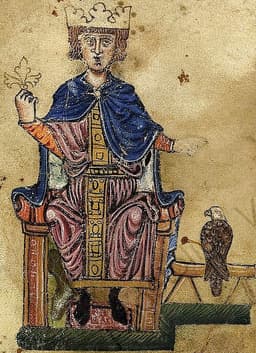
Frederick II
Emperor · Medieval
61.7Total
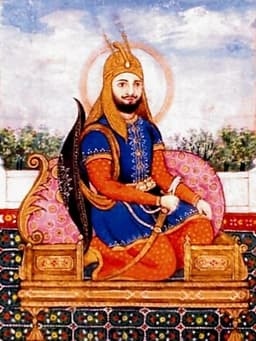
Sher Shah Suri
Emperor · Medieval
68.7Total
Basic Information
Born
1194
1486
Died
1250
1545
Era
Medieval
Medieval
Nationality
Holy Roman Empire
India
Occupation
Emperor
Emperor
Civilization
Western
Indian
Score Comparison
Military (10%)
72.5
80.0
Political (20%)
70.3
82.0
Influence (20%)
40.0
56.7
Legacy (20%)
65.0
65.0
Leadership (15%)
72.0
72.0
Strategy (15%)
68.1
72.0
TOTAL
61.7
68.7
Frederick II — Complete Timeline
1224 AD
Foundation of the University of NaplesCultural◆ Major
Frederick II founded the University of Naples, the first state-run university in Europe. It was established to train administrators and lawyers for the kingdom, independent of papal control. The university became a center for legal and scientific studies.
EducationUniversitySicily
Impact: regionalconstructive
1228 AD
Sixth CrusadeWar◆ Major
Frederick II led the Sixth Crusade while excommunicated. Through diplomacy with Sultan al-Kamil, he secured the return of Jerusalem, Bethlehem, and Nazareth to Christian control without major battle. He crowned himself King of Jerusalem in the Church of the Holy Sepulchre.
CrusadeDiplomacyJerusalem
Impact: globalconstructive
1231 AD
Promulgation of the Constitutions of MelfiReform◆ Major
Frederick II issued the Constitutions of Melfi, a comprehensive legal code for the Kingdom of Sicily. The code centralized royal authority, reformed administration, and established a uniform legal system. It was one of the most advanced legal codes of the medieval period.
Legal ReformSicilyAdministration
Impact: regionalconstructive
1237 AD
Battle of CortenuovaWar◆ Major
Frederick II defeated the Lombard League at Cortenuova in northern Italy. He captured the League's carroccio and sent it to Rome as a trophy. The victory strengthened imperial control over northern Italy but did not end the League's resistance.
Lombard LeagueBattleItaly
Impact: regional
Sher Shah Suri — Complete Timeline
1539 AD
Defeat of Humayun at ChausaWar◆ Major
Sher Shah Suri defeated the Mughal emperor Humayun at the Battle of Chausa in Bihar. This victory forced Humayun to flee to Persia and allowed Sher Shah to establish the Sur Empire in northern India.
BattleMughal-Sur Conflict
Impact: regional
1540 AD
Defeat of Humayun at KannaujWar◆ Major
Sher Shah Suri decisively defeated Humayun at the Battle of Kannauj (also known as Bilgram). This victory consolidated Sher Shah's control over the Delhi Sultanate and ended Mughal rule in India for 15 years.
BattleMughal-Sur Conflict
Impact: regional
Introduction of the RupeeReform◆ Major
Sher Shah Suri introduced a standardized silver coin called the 'rupiya', which became the basis for the modern Indian rupee. This reform stabilized the economy and facilitated trade across his empire.
Currency ReformEconomic Policy
Impact: regionalconstructive
1541 AD
Land Revenue ReformsReform◆ Major
Sher Shah Suri implemented a systematic land revenue system based on measurement of land and classification of soil types. This reform increased state revenue and reduced corruption, later adopted by the Mughals under Akbar.
Administrative ReformTaxation
Impact: regionalconstructive
1542 AD
Construction of the Grand Trunk RoadOther◆ Major
Sher Shah Suri built the Grand Trunk Road from Sonargaon (Bangladesh) to Peshawar (Pakistan), improving trade and communication. The road included rest houses and wells at regular intervals, facilitating travel and commerce.
InfrastructureTrade Route
Impact: regionalconstructive
Expert Analysis
Origins
Frederick II was born in 1194 in Jesi, Italy, to Holy Roman Emperor Henry VI and Constance of Sicily. Orphaned by age four, he was raised by Pope Innocent III, who used him to control Sicily. His education included Arabic, Greek, and Latin, fostering a cosmopolitan worldview. Sher Shah Suri, born Farid Khan in 1486 in Sasaram, India, to an Afghan noble family, received military training and administrative experience under his father's service. After a dispute, he left home and served under the Afghan ruler of Jaunpur, learning governance. His early life was marked by ambition and a desire for power.
Rise to Power
Frederick II was crowned King of Sicily in 1198 and Holy Roman Emperor in 1220. His rise involved navigating papal hostility and German princely opposition. He secured his position by promising to lead a crusade, a promise he delayed repeatedly. Sher Shah Suri rose by serving under the Afghan ruler of Bihar, eventually becoming governor. He rebelled against the Mughal emperor Humayun, defeating him at Chausa in 1539 and Kannauj in 1540. These victories forced Humayun into exile and established Sher Shah as ruler of northern India.
Leadership & Governance
Frederick II's leadership was autocratic and innovative. He centralized authority in Sicily through the Constitutions of Melfi (1231), a legal code that streamlined administration and curbed feudal power. He founded the University of Naples in 1224, the first state-run university, to train bureaucrats. His rule in Germany was less effective due to absenteeism. Sher Shah Suri's governance was systematic and inclusive. He introduced a standardized silver coin, the rupiya, which stabilized the economy. His land revenue reforms, based on land measurement and soil classification, increased state revenue and reduced corruption. He built the Grand Trunk Road, connecting Bengal to the Indus, with rest houses and wells. Both rulers focused on administrative efficiency, but Sher Shah's reforms were more practical and enduring.
Triumph & Tragedy
Frederick II's greatest triumph was the Sixth Crusade (1228-1229), where through diplomacy with Sultan al-Kamil, he regained Jerusalem, Bethlehem, and Nazareth without major battle. His tragedy was his conflict with the papacy; Pope Gregory IX excommunicated him twice, and after his death, his dynasty was destroyed. Sher Shah Suri's triumph was his defeat of the Mughals, establishing the Sur Empire. His tragedy was his short reign (1540-1545) and accidental death from a gunpowder explosion at Kalinjar. His empire collapsed after his death, but his administrative system was revived by the Mughals.
Character & Destiny
Frederick II was intellectual and tolerant, speaking six languages and patronizing arts and sciences. His authoritarian style and conflicts with the pope led to his vilification as the Antichrist. Sher Shah Suri was pragmatic and just, known for his efficient administration and military discipline. His character traits—attention to detail and meritocracy—shaped his reforms. His early death cut short his consolidation, but his systems outlived him.
Legacy
Frederick II's Constitutions of Melfi influenced later legal codes, and his patronage of science and culture left a mark on Sicily. However, his political legacy was limited; the Hohenstaufen dynasty was eradicated. Sher Shah Suri's legacy is immense: his rupee remained the standard currency in India for centuries; his land revenue system was adopted by Akbar; and the Grand Trunk Road is still a major highway. His administrative reforms formed the backbone of Mughal governance. In comparison, Sher Shah Suri's impact on governance and economy is more tangible and lasting.
Conclusion
While Frederick II was a remarkable medieval emperor with cultural achievements, Sher Shah Suri had a greater impact on statecraft and administration. Sher Shah scored 72.0 in strategy to Frederick's 68.1, and 82.0 in politics to Frederick's 70.3. His total score of 68.7 surpasses Frederick's 61.7. Sher Shah's reforms directly shaped the Mughal Empire and modern India, whereas Frederick's legacy is more fragmented. Thus, Sher Shah Suri emerges as the more consequential ruler in terms of lasting governance systems.
Rankings
🥇
Sher Shah SuriLeader
Mil: 80.0Pol: 82.0Inf: 56.7
68.7
🥈
Frederick II
Mil: 72.5Pol: 70.3Inf: 40.0
61.7
+7.0 behind
How This Comparison Works
Algorithm
Each figure is scored on 6 dimensions (0—100 scale) based on structured historical data: Military (10%), Political (20%), Influence (20%), Legacy (20%), Leadership (15%), Strategy (15%). The weighted total produces the final ranking.
Data Sources
Scores are computed from structured sub-indicators in the database. Scale factors adjust for era (Ancient ×0.85, Modern ×1.0) and civilization size (Eastern ×1.05, Other ×0.80) to account for differences in population and military scale.
Maximum 3 Figures
Comparisons are limited to 2—3 figures to ensure readability and statistical meaningfulness.
Error Margins
±5 points per dimension — Sub-scores are derived from historical records with inherent uncertainty. Two figures within 5 points on a dimension should be considered roughly equivalent in that area.
Total Score Accuracy
±3 points overall — The weighted combination of 6 dimensions produces a total score with approximately ±3 points of uncertainty. Differences of less than 3 points are not statistically significant— the figures are effectively tied.
Known Limitations
- Historical records are incomplete and uneven across civilizations
- Figures from oral-tradition societies may be underrepresented
- Occupation labels can misclassify multi-role figures
- Scores measure capability and impact, not moral character
- Quantitative scoring is a comparison tool, not absolute truth
Capability Radar
Military (10%) — Battles & Warfare
Battles
65
75
Win Rate
60
80
Expansion
55
75
Political (20%) — Governance & Reform
Reform
90
95
Diplomacy
85
70
Economy
80
90
Influence (20%) — Cultural & Global Reach
Cultural
85
60
Global
70
55
Legacy (20%) — Historical Impact
Historical
80
85
Longevity
75
80
Leadership (15%) — Power & Stability
Tenure
85
60
Stability
60
65
Strategy (15%) — Tactics & Innovation
Strategy
70
80
Tactics
75
85
Reform
80
90
Similar Comparisons
Comments & Discussion
No comments yet. Be the first to share your thoughts!