Loading...
This comparison has not been analyzed yet.
One-time AI generation (~1 minute). Scores and timeline are already available below.
Philopoemen of Megalopolis vs Wang Jian
Philopoemen of Megalopolis leads by 4.5 pts · 2 figures compared
…

Philopoemen of Megalopolis
General · Ancient
59.2Total
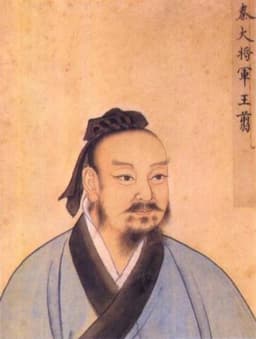
Wang Jian
General · Ancient
54.7Total
Basic Information
Born
-253
-260
Died
-183
-210
Era
Ancient
Ancient
Nationality
Achaean League
China
Occupation
General
General
Civilization
Western
Eastern
Score Comparison
Military (10%)
80.0
88.0
Political (20%)
54.7
33.6
Influence (20%)
54.9
56.4
Legacy (20%)
47.5
56.0
Leadership (15%)
68.0
36.9
Strategy (15%)
72.0
72.0
TOTAL
59.2
54.7
Philopoemen of Megalopolis — Complete Timeline
208 BC
Reform of Achaean League armyReform◆ Major
Philopoemen reformed the Achaean League's military, introducing Macedonian-style tactics and equipment. He trained the infantry to use the sarissa pike and organized them into phalanxes, transforming the League's army into a more effective fighting force.
Achaean LeagueMilitary ReformPhalanx
Impact: regionalconstructive
207 BC
Battle of MantineaWar
Philopoemen led the Achaean League to a decisive victory over Sparta at the Battle of Mantinea. The Spartan army was destroyed, and their leader Machanidas was killed. This victory broke Spartan power and established Achaean dominance in the Peloponnese.
Achaean LeagueSpartaBattle
Impact: regional
192 BC
Capture of SpartaWar◆ Major
Philopoemen captured Sparta and forced it to join the Achaean League. He dismantled the Spartan walls, abolished the Lycurgan constitution, and imposed Achaean laws. This ended Sparta's independence as a major power.
Achaean LeagueSpartaConquest
Impact: regionaldestructive
183 BC
Capture and execution by MesseniansWar◆ Major
Philopoemen was captured by Messenian rebels while on campaign. He was imprisoned and forced to drink poison, dying at age 70. His death was a major blow to the Achaean League, which lost its most capable general.
Achaean LeagueMessenian WarExecution
Impact: regionaltragic
Wang Jian — Complete Timeline
228 BC
Conquest of ZhaoWar◆ Major
Wang Jian led the Qin army to conquer the state of Zhao, capturing King Qian of Zhao. This victory eliminated one of the last major obstacles to Qin unification of China.
ConquestQin StateZhao State
Impact: regionaldestructive
223 BC
Conquest of ChuWar◆ Major
Wang Jian led a Qin army of 600,000 men to conquer the state of Chu. He defeated the Chu general Xiang Yan and captured King Fuchu of Chu, annexing Chu territory into Qin.
ConquestQin StateChu State
Impact: regionaldestructive
222 BC
Conquest of YanWar
Wang Jian led the Qin army to conquer the state of Yan, capturing King Xi of Yan. This victory further consolidated Qin control over northern China.
ConquestQin StateYan State
Impact: regionaldestructive
210 BC
Retirement and DeathOther
After the conquest of Chu, Wang Jian retired from military service. He died in 210 BC, having played a crucial role in the unification of China under Qin Shi Huang.
RetirementQin StateUnification
Impact: national
This comparison has not been analyzed yet.
One-time AI generation (~1 minute). Scores and timeline are already available below.
Rankings
🥇
Philopoemen of MegalopolisLeader
Mil: 80.0Pol: 54.7Inf: 54.9
59.2
🥈
Wang Jian
Mil: 88.0Pol: 33.6Inf: 56.4
54.7
+4.5 behind
How This Comparison Works
Algorithm
Each figure is scored on 6 dimensions (0—100 scale) based on structured historical data: Military (10%), Political (20%), Influence (20%), Legacy (20%), Leadership (15%), Strategy (15%). The weighted total produces the final ranking.
Data Sources
Scores are computed from structured sub-indicators in the database. Scale factors adjust for era (Ancient ×0.85, Modern ×1.0) and civilization size (Eastern ×1.05, Other ×0.80) to account for differences in population and military scale.
Maximum 3 Figures
Comparisons are limited to 2—3 figures to ensure readability and statistical meaningfulness.
Error Margins
±5 points per dimension — Sub-scores are derived from historical records with inherent uncertainty. Two figures within 5 points on a dimension should be considered roughly equivalent in that area.
Total Score Accuracy
±3 points overall — The weighted combination of 6 dimensions produces a total score with approximately ±3 points of uncertainty. Differences of less than 3 points are not statistically significant— the figures are effectively tied.
Known Limitations
- Historical records are incomplete and uneven across civilizations
- Figures from oral-tradition societies may be underrepresented
- Occupation labels can misclassify multi-role figures
- Scores measure capability and impact, not moral character
- Quantitative scoring is a comparison tool, not absolute truth
Capability Radar
Military (10%) — Battles & Warfare
Battles
65
85
Win Rate
70
90
Expansion
55
90
Political (20%) — Governance & Reform
Reform
70
20
Diplomacy
65
30
Economy
50
20
Influence (20%) — Cultural & Global Reach
Cultural
45
40
Global
35
50
Legacy (20%) — Historical Impact
Historical
55
70
Longevity
40
60
Leadership (15%) — Power & Stability
Tenure
60
40
Stability
55
30
Strategy (15%) — Tactics & Innovation
Strategy
72
85
Tactics
75
80
Reform
80
60
Similar Comparisons
Comments & Discussion
No comments yet. Be the first to share your thoughts!