Loading...
Probus vs Umar ibn Abd al-Aziz
Umar ibn Abd al-Aziz leads by 0.3 pts · 2 figures compared
…

Probus
Emperor · Ancient
54.2Total
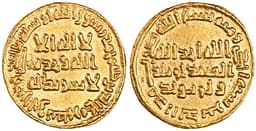
Umar ibn Abd al-Aziz
Emperor · Ancient
54.5Total
Basic Information
Born
232
-682
Died
282
—
Era
Ancient
Ancient
Nationality
Roman Empire
Umayyad Caliphate
Occupation
Emperor
Emperor
Civilization
Western
Middle Eastern
Score Comparison
Military (10%)
61.7
22.6
Political (20%)
61.3
78.0
Influence (20%)
53.3
59.0
Legacy (20%)
42.5
54.0
Leadership (15%)
58.8
62.0
Strategy (15%)
60.7
30.3
TOTAL
54.2
54.5
Probus — Complete Timeline
277 AD
Reconquest of GaulWar◆ Major
Probus led a campaign to reclaim Gaul from the Gallic Empire, which had seceded under Postumus. He defeated the Gallic usurpers Tetricus I and Tetricus II at the Battle of Ch
Gallic EmpireReunificationMilitary Campaign
Impact: regionalconstructive
278 AD
Campaign against the Franks and AlemanniWar◆ Major
Probus campaigned against the Franks and Alemanni along the Rhine frontier. He defeated them in several battles and forced them to sue for peace. He then strengthened the frontier defenses and resettled captured tribes within the empire.
Germanic WarsRhine FrontierResettlement
Impact: regionalconstructive
279 AD
Restoration of the Rhine FrontierReform◆ Major
Probus undertook a major program to restore the Rhine frontier defenses. He rebuilt forts, repaired roads, and constructed a new defensive line. He also encouraged viticulture in Gaul by allowing the planting of vineyards, boosting the local economy.
Frontier DefenseInfrastructureEconomic Policy
Impact: regionalconstructive
282 AD
Assassination by His Own SoldiersPolitical Action◆ Major
Probus was assassinated by his own soldiers at Sirmium after a mutiny. The troops were angered by his strict discipline and his use of them for public works projects. His death paved the way for Carus to become emperor.
AssassinationMilitary MutinyEnd of Reign
Impact: nationaltragic
Umar ibn Abd al-Aziz — Complete Timeline
717 AD
Accession as CaliphPolitical Action◆ Major
Umar ibn Abd al-Aziz became the eighth Umayyad caliph after the death of Sulayman ibn Abd al-Malik. His reign, though short, was marked by significant reforms and a departure from the policies of his predecessors.
CaliphateUmayyadSuccession
Impact: regional
718 AD
Withdrawal from the Siege of ConstantinopleWar◆ Major
Umar ibn Abd al-Aziz ordered the withdrawal of Umayyad forces from the prolonged and unsuccessful siege of Constantinople. This decision ended a costly military campaign and shifted focus to internal consolidation and reform.
SiegeByzantine EmpireWithdrawal
Impact: regional
Tax Reforms and JusticeReform◆ Major
Umar ibn Abd al-Aziz implemented sweeping tax reforms, abolishing the jizya (poll tax) for non-Muslims who converted to Islam and ensuring equal treatment of all subjects. He also ordered the return of confiscated lands and property to their rightful owners.
Tax ReformJusticeIslamic Governance
Impact: regionalprogressive
Expert Analysis
Origins
**Probus** (born 232 AD in Sirmium, modern Serbia) was the son of a Roman soldier. He rose through the military ranks, serving under emperors Valerian, Gallienus, and Aurelian. His early career included campaigns against the Persians and Germanic tribes, shaping his expertise in frontier defense.
**Umar ibn Abd al-Aziz** (born 682 AD in Medina, Arabia) was a member of the Umayyad dynasty. His father was Abd al-Aziz ibn Marwan, governor of Egypt. Umar grew up in the caliphal court, but was influenced by pious scholars. He served as governor of Medina before becoming caliph.
Rise to Power
Probus was proclaimed emperor by his troops in 276 AD after the death of Emperor Tacitus. He quickly defeated Florianus, a rival claimant, securing his position. His reign focused on restoring order in the western provinces, particularly Gaul, which had seceded under the Gallic Empire. By 277 AD, Probus had defeated the Gallic usurpers Tetricus I and Tetricus II, reuniting Gaul with the Roman Empire.
Umar ibn Abd al-Aziz became caliph in 717 AD after the death of his cousin Sulayman ibn Abd al-Malik. He was not the first choice, but Sulayman had designated him on his deathbed. Umar's accession surprised many, as he was known for his piety and reformist tendencies, contrasting with previous Umayyad rulers.
Leadership & Governance
Probus governed with a focus on military discipline and restoration. He rebuilt forts, repaired roads, and constructed a new defensive line along the Rhine. He also settled barbarian groups within the empire, integrating them as soldiers. However, his strict discipline alienated his troops, who were forced into labor on public works. Probus scored 58.8 in leadership, reflecting his effective but unpopular style.
Umar ibn Abd al-Aziz implemented sweeping reforms. He abolished the jizya (poll tax) for non-Muslims who converted to Islam, ensuring equal treatment. He also reformed tax collection, reducing corruption and ensuring fair distribution. His political score of 78.0 reflects his ability to enact justice and gain popular support. He ordered the withdrawal from the costly siege of Constantinople, ending a military campaign that had drained resources.
Triumph & Tragedy
Probus's greatest success was the reconquest of Gaul and restoration of the Rhine frontier. He defeated the Franks and Alemanni, forcing them to sue for peace. He also settled barbarians, increasing agricultural production. However, his tragic end came in 282 AD when his own soldiers assassinated him at Sirmium, angered by his strict discipline and forced labor. His legacy was cut short.
Umar's triumph was his tax and justice reforms, which improved the lives of non-Muslims and reduced oppression. He also ended the expansionist wars, focusing on internal stability. However, his reign lasted only two years (717-719 AD). His reforms were largely reversed by his successors, limiting their long-term impact. He died, possibly poisoned, at age 37.
Character & Destiny
Probus was a capable general and administrator, but his inflexible discipline and reliance on forced labor bred resentment. His character, focused on military efficiency, led to his downfall. He scored 61.7 in military and 60.7 in strategy, but his political score of 61.3 shows he failed to manage his troops' loyalty.
Umar was known for his piety, humility, and justice. He lived simply, even selling his own property to return to the treasury. His character inspired loyalty among the people, but his reforms threatened the Umayyad elite, leading to his early death. His leadership score of 62.0 reflects his moral authority.
Legacy
Probus's military campaigns secured the Rhine frontier for decades. His rebuilding efforts strengthened Roman defenses, but his assassination demonstrated the instability of the late Roman Empire. He is remembered as a capable but strict emperor, overshadowed by Diocletian's later reforms. His legacy score is 42.5.
Umar ibn Abd al-Aziz is revered in Islamic history as the fifth righteous caliph (al-khulafa' al-rashidun). His reforms set a precedent for just governance, though they were short-lived. He is remembered for his piety and justice, influencing later Islamic rulers. His legacy score is 54.0.
Conclusion
While Probus restored Roman Gaul with military prowess, his impact was limited by his short reign and assassination. Umar ibn Abd al-Aziz, despite a shorter reign, achieved lasting moral influence through his reforms. Umar's political score of 78.0 and legacy of 54.0 exceed Probus's scores of 61.3 and 42.5. Umar had greater impact, as his principles of justice and equality continue to inspire, while Probus's achievements were primarily tactical and temporary.
Rankings
🥇
Umar ibn Abd al-AzizLeader
Mil: 22.6Pol: 78.0Inf: 59.0
54.5
🥈
Probus
Mil: 61.7Pol: 61.3Inf: 53.3
54.2
+0.3 behind
How This Comparison Works
Algorithm
Each figure is scored on 6 dimensions (0—100 scale) based on structured historical data: Military (10%), Political (20%), Influence (20%), Legacy (20%), Leadership (15%), Strategy (15%). The weighted total produces the final ranking.
Data Sources
Scores are computed from structured sub-indicators in the database. Scale factors adjust for era (Ancient ×0.85, Modern ×1.0) and civilization size (Eastern ×1.05, Other ×0.80) to account for differences in population and military scale.
Maximum 3 Figures
Comparisons are limited to 2—3 figures to ensure readability and statistical meaningfulness.
Error Margins
±5 points per dimension — Sub-scores are derived from historical records with inherent uncertainty. Two figures within 5 points on a dimension should be considered roughly equivalent in that area.
Total Score Accuracy
±3 points overall — The weighted combination of 6 dimensions produces a total score with approximately ±3 points of uncertainty. Differences of less than 3 points are not statistically significant— the figures are effectively tied.
Known Limitations
- Historical records are incomplete and uneven across civilizations
- Figures from oral-tradition societies may be underrepresented
- Occupation labels can misclassify multi-role figures
- Scores measure capability and impact, not moral character
- Quantitative scoring is a comparison tool, not absolute truth
Capability Radar
Military (10%) — Battles & Warfare
Battles
65
10
Win Rate
70
10
Expansion
60
5
Political (20%) — Governance & Reform
Reform
50
85
Diplomacy
45
70
Economy
50
75
Influence (20%) — Cultural & Global Reach
Cultural
30
60
Global
30
55
Legacy (20%) — Historical Impact
Historical
40
70
Longevity
25
65
Leadership (15%) — Power & Stability
Tenure
40
30
Stability
35
80
Strategy (15%) — Tactics & Innovation
Strategy
65
10
Tactics
60
10
Reform
55
20
Similar Comparisons
Comments & Discussion
No comments yet. Be the first to share your thoughts!