Loading...
Probus vs Vespasian
Vespasian leads by 14.1 pts · 2 figures compared
…

Probus
Emperor · Ancient
54.2Total
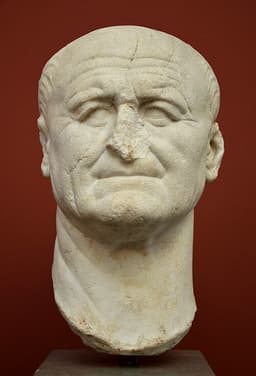
Vespasian
Emperor · Ancient
68.3Total
Basic Information
Born
232
9
Died
282
79
Era
Ancient
Ancient
Nationality
Roman Empire
Roman Empire
Occupation
Emperor
Emperor
Civilization
Western
Western
Score Comparison
Military (10%)
61.7
82.0
Political (20%)
61.3
72.0
Influence (20%)
53.3
68.0
Legacy (20%)
42.5
55.0
Leadership (15%)
58.8
79.8
Strategy (15%)
60.7
65.4
TOTAL
54.2
68.3
Probus — Complete Timeline
277 AD
Reconquest of GaulWar◆ Major
Probus led a campaign to reclaim Gaul from the Gallic Empire, which had seceded under Postumus. He defeated the Gallic usurpers Tetricus I and Tetricus II at the Battle of Ch
Gallic EmpireReunificationMilitary Campaign
Impact: regionalconstructive
278 AD
Campaign against the Franks and AlemanniWar◆ Major
Probus campaigned against the Franks and Alemanni along the Rhine frontier. He defeated them in several battles and forced them to sue for peace. He then strengthened the frontier defenses and resettled captured tribes within the empire.
Germanic WarsRhine FrontierResettlement
Impact: regionalconstructive
279 AD
Restoration of the Rhine FrontierReform◆ Major
Probus undertook a major program to restore the Rhine frontier defenses. He rebuilt forts, repaired roads, and constructed a new defensive line. He also encouraged viticulture in Gaul by allowing the planting of vineyards, boosting the local economy.
Frontier DefenseInfrastructureEconomic Policy
Impact: regionalconstructive
282 AD
Assassination by His Own SoldiersPolitical Action◆ Major
Probus was assassinated by his own soldiers at Sirmium after a mutiny. The troops were angered by his strict discipline and his use of them for public works projects. His death paved the way for Carus to become emperor.
AssassinationMilitary MutinyEnd of Reign
Impact: nationaltragic
Vespasian — Complete Timeline
69 AD
Accession as EmperorPolitical Action
Vespasian was proclaimed emperor by his troops in Egypt and later recognized by the Senate after the death of Vitellius. He founded the Flavian dynasty, ending the Year of the Four Emperors.
SuccessionFlavian DynastyCivil War
Impact: global
70 AD
Siege of Jerusalem and Destruction of the TempleWar
Vespasian's son Titus captured Jerusalem after a siege, destroying the Second Temple. The victory ended the First Jewish-Roman War and established the Flavian reputation.
Jewish WarSiegeTemple Destruction
Impact: regionaldestructive
Financial Reforms and Tax on UrineReform◆ Major
Vespasian restored the empire's finances by increasing taxes, including a tax on urine collected from public latrines for use in fulling cloth. He also revalued the currency and reduced spending.
TaxationFinanceReform
Impact: nationalconstructive
72 AD
Construction of the Colosseum BeginsCultural◆ Major
Vespasian began construction of the Flavian Amphitheatre (Colosseum) on the site of Nero's Domus Aurea. The project used spoils from the Jewish War and provided public entertainment.
ArchitecturePublic WorksEntertainment
Impact: globalconstructive
79 AD
Death and DeificationOther◆ Major
Vespasian died of natural causes at age 69, the first Roman emperor to die in office since Vespasian. He was deified by the Senate, and his sons Titus and Domitian succeeded him.
DeathDeificationSuccession
Impact: national
Expert Analysis
Origins
Probus was born around 232 AD in Sirmium (modern Sremska Mitrovica, Serbia), to a modest family. His father was a gardener or a soldier, and Probus rose through the military ranks due to his competence. Vespasian was born in 9 AD in Falacrinae, Italy, to a family of equestrian status. His father was a tax collector, and Vespasian entered the senatorial career path, serving as a military tribune in Thrace and later as a quaestor.
Rise to Power
Probus gained prominence under Emperor Aurelian, serving as a commander in the campaigns against Palmyra and the Gallic Empire. After Aurelian's assassination in 275, Probus was proclaimed emperor by his troops in the east. He defeated the usurper Florianus and secured recognition from the Senate. Vespasian rose under Emperor Claudius, commanding a legion in the invasion of Britain in 43 AD, where he distinguished himself. He later served as governor of Africa and commanded the Roman forces in the First Jewish-Roman War. In 69 AD, during the Year of the Four Emperors, he was proclaimed emperor by his troops in Egypt, and after the death of Vitellius, the Senate recognized him.
Leadership & Governance
Probus focused on restoring the Rhine frontier and reconquering Gaul. He defeated the Gallic usurpers Tetricus I and Tetricus II in 274 AD, and campaigned against the Franks and Alemanni, forcing them to sue for peace. He also restored fortifications and promoted viticulture in Gaul. However, his strict discipline and use of soldiers for public works led to discontent. Vespasian, in contrast, was a pragmatic administrator. He restored the empire's finances by increasing taxes, including a tax on urine, and implemented reforms to stabilize the economy. He began construction of the Colosseum, using spoils from the Jewish War, and promoted loyalty through propaganda and building projects.
Triumph & Tragedy
Probus's greatest success was the reconquest of Gaul and the restoration of the Rhine frontier, which stabilized the western provinces. His failure was his assassination by his own soldiers in 282 AD at Sirmium, due to his harsh discipline and the mutiny led by Carus. Vespasian's triumphs include founding the Flavian dynasty, ending the Jewish War with the destruction of Jerusalem in 70 AD, and initiating the Colosseum. His failures include the heavy tax burden he imposed, which was unpopular, and his son Domitian's later tyrannical rule, which tarnished the dynasty.
Character & Destiny
Probus was a capable soldier-emperor, known for his energy and dedication to restoring the empire. However, his strictness and lack of political acumen led to his downfall. Vespasian was shrewd, practical, and known for his humor and modesty. He successfully navigated the political turmoil of 69 AD and established a stable dynasty. His character allowed him to consolidate power and implement lasting reforms.
Legacy
Probus is remembered as a restorer of the Rhine frontier but his short reign (276-282) limited his impact. His scores reflect this: Military 61.7, Political 61.3, Influence 53.3, Legacy 42.5, Leadership 58.8, Strategy 60.7, Total 54.2. Vespasian's legacy is far greater: he founded the Flavian dynasty, built the Colosseum, and stabilized the empire after civil war. His scores: Military 82.0, Political 72.0, Influence 68.0, Legacy 55.0, Leadership 79.8, Strategy 65.4, Total 68.3. The Colosseum remains a symbol of Rome, and his financial reforms set the empire on a sound footing.
Conclusion
Vespasian had a greater impact than Probus. With a total score of 68.3 compared to Probus's 54.2, Vespasian's military and political achievements were more significant and more enduring. While Probus successfully restored Gaul, his reign was brief and ended in mutiny. Vespasian founded a dynasty that ruled for 27 years, built a lasting monument, and restored stability after a year of chaos. His influence on Roman history is clearly superior.
Rankings
🥇
VespasianLeader
Mil: 82.0Pol: 72.0Inf: 68.0
68.3
🥈
Probus
Mil: 61.7Pol: 61.3Inf: 53.3
54.2
+14.1 behind
How This Comparison Works
Algorithm
Each figure is scored on 6 dimensions (0—100 scale) based on structured historical data: Military (10%), Political (20%), Influence (20%), Legacy (20%), Leadership (15%), Strategy (15%). The weighted total produces the final ranking.
Data Sources
Scores are computed from structured sub-indicators in the database. Scale factors adjust for era (Ancient ×0.85, Modern ×1.0) and civilization size (Eastern ×1.05, Other ×0.80) to account for differences in population and military scale.
Maximum 3 Figures
Comparisons are limited to 2—3 figures to ensure readability and statistical meaningfulness.
Error Margins
±5 points per dimension — Sub-scores are derived from historical records with inherent uncertainty. Two figures within 5 points on a dimension should be considered roughly equivalent in that area.
Total Score Accuracy
±3 points overall — The weighted combination of 6 dimensions produces a total score with approximately ±3 points of uncertainty. Differences of less than 3 points are not statistically significant— the figures are effectively tied.
Known Limitations
- Historical records are incomplete and uneven across civilizations
- Figures from oral-tradition societies may be underrepresented
- Occupation labels can misclassify multi-role figures
- Scores measure capability and impact, not moral character
- Quantitative scoring is a comparison tool, not absolute truth
Capability Radar
Military (10%) — Battles & Warfare
Battles
65
75
Win Rate
70
80
Expansion
60
60
Political (20%) — Governance & Reform
Reform
50
75
Diplomacy
45
80
Economy
50
85
Influence (20%) — Cultural & Global Reach
Cultural
30
75
Global
30
70
Legacy (20%) — Historical Impact
Historical
40
80
Longevity
25
75
Leadership (15%) — Power & Stability
Tenure
40
70
Stability
35
80
Strategy (15%) — Tactics & Innovation
Strategy
65
75
Tactics
60
70
Reform
55
65
Similar Comparisons
Comments & Discussion
No comments yet. Be the first to share your thoughts!