Loading...
Ptolemy II Philadelphus vs Thrasamund
Ptolemy II Philadelphus leads by 12.8 pts · 2 figures compared
…
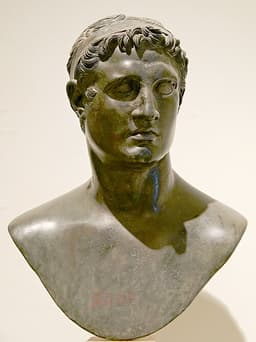
Ptolemy II Philadelphus
Emperor · Ancient
59.1Total

Thrasamund
Emperor · Ancient
46.3Total
Basic Information
Born
-308
450
Died
-246
523
Era
Ancient
Ancient
Nationality
Egypt
Vandals
Occupation
Emperor
Emperor
Civilization
Middle Eastern
Western
Score Comparison
Military (10%)
25.0
47.5
Political (20%)
70.0
48.0
Influence (20%)
72.0
53.3
Legacy (20%)
52.0
42.5
Leadership (15%)
72.0
40.0
Strategy (15%)
43.3
43.7
TOTAL
59.1
46.3
Ptolemy II Philadelphus — Complete Timeline
285 BC
Expansion of the Library of AlexandriaCultural◆ Major
Ptolemy II greatly expanded the Library of Alexandria, acquiring manuscripts from across the known world. He appointed scholars like Zenodotus and Callimachus as librarians, making Alexandria the preeminent center of Hellenistic learning and scholarship.
LibraryScholarshipHellenistic
Impact: globalprogressive
280 BC
Construction of the Pharos LighthouseCultural◆ Major
Ptolemy II completed the construction of the Pharos Lighthouse on the island of Pharos off Alexandria. The lighthouse, one of the Seven Wonders of the Ancient World, stood over 100 meters tall and guided ships into the harbor, becoming a symbol of Ptolemaic power and engineering.
Seven WondersArchitectureAlexandria
Impact: globalconstructive
274 BC
First Syrian War (274-271 BC)War◆ Major
Ptolemy II fought the First Syrian War against the Seleucid king Antiochus I. He successfully defended Ptolemaic possessions in Coele-Syria and expanded Egyptian influence into the Aegean and Anatolia, securing his kingdom's position as a major Hellenistic power.
Syrian WarPtolemaic-SeleucidEgypt
Impact: regional
273 BC
Marriage to Arsinoe IIPolitical Action◆ Major
Ptolemy II married his full sister Arsinoe II, a practice common in Egyptian pharaonic tradition but unusual for Greeks. This marriage consolidated his power and was used for propaganda, with both being deified as the Theoi Philadelphoi (Sibling-Loving Gods).
Royal MarriageIncestDeification
Impact: national
250 BC
Patronage of the Septuagint TranslationCultural◆ Major
According to tradition, Ptolemy II commissioned the translation of the Hebrew Bible into Greek, known as the Septuagint, for the Library of Alexandria. This translation made Jewish scriptures accessible to the Greek-speaking world and became foundational for Christianity.
TranslationBibleHellenistic Judaism
Impact: globalconstructive
Thrasamund — Complete Timeline
496 AD
Cultural PatronageCultural◆ Major
Thrasamund sponsored poets, scholars, and artists at his court in Carthage, including the Latin poet Luxorius. He promoted a revival of Roman culture within the Vandal Kingdom, commissioning buildings and literary works.
PatronageCultural RevivalVandal Kingdom
Impact: regionalconstructive
500 AD
Marriage to AmalafridaPolitical Action
Thrasamund married Amalafrida, sister of the Ostrogothic king Theodoric the Great, to forge an alliance with the Ostrogoths. The marriage strengthened Vandal-Ostrogothic relations and provided military support against the Byzantines.
Marriage AllianceOstrogothic-Vandal RelationsDiplomacy
Impact: regionalconstructive
510 AD
War with the Byzantine EmpireWar
Thrasamund fought a war with the Byzantine Empire over control of North African coastal cities. The conflict ended in a stalemate, with the Vandals retaining their territory but suffering economic losses.
Byzantine-Vandal WarConflictNorth Africa
Impact: regionaldestructive
515 AD
Construction of the Basilica of Saint CyprianCultural
Thrasamund built the Basilica of Saint Cyprian in Carthage, a major Christian monument. The church demonstrated his support for Catholic Christianity, despite the Vandal elite's Arianism, and promoted religious harmony.
Church BuildingReligious PatronageCarthage
Impact: regionalconstructive
Expert Analysis
Origins
**Ptolemy II Philadelphus** (308–246 BC) was the son of Ptolemy I Soter, a Macedonian general of Alexander the Great who founded the Ptolemaic dynasty in Egypt. Born on Kos, Ptolemy II was educated in the Hellenistic tradition and groomed for rule. His mother was Berenice I, and he had several half-siblings from his father's previous marriage. Ptolemy II's early life was marked by court intrigue, including the execution of his half-brother Meleager for conspiracy. He ascended the throne around 284 BC, co-ruling with his father for two years before becoming sole ruler.
**Thrasamund** (450–523 AD) was a king of the Vandals, a Germanic tribe that conquered North Africa from the Romans. He was the son of Geiseric's younger son, likely born in Carthage after the Vandal seizure of the city in 439. Little is known of his early life, but he grew up in a kingdom that was a major Mediterranean power. Thrasamund became king in 496 after the death of his brother Gunthamund, inheriting a realm that controlled Sardinia, Corsica, and parts of North Africa.
Rise to Power
Ptolemy II's rise was relatively smooth due to his father's careful planning. He was appointed co-regent in 284 BC, ensuring a stable transition. His key turning point came after his father's death in 283 BC, when he quickly consolidated power by eliminating rivals. He married Arsinoe I, but later divorced her and married his full sister Arsinoe II in 273 BC, a move that solidified his legitimacy by emulating Egyptian pharaonic tradition. This marriage was controversial among Greeks but strengthened his control over the priesthood and native population.
Thrasamund came to power in 496 after the death of his brother Gunthamund, who had reigned for 12 years. The Vandal kingdom was already in decline due to pressure from the Berber tribes and the Byzantine Empire. Thrasamund's key turning point was his marriage to Amalafrida, sister of the Ostrogothic king Theodoric the Great, in around 500. This alliance with the powerful Ostrogoths helped stabilize his kingdom temporarily and gave him a counterweight against Byzantium.
Leadership & Governance
Ptolemy II was a capable administrator who focused on cultural and economic development. He expanded the Library of Alexandria, acquiring manuscripts from across the known world, and appointed scholars like Zenodotus and Callimachus. His patronage of the Septuagint translation shows his desire to integrate Jewish culture. He also completed the Pharos Lighthouse, one of the Seven Wonders of the Ancient World, which became a symbol of Alexandria's maritime power. Economically, he reformed the tax system and promoted trade, increasing state revenues. His political score of 70.0 reflects his ability to maintain a stable dynasty, though his military score of 25.0 shows his reliance on diplomacy and mercenaries.
Thrasamund focused on cultural revival and religious tolerance. He sponsored poets like Luxorius and built the Basilica of Saint Cyprian in Carthage, a major Christian monument. This was part of his effort to reconcile with the Roman Catholic population, who were persecuted under earlier Vandal kings. His governance was marked by a desire to integrate Vandal and Roman cultures, but his military score of 47.5 and political score of 48.0 indicate a mediocre ruler. His strategy score of 43.7 is similar to Ptolemy's 43.3, showing both were cautious.
Triumph & Tragedy
Ptolemy II's greatest success was the cultural flourishing of Alexandria. The Library became the greatest repository of knowledge in the ancient world, and the Lighthouse boosted commerce. He also successfully defended Egypt in the First Syrian War (274–271 BC) against Antiochus I, securing Coele-Syria. However, his greatest failure was his military weakness; he lost the Second Syrian War (260–253 BC) to Antiochus II, losing territory in Asia Minor. His legacy score of 52.0 reflects that his achievements were overshadowed by later Ptolemaic decline.
Thrasamund's greatest success was his cultural patronage, which preserved Roman literature in Vandal Africa. His alliance with the Ostrogoths through marriage to Amalafrida temporarily strengthened his position. However, his failures included a stalemated war with Byzantium and the erosion of Vandal military power. After his death in 523, his successor Hilderic reversed his policies and was overthrown, leading to the Vandal kingdom's collapse in 534. His legacy score of 42.5 reflects the ephemeral nature of his achievements.
Character & Destiny
Ptolemy II was a shrewd and cultured ruler, but also ruthless. He eliminated rivals and married his sister to secure power. His character was shaped by Hellenistic ideals of kingship: he saw himself as a patron of learning and a divine pharaoh. This blend of Greek and Egyptian traditions allowed him to rule effectively, but his lack of military ambition left Egypt vulnerable. His total score of 59.1 reflects a competent but not exceptional ruler.
Thrasamund was a peace-loving king who preferred diplomacy and culture over war. He was more Roman than Vandal in his tastes, which alienated his warrior aristocracy. His marriage to Amalafrida brought Ostrogothic influence, but after Theodoric's death in 526, the Vandals faced renewed Byzantine aggression. His character—tolerant and cultured—did not match the brutal times, leading to his kingdom's decline. His total score of 46.3 is lower due to weaker leadership and legacy.
Legacy
Ptolemy II's legacy is immense: the Library of Alexandria became a symbol of ancient knowledge, and the Pharos Lighthouse influenced lighthouse design for centuries. The Septuagint translation shaped Judeo-Christian scripture. However, his dynasty eventually declined, and his military failures weakened Egypt. His influence score of 72.0 highlights his cultural impact.
Thrasamund's legacy is more modest. His patronage kept Latin poetry alive in a period of decline, but his kingdom fell soon after. The Basilica of Saint Cyprian is a historical footnote. His influence score of 53.3 and legacy score of 42.5 reflect his limited lasting impact.
Conclusion
Ptolemy II Philadelphus had a greater impact than Thrasamund. His cultural contributions—the Library, the Lighthouse, the Septuagint—shaped Western civilization for millennia. Thrasamund's achievements were commendable but fleeting. While Ptolemy scored 59.1 total to Thrasamund's 46.3, the gap is larger in influence (72.0 vs 53.3) and political skill (70.0 vs 48.0). Ptolemy II's Egypt was a center of learning for centuries; Thrasamund's Vandal kingdom vanished within a decade of his death. The clear position is that Ptolemy II Philadelphus, with a score gap of 12.8 points, was the more significant historical figure.
Rankings
🥇
Ptolemy II PhiladelphusLeader
Mil: 25.0Pol: 70.0Inf: 72.0
59.1
🥈
Thrasamund
Mil: 47.5Pol: 48.0Inf: 53.3
46.3
+12.8 behind
How This Comparison Works
Algorithm
Each figure is scored on 6 dimensions (0—100 scale) based on structured historical data: Military (10%), Political (20%), Influence (20%), Legacy (20%), Leadership (15%), Strategy (15%). The weighted total produces the final ranking.
Data Sources
Scores are computed from structured sub-indicators in the database. Scale factors adjust for era (Ancient ×0.85, Modern ×1.0) and civilization size (Eastern ×1.05, Other ×0.80) to account for differences in population and military scale.
Maximum 3 Figures
Comparisons are limited to 2—3 figures to ensure readability and statistical meaningfulness.
Error Margins
±5 points per dimension — Sub-scores are derived from historical records with inherent uncertainty. Two figures within 5 points on a dimension should be considered roughly equivalent in that area.
Total Score Accuracy
±3 points overall — The weighted combination of 6 dimensions produces a total score with approximately ±3 points of uncertainty. Differences of less than 3 points are not statistically significant— the figures are effectively tied.
Known Limitations
- Historical records are incomplete and uneven across civilizations
- Figures from oral-tradition societies may be underrepresented
- Occupation labels can misclassify multi-role figures
- Scores measure capability and impact, not moral character
- Quantitative scoring is a comparison tool, not absolute truth
Capability Radar
Military (10%) — Battles & Warfare
Battles
30
20
Win Rate
40
25
Expansion
35
15
Political (20%) — Governance & Reform
Reform
70
40
Diplomacy
80
50
Economy
85
45
Influence (20%) — Cultural & Global Reach
Cultural
85
50
Global
70
30
Legacy (20%) — Historical Impact
Historical
80
40
Longevity
75
35
Leadership (15%) — Power & Stability
Tenure
75
60
Stability
70
55
Strategy (15%) — Tactics & Innovation
Strategy
40
20
Tactics
35
20
Reform
30
15
Similar Comparisons
Comments & Discussion
No comments yet. Be the first to share your thoughts!