Loading...
Ptolemy II Philadelphus vs Sneferu
Ptolemy II Philadelphus leads by 4.9 pts · 2 figures compared
…
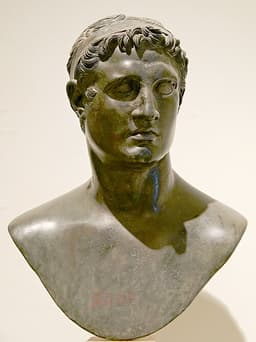
Ptolemy II Philadelphus
Emperor · Ancient
59.1Total

Sneferu
Emperor · Ancient
54.2Total
Basic Information
Born
-308
-2613
Died
-246
-2589
Era
Ancient
Ancient
Nationality
Egypt
Egypt
Occupation
Emperor
Emperor
Civilization
Middle Eastern
Middle Eastern
Score Comparison
Military (10%)
25.0
35.0
Political (20%)
70.0
68.0
Influence (20%)
72.0
55.7
Legacy (20%)
52.0
50.0
Leadership (15%)
72.0
68.0
Strategy (15%)
43.3
38.6
TOTAL
59.1
54.2
Ptolemy II Philadelphus — Complete Timeline
285 BC
Expansion of the Library of AlexandriaCultural◆ Major
Ptolemy II greatly expanded the Library of Alexandria, acquiring manuscripts from across the known world. He appointed scholars like Zenodotus and Callimachus as librarians, making Alexandria the preeminent center of Hellenistic learning and scholarship.
LibraryScholarshipHellenistic
Impact: globalprogressive
280 BC
Construction of the Pharos LighthouseCultural◆ Major
Ptolemy II completed the construction of the Pharos Lighthouse on the island of Pharos off Alexandria. The lighthouse, one of the Seven Wonders of the Ancient World, stood over 100 meters tall and guided ships into the harbor, becoming a symbol of Ptolemaic power and engineering.
Seven WondersArchitectureAlexandria
Impact: globalconstructive
274 BC
First Syrian War (274-271 BC)War◆ Major
Ptolemy II fought the First Syrian War against the Seleucid king Antiochus I. He successfully defended Ptolemaic possessions in Coele-Syria and expanded Egyptian influence into the Aegean and Anatolia, securing his kingdom's position as a major Hellenistic power.
Syrian WarPtolemaic-SeleucidEgypt
Impact: regional
273 BC
Marriage to Arsinoe IIPolitical Action◆ Major
Ptolemy II married his full sister Arsinoe II, a practice common in Egyptian pharaonic tradition but unusual for Greeks. This marriage consolidated his power and was used for propaganda, with both being deified as the Theoi Philadelphoi (Sibling-Loving Gods).
Royal MarriageIncestDeification
Impact: national
250 BC
Patronage of the Septuagint TranslationCultural◆ Major
According to tradition, Ptolemy II commissioned the translation of the Hebrew Bible into Greek, known as the Septuagint, for the Library of Alexandria. This translation made Jewish scriptures accessible to the Greek-speaking world and became foundational for Christianity.
TranslationBibleHellenistic Judaism
Impact: globalconstructive
Sneferu — Complete Timeline
2600 BC
Construction of the Bent PyramidCultural◆ Major
Sneferu built the Bent Pyramid at Dahshur, named for its unusual change in angle from 54 to 43 degrees. This design change likely corrected structural instability, representing a transitional step toward the true pyramid form.
PyramidArchitectureEngineering
Impact: regionalconstructive
2590 BC
Construction of the Red PyramidCultural◆ Major
Sneferu built the Red Pyramid at Dahshur, the first successful true pyramid with smooth sides. It became the model for later pyramids, including those at Giza, and demonstrated mastery of pyramid construction.
PyramidArchitectureEngineering
Impact: regionalconstructive
Expert Analysis
Origins
Ptolemy II Philadelphus (308–246 BC) was born on Kos, the son of Ptolemy I Soter, a Macedonian general of Alexander the Great, and Berenice I. He was educated in the Greek tradition and became co-regent with his father in 285 BC. His early life was marked by the consolidation of the Ptolemaic dynasty in Egypt, a Hellenistic kingdom centered in Alexandria.
Sneferu (reigned c. 2613–2589 BC) was the first pharaoh of the Fourth Dynasty of the Old Kingdom. His parentage is uncertain, but he likely was the son of Huni, the last pharaoh of the Third Dynasty. He married Hetepheres I, possibly his half-sister, and his reign marked a period of architectural innovation and military campaigns into Nubia and Libya.
Rise to Power
Ptolemy II ascended to the throne in 283 BC after a period of co-rule with his father. He quickly eliminated rivals, including his half-brother Magas, who later became king of Cyrene. His marriage to his full sister Arsinoe II in 273 BC was a political masterstroke, consolidating power and aligning with Egyptian traditions. He scored 70.0 in political acumen, reflecting his ability to secure his dynasty.
Sneferu became pharaoh following Huni's death. He launched expeditions into Sinai and Nubia, securing resources like turquoise and gold. His military score of 35.0 is modest, but he used force to protect trade routes. His true rise came through monumental building projects at Dahshur and Meidum, which set the stage for pyramid construction.
Leadership & Governance
Ptolemy II ruled as a Hellenistic monarch, centralizing power in Alexandria. He expanded the Library of Alexandria (scoring 72.0 in influence) by acquiring manuscripts from Athens, Rhodes, and elsewhere. He sponsored the Septuagint translation, making Jewish scriptures accessible to Greek speakers. His governance involved heavy taxation and state control of the economy, but also patronage of arts and sciences. He scored 72.0 in leadership, reflecting his ability to maintain a stable kingdom.
Sneferu's governance was typical of Old Kingdom pharaohs: divine kingship, control of labor, and monumental architecture. He built multiple pyramids, including the Bent Pyramid and the Red Pyramid, which demonstrated his willingness to learn from failure (the Bent Pyramid's angle change corrected structural issues). His leadership score of 68.0 indicates effective project management, though his military campaigns were limited.
Triumph & Tragedy
Ptolemy II's greatest success was the completion of the Pharos Lighthouse, one of the Seven Wonders of the Ancient World, which guided ships into Alexandria's harbor. The Library of Alexandria became a beacon of knowledge, housing up to 500,000 scrolls. However, his First Syrian War (274–271 BC) against Antiochus I was indecisive, and his later reign saw the costly Second Syrian War (260–253 BC) that drained resources. His marriage to his sister was controversial among Greeks but strengthened his grip.
Sneferu's triumph was the Red Pyramid, the first true smooth-sided pyramid, which set the standard for all later pyramids. The Bent Pyramid, though flawed, showed innovation. His tragedy is less documented: his pyramid at Meidum collapsed (possibly after his death), and his military campaigns yielded modest gains. He scored 50.0 in legacy, reflecting his foundational role in pyramid construction.
Character & Destiny
Ptolemy II was a shrewd administrator and patron of culture, but also ruthless in eliminating rivals. His decision to marry his sister was pragmatic, aligning with Egyptian pharaonic custom to legitimize his rule. He prioritized intellectual pursuits, earning the epithet "Philadelphus" (sibling-lover). His strategy score of 43.3 suggests he was not a great military commander but compensated through diplomacy and wealth.
Sneferu was an innovator and persistent builder. His willingness to adapt (changing the pyramid angle) shows a pragmatic character. He is remembered as a good king in later Egyptian literature, but his lack of major military victories limited his strategic score to 38.6. His destiny was to lay the groundwork for the Great Pyramid of Giza.
Legacy
Ptolemy II's legacy is immense: the Library of Alexandria and Pharos Lighthouse became symbols of Hellenistic culture. The Septuagint influenced Judaism and Christianity. His reign set the pattern for Ptolemaic rule until Cleopatra. He scored 52.0 in legacy, but his influence on scholarship endures.
Sneferu's legacy is the pyramid form itself. The Red Pyramid directly influenced Khufu's Great Pyramid. He transformed Egyptian architecture and labor organization. His legacy score of 50.0 is comparable, but his impact is more physical and less intellectual.
Conclusion
Ptolemy II Philadelphus holds a higher total score (59.1 vs 54.2) and had greater influence on culture, science, and religion. While Sneferu's pyramids are architectural marvels, Ptolemy II's institutions (Library, Lighthouse, Septuagint) shaped Western civilization for millennia. Ptolemy II had greater impact because his contributions to knowledge and cultural synthesis outlasted Sneferu's stone monuments.
Rankings
🥇
Ptolemy II PhiladelphusLeader
Mil: 25.0Pol: 70.0Inf: 72.0
59.1
🥈
Sneferu
Mil: 35.0Pol: 68.0Inf: 55.7
54.2
+4.9 behind
How This Comparison Works
Algorithm
Each figure is scored on 6 dimensions (0—100 scale) based on structured historical data: Military (10%), Political (20%), Influence (20%), Legacy (20%), Leadership (15%), Strategy (15%). The weighted total produces the final ranking.
Data Sources
Scores are computed from structured sub-indicators in the database. Scale factors adjust for era (Ancient ×0.85, Modern ×1.0) and civilization size (Eastern ×1.05, Other ×0.80) to account for differences in population and military scale.
Maximum 3 Figures
Comparisons are limited to 2—3 figures to ensure readability and statistical meaningfulness.
Error Margins
±5 points per dimension — Sub-scores are derived from historical records with inherent uncertainty. Two figures within 5 points on a dimension should be considered roughly equivalent in that area.
Total Score Accuracy
±3 points overall — The weighted combination of 6 dimensions produces a total score with approximately ±3 points of uncertainty. Differences of less than 3 points are not statistically significant— the figures are effectively tied.
Known Limitations
- Historical records are incomplete and uneven across civilizations
- Figures from oral-tradition societies may be underrepresented
- Occupation labels can misclassify multi-role figures
- Scores measure capability and impact, not moral character
- Quantitative scoring is a comparison tool, not absolute truth
Capability Radar
Military (10%) — Battles & Warfare
Battles
30
20
Win Rate
40
20
Expansion
35
30
Political (20%) — Governance & Reform
Reform
70
55
Diplomacy
80
40
Economy
85
60
Influence (20%) — Cultural & Global Reach
Cultural
85
55
Global
70
40
Legacy (20%) — Historical Impact
Historical
80
60
Longevity
75
65
Leadership (15%) — Power & Stability
Tenure
75
60
Stability
70
65
Strategy (15%) — Tactics & Innovation
Strategy
40
25
Tactics
35
20
Reform
30
15
Similar Comparisons
Comments & Discussion
No comments yet. Be the first to share your thoughts!