Loading...
This comparison has not been analyzed yet.
One-time AI generation (~1 minute). Scores and timeline are already available below.
Pugu HuaiEn vs Skanderbeg
Skanderbeg leads by 21.3 pts · 2 figures compared
…

Pugu HuaiEn
General · Medieval
41.4Total
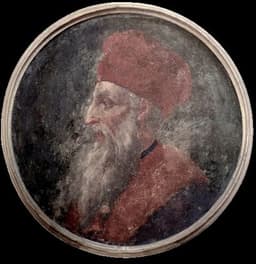
Skanderbeg
General · Medieval
62.7Total
Basic Information
Born
690
1405
Died
765
1468
Era
Medieval
Medieval
Nationality
China
Albania
Occupation
General
General
Civilization
Eastern
Western
Score Comparison
Military (10%)
47.5
80.0
Political (20%)
29.3
61.3
Influence (20%)
44.0
56.7
Legacy (20%)
36.7
52.0
Leadership (15%)
40.4
72.0
Strategy (15%)
60.0
75.0
TOTAL
41.4
62.7
Pugu HuaiEn — Complete Timeline
763 AD
Suppression of An Lushan RebellionWar◆ Major
Pugu Huai'en, a Tang general of Tiele origin, played a key role in suppressing the An Lushan Rebellion. He led Uyghur cavalry in the final campaigns that recaptured Luoyang and Chang'an, restoring Tang rule.
An Lushan RebellionMilitary CampaignTang Restoration
Impact: nationalconstructive
764 AD
Rebellion against TangWar◆ Major
Pugu Huai'en rebelled against the Tang dynasty, citing mistreatment and suspicion. He allied with the Tibetan Empire and led a major invasion of Tang territory, threatening the capital Chang'an.
RebellionTang-Tibet ConflictBetrayal
Impact: nationaldestructive
765 AD
Death in BattleWar◆ Major
Pugu Huai'en died during his rebellion, reportedly from illness or wounds. His death ended the rebellion and removed a major threat to the Tang dynasty.
DeathRebellionTang Dynasty
Impact: nationaltragic
Skanderbeg — Complete Timeline
1444 AD
Battle of TorviollWar
Skanderbeg led a small Albanian force against a larger Ottoman army under Ali Pasha at Torvioll. The Albanian victory marked the beginning of Skanderbeg's rebellion against Ottoman rule and established his reputation as a military commander.
RebellionOttoman EmpireAlbania
Impact: regional
League of LezhëPolitical Action◆ Major
Skanderbeg convened a council of Albanian noblemen at Lezh
AllianceAlbanian UnityVenice
Impact: regionalconstructive
1450 AD
Siege of Krujë (First)War◆ Major
Sultan Murad II personally led a large Ottoman army to besiege the fortress of Kruj
SiegeKrujëMurad II
Impact: regional
1457 AD
Battle of AlbulenaWar◆ Major
Skanderbeg defeated a large Ottoman army commanded by Isak Bey and Hamza Kastrioti at Albulena. The victory crushed an Ottoman attempt to invade Albania and resulted in the capture of Hamza, Skanderbeg's nephew who had defected to the Ottomans.
BattleHamza KastriotiOttoman Defeat
Impact: regional
1466 AD
Siege of Krujë (Second)War
Sultan Mehmed II led a massive Ottoman army to besiege Kruj
SiegeMehmed IIPapal States
Impact: regional
1468 AD
Death at LezhëOther◆ Major
Skanderbeg died of natural causes in Lezh
DeathOttoman ConquestNational Hero
Impact: regionaltragic
This comparison has not been analyzed yet.
One-time AI generation (~1 minute). Scores and timeline are already available below.
Rankings
🥇
SkanderbegLeader
Mil: 80.0Pol: 61.3Inf: 56.7
62.7
🥈
Pugu HuaiEn
Mil: 47.5Pol: 29.3Inf: 44.0
41.4
+21.3 behind
How This Comparison Works
Algorithm
Each figure is scored on 6 dimensions (0—100 scale) based on structured historical data: Military (10%), Political (20%), Influence (20%), Legacy (20%), Leadership (15%), Strategy (15%). The weighted total produces the final ranking.
Data Sources
Scores are computed from structured sub-indicators in the database. Scale factors adjust for era (Ancient ×0.85, Modern ×1.0) and civilization size (Eastern ×1.05, Other ×0.80) to account for differences in population and military scale.
Maximum 3 Figures
Comparisons are limited to 2—3 figures to ensure readability and statistical meaningfulness.
Error Margins
±5 points per dimension — Sub-scores are derived from historical records with inherent uncertainty. Two figures within 5 points on a dimension should be considered roughly equivalent in that area.
Total Score Accuracy
±3 points overall — The weighted combination of 6 dimensions produces a total score with approximately ±3 points of uncertainty. Differences of less than 3 points are not statistically significant— the figures are effectively tied.
Known Limitations
- Historical records are incomplete and uneven across civilizations
- Figures from oral-tradition societies may be underrepresented
- Occupation labels can misclassify multi-role figures
- Scores measure capability and impact, not moral character
- Quantitative scoring is a comparison tool, not absolute truth
Capability Radar
Military (10%) — Battles & Warfare
Battles
55
75
Win Rate
40
85
Expansion
30
40
Political (20%) — Governance & Reform
Reform
10
50
Diplomacy
35
70
Economy
10
40
Influence (20%) — Cultural & Global Reach
Cultural
20
70
Global
10
55
Legacy (20%) — Historical Impact
Historical
30
75
Longevity
20
70
Leadership (15%) — Power & Stability
Tenure
40
65
Stability
15
55
Strategy (15%) — Tactics & Innovation
Strategy
45
75
Tactics
50
80
Reform
10
60
Similar Comparisons
Comments & Discussion
No comments yet. Be the first to share your thoughts!