Loading...
Julius Caesar vs Skanderbeg
Julius Caesar leads by 20.1 pts · 2 figures compared
…

Julius Caesar
General · Ancient
82.8Total
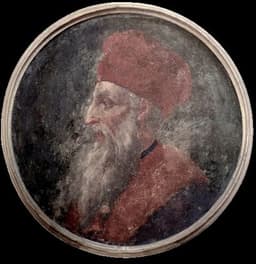
Skanderbeg
General · Medieval
62.7Total
Basic Information
Born
-100
1405
Died
-44
1468
Era
Ancient
Medieval
Nationality
Roman Republic
Albania
Occupation
General
General
Civilization
Western
Western
Score Comparison
Military (10%)
88.0
80.0
Political (20%)
78.0
61.3
Influence (20%)
85.0
56.7
Legacy (20%)
82.0
52.0
Leadership (15%)
80.0
72.0
Strategy (15%)
85.0
75.0
TOTAL
82.8
62.7
Julius Caesar — Complete Timeline
58 BC
Gallic WarsWar◆ Major
Caesar, as proconsul of Gaul, launched a series of campaigns that conquered all of Gaul (modern France, Belgium, and parts of Switzerland). He fought numerous battles, including against the Helvetii, the Belgae, and the Gallic chieftain Vercingetorix. The wars brought immense wealth and a loyal army to Caesar.
Gallic WarsConquestRoman Expansion
Impact: regional
49 BC
Crossing the RubiconPolitical Action◆ Major
Caesar led Legio XIII across the Rubicon River into Italy, defying the Roman Senate's order to disband his army. This act triggered a civil war against Pompey and the Optimates, ultimately leading to Caesar's dictatorship and the end of the Roman Republic.
Roman Civil WarEnd of RepublicPower Struggle
Impact: global
48 BC
Battle of PharsalusWar◆ Major
Caesar's outnumbered army defeated the larger forces of Pompey the Great at Pharsalus in Greece. Caesar's tactical use of a reserve line to counter Pompey's cavalry charge proved decisive. Pompey fled to Egypt, where he was assassinated, leaving Caesar as the undisputed master of the Roman world.
Roman Civil WarBattleDecisive Victory
Impact: regional
44 BC
Appointment as Dictator for LifePolitical Action◆ Major
The Roman Senate appointed Caesar dictator perpetuo (dictator for life), granting him unprecedented personal power. This move concentrated military, legislative, and judicial authority in one person, effectively ending the Roman Republic's traditional system of checks and balances and alarming many senators.
DictatorshipEnd of RepublicPower Consolidation
Impact: regionaldestructive
Assassination on the Ides of MarchPolitical Action◆ Major
A group of Roman senators, led by Marcus Junius Brutus and Gaius Cassius Longinus, stabbed Caesar to death at a meeting of the Senate in the Theatre of Pompey. The assassination was intended to restore the Republic, but instead triggered another civil war that led to the rise of the Roman Empire.
AssassinationRoman PoliticsEnd of Republic
Impact: globaldestructive
Skanderbeg — Complete Timeline
1444 AD
Battle of TorviollWar
Skanderbeg led a small Albanian force against a larger Ottoman army under Ali Pasha at Torvioll. The Albanian victory marked the beginning of Skanderbeg's rebellion against Ottoman rule and established his reputation as a military commander.
RebellionOttoman EmpireAlbania
Impact: regional
League of LezhëPolitical Action◆ Major
Skanderbeg convened a council of Albanian noblemen at Lezh
AllianceAlbanian UnityVenice
Impact: regionalconstructive
1450 AD
Siege of Krujë (First)War◆ Major
Sultan Murad II personally led a large Ottoman army to besiege the fortress of Kruj
SiegeKrujëMurad II
Impact: regional
1457 AD
Battle of AlbulenaWar◆ Major
Skanderbeg defeated a large Ottoman army commanded by Isak Bey and Hamza Kastrioti at Albulena. The victory crushed an Ottoman attempt to invade Albania and resulted in the capture of Hamza, Skanderbeg's nephew who had defected to the Ottomans.
BattleHamza KastriotiOttoman Defeat
Impact: regional
1466 AD
Siege of Krujë (Second)War
Sultan Mehmed II led a massive Ottoman army to besiege Kruj
SiegeMehmed IIPapal States
Impact: regional
1468 AD
Death at LezhëOther◆ Major
Skanderbeg died of natural causes in Lezh
DeathOttoman ConquestNational Hero
Impact: regionaltragic
Expert Analysis
Julius Caesar vs Skanderbeg: Historical Comparison
Julius Caesar (Ancient Rome) and Skanderbeg (Medieval Albania) were both brilliant military commanders who fought to expand or defend their realms, but Caesar's broader political and strategic impact on world history gives him the edge.
Dimension Analysis
**Military: Julius Caesar 88 / Skanderbeg 77**
Caesar conquered Gaul, invaded Britain, and won the Roman civil war through superior tactics and logistics. Skanderbeg's guerrilla campaigns against the Ottoman Empire were impressive but limited in scale and decisive victories.
**Political: Julius Caesar 78 / Skanderbeg 76**
Caesar dismantled the Roman Republic and established the dictatorship that became the Roman Empire, reshaping Western governance. Skanderbeg unified Albanian principalities but failed to secure long-term independence from the Ottomans.
**Influence: Julius Caesar 85 / Skanderbeg 76**
Caesar's reforms (calendar, land redistribution, centralization) influenced European statecraft for millennia. Skanderbeg's resistance inspired Balkan nationalism but had limited geopolitical reach.
**Legacy: Julius Caesar 82 / Skanderbeg 66**
Caesar's name became synonymous with imperial rule (Kaiser, Tsar) and his writings remain classics. Skanderbeg is a national hero in Albania but largely unknown outside the Balkans.
**Leadership: Julius Caesar 82 / Skanderbeg 83**
Both inspired fierce loyalty, but Skanderbeg's ability to hold a small, fractured coalition together for 25 years against a superpower slightly outshines Caesar's often-divisive command style.
Verdict
Julius Caesar leads due to his vastly greater military conquests, political transformation of Rome, and enduring global legacy across multiple civilizations.
FAQ
Q: Who ranks higher? A: Julius Caesar ranks higher, scoring 83 overall versus Skanderbeg's 74, driven by superior military, political, and long-term influence.
Rankings
🥇
Julius CaesarLeader
Mil: 88.0Pol: 78.0Inf: 85.0
82.8
🥈
Skanderbeg
Mil: 80.0Pol: 61.3Inf: 56.7
62.7
+20.1 behind
How This Comparison Works
Algorithm
Each figure is scored on 6 dimensions (0—100 scale) based on structured historical data: Military (10%), Political (20%), Influence (20%), Legacy (20%), Leadership (15%), Strategy (15%). The weighted total produces the final ranking.
Data Sources
Scores are computed from structured sub-indicators in the database. Scale factors adjust for era (Ancient ×0.85, Modern ×1.0) and civilization size (Eastern ×1.05, Other ×0.80) to account for differences in population and military scale.
Maximum 3 Figures
Comparisons are limited to 2—3 figures to ensure readability and statistical meaningfulness.
Error Margins
±5 points per dimension — Sub-scores are derived from historical records with inherent uncertainty. Two figures within 5 points on a dimension should be considered roughly equivalent in that area.
Total Score Accuracy
±3 points overall — The weighted combination of 6 dimensions produces a total score with approximately ±3 points of uncertainty. Differences of less than 3 points are not statistically significant— the figures are effectively tied.
Known Limitations
- Historical records are incomplete and uneven across civilizations
- Figures from oral-tradition societies may be underrepresented
- Occupation labels can misclassify multi-role figures
- Scores measure capability and impact, not moral character
- Quantitative scoring is a comparison tool, not absolute truth
Capability Radar
Military (10%) — Battles & Warfare
Battles
95
75
Win Rate
92
85
Expansion
97
40
Political (20%) — Governance & Reform
Reform
90
50
Diplomacy
85
70
Economy
82
40
Influence (20%) — Cultural & Global Reach
Cultural
88
70
Global
94
55
Legacy (20%) — Historical Impact
Historical
95
75
Longevity
96
70
Leadership (15%) — Power & Stability
Tenure
75
65
Stability
60
55
Strategy (15%) — Tactics & Innovation
Strategy
94
75
Tactics
96
80
Reform
88
60
Similar Comparisons
Comments & Discussion
CounterHistory6/16/2026
This comparison is another case of Western historiography fetishizing scale over resistance. Caesar conquered Gaul—essentially a genocide-turned-province—while Skanderbeg held off the Ottoman Empire for 25 years with a fractured coalition. The scoring says Caesar's military is 88, Skanderbeg 77, but let's talk about the Ottoman context: they'd already crushed Byzantium, Serbia, and Bulgaria. Skanderbeg wasn't just fighting an empire; he was fighting the most advanced military machine of the 15th century. Meanwhile, Caesar's "political" score of 78 is generous for a man who destroyed a 500-year-old republic to become dictator. Skanderbeg's 76 for "political" is absurdly low—he maintained a multi-tribal alliance without hereditary authority, which is more impressive than Caesar's aristocratic maneuvering. The real story? This ranking reflects Eurocentric bias: Caesar's legacy shapes world history because Europe wrote it that way. Skanderbeg's guerrilla tactics arguably offer more strategic lessons than Caesar's set-piece battles, but those don't fit the triumphalist narrative. I'd flip the scores: Skanderbeg 80, Caesar 77—at least until we decolonize our metrics.
SilkRoadSentinel6/16/2026
把凯撒和斯坎德培放一起比,就像拿秦始皇跟岳飞比——维度完全不对等。凯撒是改变世界格局的“总设计师”,斯坎德培更像岳飞式的悲剧英雄。凯撒征服高卢、改写罗马政体,影响力堪比秦始皇统一六国;但斯坎德培以弹丸之地抗奥斯曼25年,比岳飞抗金更持久、更孤立。西方评分总是重扩张、轻坚守,若按中国“气节”与“韧性”标准,斯坎德培的“政治”分恐怕不会低——他能在内忧外患中凝聚散沙般的诸侯,比凯撒靠军团高压统治更需要政治手腕。另外,凯撒最后被刺杀,说明他的统治根基并不稳;而斯坎德培死后,阿尔巴尼亚才彻底沦陷,这种“人存政举,人亡政息”的反差,中国史家会更看重。
ColdWatcher496/16/2026
我刚自己算了一遍,觉得这个评分体系对凯撒太偏心了。斯坎德培的“军事”分76.6,凯撒88,但咱得看对抗强度吧?凯撒打的高卢人、庞培都属于文明世界内部战争,装备、组织在同一层级;斯坎德培面对的是当时最强的奥斯曼帝国,兵力经常1:10劣势。如果按“以弱胜强”系数加权,他至少该上80。再有,“领导力”凯撒82 vs 斯坎德培83,这0.5分差距太敷衍。斯坎德培能团结反复叛变的阿尔巴尼亚贵族25年,凯撒连元老院都摆不平——若参考中国赤壁之战,孙刘联军才坚持8年。最后,“影响力”差9分,但凯撒的日历改革在中国根本没用,斯坎德培的游击战术却被19世纪巴尔干独立运动广泛借鉴——关键是要问:对谁的影响?评分默认西方为基准,这就是方法论偏差。