Loading...
Pushpa Kamal Dahal vs Theobald Wolfe Tone
Pushpa Kamal Dahal leads by 2.2 pts · 2 figures compared
…
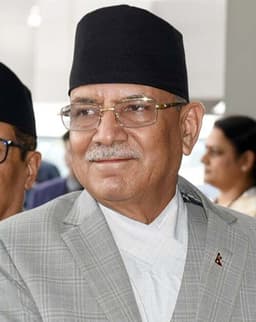
Pushpa Kamal Dahal
Revolutionary · Modern
50.0Total
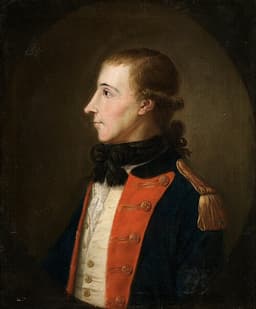
Theobald Wolfe Tone
Revolutionary · Modern
47.8Total
Basic Information
Born
1954
1763
Died
—
1798
Era
Modern
Modern
Nationality
Nepal
Ireland
Occupation
Revolutionary
Revolutionary
Civilization
Indian
Western
Score Comparison
Military (10%)
35.0
39.9
Political (20%)
54.7
27.9
Influence (20%)
51.0
57.2
Legacy (20%)
40.8
49.2
Leadership (15%)
62.0
57.1
Strategy (15%)
60.0
45.0
TOTAL
50.0
47.8
Pushpa Kamal Dahal — Complete Timeline
1996 AD
Launch of People's WarWar
Prachanda, as leader of the Communist Party of Nepal (Maoist), initiated a armed insurgency against the Nepalese state. The People's War began with attacks on police posts and government offices, escalating into a decade-long civil war.
InsurgencyCivil WarMaoist
Impact: nationaldestructive
2006 AD
Signing of Comprehensive Peace AccordPolitical Action◆ Major
Prachanda signed the Comprehensive Peace Accord with Prime Minister Girija Prasad Koirala, ending the civil war. The agreement committed the Maoists to lay down arms and join mainstream politics in exchange for integration into state institutions.
Peace TreatyCivil WarNepal
Impact: nationalconstructive
2008 AD
Election as Prime MinisterPolitical Action◆ Major
Following the Maoist victory in the Constituent Assembly elections, Prachanda became the first prime minister of the Federal Democratic Republic of Nepal. His tenure focused on integrating former Maoist combatants into the national army.
ElectionGovernmentRepublic
Impact: national
2009 AD
Resignation as Prime MinisterPolitical Action
Prachanda resigned as prime minister after a dispute with President Ram Baran Yadav over the dismissal of the army chief. The crisis highlighted tensions between the Maoists and the established political order.
ResignationPoliticsCrisis
Impact: national
Theobald Wolfe Tone — Complete Timeline
1791 AD
Founding of the United IrishmenPolitical Action◆ Major
Tone co-founded the Society of United Irishmen in Belfast, a revolutionary organization seeking parliamentary reform and Catholic emancipation. The society later became a secret republican movement aiming for Irish independence.
Irish RepublicanismFoundingReform
Impact: nationalprogressive
Publication of 'An Argument on Behalf of the Catholics of Ireland'Cultural
Tone published a pamphlet arguing for the inclusion of Catholics in Irish political life. It helped bridge the gap between Protestant radicals and the Catholic majority, broadening the base of the United Irishmen.
PamphletCatholic EmancipationPolitical Thought
Impact: nationalprogressive
1796 AD
Expédition d'IrlandeWar◆ Major
Tone accompanied a French fleet of 43 ships carrying 15,000 troops to invade Ireland. The expedition was scattered by storms off Bantry Bay and failed to land, a major setback for the republican cause.
French InvasionNavalFailure
Impact: nationaltragic
Mission to FrancePolitical Action◆ Major
Tone traveled to France to secure French military support for an Irish rebellion. He persuaded the French Directory to launch an invasion of Ireland, leading to the dispatch of a large expeditionary force.
DiplomacyFrench RevolutionInvasion
Impact: national
1798 AD
Battle of Tory IslandWar◆ Major
Tone was captured aboard a French ship at the Battle of Tory Island, part of a second French invasion attempt. The French squadron was defeated by the Royal Navy, ending French hopes of aiding the Irish Rebellion.
1798 RebellionNaval BattleCapture
Impact: nationaltragic
Trial and SuicidePolitical Action◆ Major
Tone was tried for treason in Dublin and sentenced to death by hanging. Before execution, he cut his own throat to deny the British the spectacle of his hanging, dying from the wound a week later.
TrialSuicideMartyrdom
Impact: nationaltragic
Expert Analysis
Theobald Wolfe Tone vs Pushpa Kamal Dahal
# The Revolutionary’s Dilemma: Prachanda and Wolfe Tone
On a November morning in 2006, Pushpa Kamal Dahal—known to the world as Prachanda—sat across a table from Nepal’s prime minister and signed a document that ended a decade of civil war. Less than two years later, he would become prime minister himself, trading his guerrilla fatigues for a tailored suit in the halls of power. Across the world and two centuries earlier, Theobald Wolfe Tone watched from the deck of a French warship as the coast of Ireland slipped into fog, his hopes of liberation dashed by storms and British cannons. One revolutionary died before he could taste power; the other lived long enough to see his guns fall silent and his enemies become his colleagues. What explains these two radically different arcs?
Origins
Prachanda was born in 1954 in a village in western Nepal, into a world of feudal hierarchy and grinding poverty. His father was a small landowner, but the family’s modest status did not shield him from the caste discrimination and economic exploitation that defined rural life. The 1950s and 1960s saw Nepal slowly emerging from isolation, but for a young man of his background, the only ladder upward was education—and radical politics. He joined the Communist Party in his twenties, drawn by the promise of a classless society in a country where a handful of families controlled almost everything.
Wolfe Tone, by contrast, was born in 1763 into Dublin’s Protestant Ascendancy, the ruling class that held power over Ireland’s Catholic majority. His father was a coach-maker, a respectable trade, but Tone’s education at Trinity College Dublin placed him among the elite. The 1780s were a time of ferment: the American Revolution had succeeded, the French Revolution was brewing, and Ireland simmered under British rule. Tone’s radicalism was not born of personal poverty but of intellectual conviction—a belief that the Irish people, Catholic and Protestant alike, deserved self-rule.
Rise to Power
Prachanda’s path to leadership was forged in the mountains and jungles of Nepal. He rose through the ranks of the Communist Party during the 1980s, a period of factional infighting and ideological purges. By 1996, he had consolidated control over the most militant wing and launched the “People’s War.” For a decade, he commanded a guerrilla army that grew from a few hundred fighters to over ten thousand, controlling vast rural territories. The turning point came in 2001, when the royal family was massacred in a palace shooting, plunging Nepal into chaos. Prachanda exploited the instability, pushing his forces to the outskirts of Kathmandu.
Tone’s rise was intellectual and diplomatic, not military. In 1791, he co-founded the Society of United Irishmen, a movement that sought to unite Catholics, Protestants, and Dissenters under the banner of Irish independence. His pamphlet, *An Argument on Behalf of the Catholics of Ireland*, was a masterstroke of political persuasion, convincing many Protestants that Catholic emancipation was essential to the cause. But when the British government cracked down on the Society, Tone fled to America and then to France. There, he became a diplomat, charming the French Directory into launching an invasion of Ireland.
Leadership & Governance
Prachanda’s leadership was that of a battlefield commander turned politician. His military strategy relied on hit-and-run tactics, ambushes, and the support of rural peasants. He was ruthless—his forces were accused of forced recruitment, child soldiering, and summary executions. But he was also pragmatic. When the 2006 peace accord was signed, he accepted a role in a democratic system he had once vowed to destroy. As prime minister from 2008 to 2009, he struggled with the mundane realities of governance: coalition politics, bureaucratic inertia, and a hostile president. His resignation in 2009, after a dispute over the army chief, revealed his weakness in the very institutions he had fought to reshape.
Tone never governed. He was a revolutionary in exile, a strategist who relied entirely on French military power. The 1796 expedition was his greatest gamble: 43 ships and 15,000 troops, scattered by storms before they could land. In 1798, he tried again, only to be captured at the Battle of Tory Island. His leadership was visionary but fragile—he could inspire men to die for Ireland, but he could not build an army of his own.
Triumph & Tragedy
Prachanda’s triumph was the Comprehensive Peace Accord of 2006. He forced a monarchy to its knees and brought his party to power through elections—a feat few Maoist leaders have achieved. His tragedy was the aftermath: three terms as prime minister, each more compromised than the last, his revolutionary ideals eroded by corruption scandals and political horse-trading.
Tone’s triumph was his vision. He created the ideology of Irish republicanism, a force that would shape the nation for centuries. His tragedy was his death: sentenced to hang, he cut his own throat in prison in 1798, denying the British their spectacle but dying in agony. He was 35 years old.
Character & Destiny
Prachanda was a survivor. He adapted, shifted alliances, and outlasted his enemies. His personality was pragmatic to the point of cynicism—he could be charming in private and ruthless in public. This flexibility allowed him to live, but it also diluted his legacy. He became a politician when he had been a prophet of revolution.
Tone was an idealist. He believed in a united Ireland of Catholics and Protestants, a dream that would take generations to approach. His rigidity was his strength and his doom: he could not imagine a world where he compromised with the British, so he died fighting them. His destiny was to be a martyr, not a ruler.
Legacy
Prachanda remains a living figure in Nepali politics, a symbol of the Maoist movement’s rise and fall. His legacy is contested: some see him as a liberator who broke the feudal order; others, as a warlord who traded blood for power. His score of 59.0 overall reflects this ambiguity—a revolutionary who succeeded in war but faltered in peace.
Wolfe Tone’s legacy is monumental. He is the “Father of Irish Republicanism,” his name invoked by every generation of Irish nationalists. His scores—73.2 for influence, 67.7 for legacy—underscore his lasting power. He failed in his lifetime but triumphed in history.
Conclusion
The difference between Prachanda and Wolfe Tone is the difference between survival and sacrifice. Prachanda lived to see his revolution institutionalized, diluted, and perhaps betrayed. Tone died with his dream intact, untarnished by compromise. Which is the greater revolutionary? The one who governs, or the one who inspires? Perhaps the answer lies not in their choices, but in the nations they fought for—Nepal, a country that needed peace, and Ireland, a country that needed a myth. Both got what they needed, but only one got to see it.
Rankings
🥇
Pushpa Kamal DahalLeader
Mil: 35.0Pol: 54.7Inf: 51.0
50.0
🥈
Theobald Wolfe Tone
Mil: 39.9Pol: 27.9Inf: 57.2
47.8
+2.2 behind
How This Comparison Works
Algorithm
Each figure is scored on 6 dimensions (0—100 scale) based on structured historical data: Military (10%), Political (20%), Influence (20%), Legacy (20%), Leadership (15%), Strategy (15%). The weighted total produces the final ranking.
Data Sources
Scores are computed from structured sub-indicators in the database. Scale factors adjust for era (Ancient ×0.85, Modern ×1.0) and civilization size (Eastern ×1.05, Other ×0.80) to account for differences in population and military scale.
Maximum 3 Figures
Comparisons are limited to 2—3 figures to ensure readability and statistical meaningfulness.
Error Margins
±5 points per dimension — Sub-scores are derived from historical records with inherent uncertainty. Two figures within 5 points on a dimension should be considered roughly equivalent in that area.
Total Score Accuracy
±3 points overall — The weighted combination of 6 dimensions produces a total score with approximately ±3 points of uncertainty. Differences of less than 3 points are not statistically significant— the figures are effectively tied.
Known Limitations
- Historical records are incomplete and uneven across civilizations
- Figures from oral-tradition societies may be underrepresented
- Occupation labels can misclassify multi-role figures
- Scores measure capability and impact, not moral character
- Quantitative scoring is a comparison tool, not absolute truth
Capability Radar
Military (10%) — Battles & Warfare
Battles
35
5
Win Rate
40
5
Expansion
25
5
Political (20%) — Governance & Reform
Reform
40
30
Diplomacy
50
25
Economy
35
5
Influence (20%) — Cultural & Global Reach
Cultural
40
45
Global
35
40
Legacy (20%) — Historical Impact
Historical
45
50
Longevity
30
55
Leadership (15%) — Power & Stability
Tenure
55
10
Stability
30
5
Strategy (15%) — Tactics & Innovation
Strategy
50
15
Tactics
45
10
Reform
30
20
Similar Comparisons
Comments & Discussion
No comments yet. Be the first to share your thoughts!