Loading...
Quett Masire vs Samia Suluhu Hassan
Quett Masire leads by 7.4 pts · 2 figures compared
…
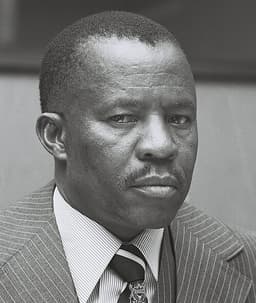
Quett Masire
Politician · Modern
61.8Total

Samia Suluhu Hassan
Politician · Modern
54.4Total
Basic Information
Born
1925
1960
Died
—
—
Era
Modern
Modern
Nationality
Botswana
Tanzania
Occupation
Politician
Politician
Civilization
Other
Other
Score Comparison
Military (10%)
38.0
40.4
Political (20%)
85.0
53.8
Influence (20%)
60.0
61.0
Legacy (20%)
54.0
49.2
Leadership (15%)
83.3
72.0
Strategy (15%)
42.3
39.0
TOTAL
61.8
54.4
Quett Masire — Complete Timeline
1966 AD
Elected Vice President of BotswanaPolitical Action◆ Major
Masire was elected Vice President of Botswana upon independence in 1966, serving under President Seretse Khama. He was a key architect of Botswana's economic policies.
Vice PresidencyEconomic Planning
Impact: nationalconstructive
1980 AD
Led Botswana through diamond boomReform◆ Major
Masire oversaw the expansion of diamond mining through Debswana, a joint venture with De Beers. Revenue from diamonds funded infrastructure, education, and healthcare, transforming Botswana into a middle-income country.
Economic DevelopmentDiamond Revenue
Impact: nationalconstructive
Became President of BotswanaPolitical Action
Masire became President of Botswana on July 13, 1980, following the death of Seretse Khama. He continued Khama's policies of democracy, fiscal discipline, and diamond-led development.
PresidencyContinuity
Impact: nationalconstructive
1984 AD
Re-elected President (1984, 1989, 1994)Political Action◆ Major
Masire was re-elected in 1984, 1989, and 1994, each time with large majorities. His Botswana Democratic Party maintained power through free and fair elections, reinforcing Botswana's democratic reputation.
Re-electionDemocratic Stability
Impact: nationalconstructive
1998 AD
Retired as PresidentPolitical Action◆ Major
Masire retired as President in March 1998, handing power to his Vice President, Festus Mogae. His retirement was voluntary and peaceful, setting a precedent for democratic transitions in Africa.
RetirementDemocratic Transition
Impact: nationalconstructive
Samia Suluhu Hassan — Complete Timeline
2021 AD
Became First Female President of TanzaniaPolitical Action
Following John Magufuli's death, Samia Suluhu Hassan was sworn in as president, becoming Tanzania's first female head of state. She assumed office amid constitutional continuity and pledged to unite the country.
PresidencyFirst FemaleSuccession
Impact: nationalprogressive
Reversed COVID-19 Denial PolicyPolitical Action◆ Major
President Hassan reversed Magufuli's COVID-19 denial approach, forming a committee to review the pandemic response. She encouraged mask-wearing and vaccination, and Tanzania received its first COVAX vaccine shipments.
COVID-19Policy ReversalPublic Health
Impact: nationalconstructive
Reopened Opposition MediaPolitical Action◆ Major
Hassan allowed the reopening of opposition-aligned newspapers and TV stations that had been banned under Magufuli. This move signaled a shift toward greater press freedom and political openness.
Press FreedomDemocracyReform
Impact: nationalprogressive
2023 AD
Hosted Talks on Democratic Transition in NigerPolitical Action
Hassan mediated negotiations between Niger's junta and ECOWAS after the 2023 coup. She facilitated dialogue aimed at restoring civilian rule, enhancing her regional diplomatic profile.
DiplomacyNigerECOWAS
Impact: regionalconstructive
Expert Analysis
Origins
Quett Masire was born on July 23, 1925, in Kanye, Botswana (then Bechuanaland Protectorate). He came from a modest farming family and trained as a teacher at Tiger Kloof College in South Africa. After returning, he founded a secondary school and became involved in politics through the Botswana Democratic Party (BDP). Samia Suluhu Hassan was born on January 27, 1960, in Zanzibar, Tanzania. She completed secondary education and worked as a civil servant before studying public administration at the University of Dar es Salaam. Her early career included roles in the Zanzibar government, rising through the ranks of the Chama Cha Mapinduzi (CCM) party. Both leaders emerged from humble beginnings, but Masire's background as an educator and journalist shaped his methodical approach, while Hassan's experience in bureaucracy and local governance developed her pragmatic style.
Rise to Power
Masire's rise was gradual and institutional. He was elected Vice President of Botswana upon independence in 1966, serving under Seretse Khama. He played a key role in negotiating diamond revenue agreements with De Beers, which became the bedrock of Botswana's economy. When Khama died in 1980, Masire succeeded him as president, continuing Khama's democratic and fiscal policies. He was re-elected in 1984, 1989, and 1994 with large majorities. Hassan's ascent was more abrupt. She served as Vice President under John Magufuli from 2015, a position largely ceremonial. Upon Magufuli's death in March 2021, she became president unexpectedly, inheriting a polarized nation and a COVID-19 denial policy. Her rise was marked by a need to quickly distance herself from Magufuli's authoritarian legacy while maintaining party unity.
Leadership & Governance
Masire's leadership was characterized by consensus-building and fiscal discipline. He maintained Botswana's democratic institutions, with free and fair elections and a free press. His government invested diamond revenues into infrastructure, education, and healthcare, achieving sustained economic growth. For example, he established the University of Botswana and expanded primary education. Hassan's style is more consultative but also decisive in reversing Magufuli's policies. She formed a COVID-19 committee, encouraged mask-wearing and vaccination, and reopened opposition media outlets. She also mediated regional conflicts, such as talks between Niger's junta and ECOWAS. However, she has been cautious in tackling corruption and has not pursued major political reforms. Masire scores 85.0 in political leadership, reflecting his long-term democratic stewardship, while Hassan scores 72.0, indicating her effective but limited crisis management.
Triumph & Tragedy
Masire's greatest triumph was overseeing Botswana's transformation from one of the poorest countries in Africa to a middle-income nation. His management of diamond wealth avoided the resource curse, with per capita income rising from $70 in 1966 to $3,300 by 1997. His tragedy was the HIV/AIDS epidemic, which by the late 1990s infected nearly a third of adults. His government's early response was slow, and it took international pressure to implement antiretroviral programs. Hassan's triumph is restoring Tanzania's international reputation by reversing COVID-19 denial and reopening political space. She also increased female representation in government. Her tragedy is the ongoing economic stagnation and high unemployment, partly inherited from Magufuli's policies. She has struggled to stimulate growth, with GDP growth averaging 5% under her tenure, insufficient to absorb a growing youth population.
Character & Destiny
Masire was known for his modesty, integrity, and meticulous planning. He was a technocrat who believed in incremental progress. His destiny was to be the steward of Botswana's democracy during a period of economic boom. He retired voluntarily in 1998, setting a precedent for peaceful transfers of power. Hassan is pragmatic and resilient, but also cautious. She has shown willingness to break with Magufuli's legacy, yet she operates within the constraints of CCM's entrenched interests. Her destiny is to navigate Tanzania through a delicate transition, balancing reform with stability. Historical assessments view Masire as one of Africa's most effective leaders, while Hassan is seen as a promising but untested reformer.
Legacy
Masire's legacy is Botswana's stable democracy and prudent economic management. He institutionalized fiscal discipline, with the country maintaining a budget surplus for decades. His policies created a model for resource-rich nations. Today, Botswana is ranked as one of the least corrupt countries in Africa. Hassan's legacy is still forming, but she has already re-established democratic norms in Tanzania. By reopening media and reversing COVID-19 denial, she has improved governance. However, her long-term impact will depend on whether she can sustain reforms and address economic challenges. Masire's legacy scores 54.0 for its enduring institutional impact, while Hassan's legacy scores 49.2, reflecting her shorter tenure and unfinished agenda.
Conclusion
Quett Masire had a greater impact than Samia Suluhu Hassan. His total score of 61.8 exceeds Hassan's 54.4, driven by his superior political leadership (85.0 vs 53.8) and strategic governance (42.3 vs 39.0). Masire's 27-year leadership transformed Botswana from a poor protectorate into a democratic success story, with lasting institutions and economic growth. Hassan's tenure is too brief to match this scale; while she has admirably reversed authoritarian policies, she has not yet achieved structural transformation. Masire's legacy is more concrete and enduring, making him the more significant figure in African history.
Rankings
🥇
Quett MasireLeader
Mil: 38.0Pol: 85.0Inf: 60.0
61.8
🥈
Samia Suluhu Hassan
Mil: 40.4Pol: 53.8Inf: 61.0
54.4
+7.4 behind
How This Comparison Works
Algorithm
Each figure is scored on 6 dimensions (0—100 scale) based on structured historical data: Military (10%), Political (20%), Influence (20%), Legacy (20%), Leadership (15%), Strategy (15%). The weighted total produces the final ranking.
Data Sources
Scores are computed from structured sub-indicators in the database. Scale factors adjust for era (Ancient ×0.85, Modern ×1.0) and civilization size (Eastern ×1.05, Other ×0.80) to account for differences in population and military scale.
Maximum 3 Figures
Comparisons are limited to 2—3 figures to ensure readability and statistical meaningfulness.
Error Margins
±5 points per dimension — Sub-scores are derived from historical records with inherent uncertainty. Two figures within 5 points on a dimension should be considered roughly equivalent in that area.
Total Score Accuracy
±3 points overall — The weighted combination of 6 dimensions produces a total score with approximately ±3 points of uncertainty. Differences of less than 3 points are not statistically significant— the figures are effectively tied.
Known Limitations
- Historical records are incomplete and uneven across civilizations
- Figures from oral-tradition societies may be underrepresented
- Occupation labels can misclassify multi-role figures
- Scores measure capability and impact, not moral character
- Quantitative scoring is a comparison tool, not absolute truth
Capability Radar
Military (10%) — Battles & Warfare
Battles
20
26
Win Rate
26
26
Expansion
27
31
Political (20%) — Governance & Reform
Reform
70
55
Diplomacy
80
65
Economy
85
55
Influence (20%) — Cultural & Global Reach
Cultural
40
50
Global
50
55
Legacy (20%) — Historical Impact
Historical
55
55
Longevity
60
40
Leadership (15%) — Power & Stability
Tenure
75
60
Stability
90
60
Strategy (15%) — Tactics & Innovation
Strategy
32
31
Tactics
31
33
Reform
38
40
Similar Comparisons
Comments & Discussion
No comments yet. Be the first to share your thoughts!