Loading...
Radovan Karadzic vs Ralph Gonsalves
Ralph Gonsalves leads by 11.2 pts · 2 figures compared
…
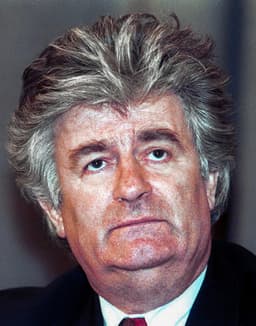
Radovan Karadzic
Politician · Modern
40.6Total

Ralph Gonsalves
Politician · Modern
51.8Total
Basic Information
Born
1945
1946
Died
—
—
Era
Modern
Modern
Nationality
Bosnia
Saint Vincent
Occupation
Politician
Politician
Civilization
Western
Other
Score Comparison
Military (10%)
14.9
41.3
Political (20%)
25.0
68.0
Influence (20%)
50.2
50.2
Legacy (20%)
38.3
40.0
Leadership (15%)
51.9
72.0
Strategy (15%)
54.8
41.1
TOTAL
40.6
51.8
Radovan Karadzic — Complete Timeline
1990 AD
Founding of the Serb Democratic Party (SDS)Political Action◆ Major
Karadžić co-founded the Serb Democratic Party (SDS) in Bosnia and Herzegovina in 1990. The party advocated for the unification of Bosnian Serb territories with Serbia and played a key role in the Bosnian War, promoting ethnic separation and conflict.
Political PartyNationalismBosnian War
Impact: regionaldestructive
1992 AD
Siege of SarajevoWar◆ Major
As leader of the Bosnian Serbs, Karad
SiegeWar CrimesSarajevo
Impact: regionaldestructive
1995 AD
Srebrenica GenocideWar◆ Major
Karadžić was found responsible for the Srebrenica genocide in July 1995, where Bosnian Serb forces killed over 8,000 Bosniak men and boys. The massacre was the worst atrocity in Europe since World War II and led to his indictment for genocide.
GenocideSrebrenicaWar Crimes
Impact: globaldestructive
2008 AD
Arrest and Extradition to The HaguePolitical Action◆ Major
Karadžić was arrested in Belgrade on July 21, 2008, after 13 years as a fugitive. He had been living under the alias Dragan Dabić, working as a New Age healer. He was extradited to the ICTY in The Hague to face trial for war crimes.
ArrestFugitiveICTY
Impact: global
2016 AD
Conviction for Genocide by ICTYPolitical Action◆ Major
Radovan Karad
War CrimesGenocideICTY
Impact: globaldestructive
Ralph Gonsalves — Complete Timeline
2001 AD
Elected Prime Minister of Saint Vincent and the GrenadinesPolitical Action◆ Major
Ralph Gonsalves led the Unity Labour Party to victory in the 2001 general election, becoming prime minister. His leftist policies included social programs and regional integration efforts.
ElectionSaint VincentULP
Impact: nationalconstructive
2002 AD
Implemented Free Education and HealthcareReform◆ Major
Gonsalves introduced free primary and secondary education, as well as subsidized healthcare. These policies expanded access to social services for low-income Vincentians.
Social PolicyEducationHealthcare
Impact: nationalprogressive
2005 AD
Advocated for Regional IntegrationPolitical Action◆ Major
Gonsalves pushed for deeper Caribbean integration, supporting the Caribbean Single Market and Economy (CSME). He argued for regional cooperation on trade and climate change.
CaribbeanIntegrationCSME
Impact: regionalconstructive
2010 AD
Faced Controversy Over Airport ProjectPolitical Action◆ Major
Gonsalves oversaw the construction of the Argyle International Airport, funded partly by Venezuela. Critics raised concerns about debt and corruption, but the airport opened in 2017, boosting tourism.
InfrastructureAirportVenezuela
Impact: national
2015 AD
Won Fourth Consecutive Term in 2015Political Action◆ Major
Gonsalves won a fourth consecutive term in the 2015 general election, a rare feat in Caribbean politics. His continued tenure made him one of the longest-serving leaders in the region.
ElectionSaint VincentULP
Impact: nationalconstructive
Expert Analysis
Origins
Radovan Karadzic was born on June 19, 1945, in Petnjica, Montenegro, into a poor Serb family. His father was a farmer, and Karadzic studied medicine at the University of Sarajevo, becoming a psychiatrist. He later co-founded the Serb Democratic Party (SDS) in 1990, capitalizing on rising nationalism. Ralph Gonsalves was born on August 8, 1946, in Colonarie, Saint Vincent and the Grenadines, into a working-class family. He studied law at the University of the West Indies and later at the University of Oxford, becoming a lawyer and academic. He entered politics in the 1970s, joining the leftist Unity Labour Party (ULP).
Rise to Power
Karadzic rose to prominence during the breakup of Yugoslavia. In 1990, he co-founded the SDS, which advocated for Bosnian Serb interests. By 1992, he declared the Serbian Republic of Bosnia and Herzegovina, becoming its president. His leadership was marked by the siege of Sarajevo (April 1992-February 1996) and the Srebrenica genocide (July 1995), where over 8,000 Bosniak men and boys were killed. Gonsalves rose through the ranks of the ULP, becoming its leader in 1998. In 2001, he led the party to victory, becoming prime minister. His leftist policies, including free education and healthcare, solidified his support. He won four consecutive terms, a rare feat in Caribbean politics, with his 2015 victory marking his longest tenure.
Leadership & Governance
Karadzic's leadership was authoritarian and ethnonationalist. He directed military campaigns against Bosniak and Croat civilians, ordering the siege of Sarajevo and orchestrating the Srebrenica genocide. His governance relied on fear and ethnic cleansing, with a score of 51.9 in leadership and 54.8 in strategy. In contrast, Gonsalves governed with a socialist agenda, expanding social services. He introduced free primary and secondary education and subsidized healthcare, scoring 72.0 in leadership. However, his strategy score of 41.1 reflects criticism over the Argyle International Airport project, which raised debt concerns. While Karadzic's leadership destroyed lives, Gonsalves improved living standards for many.
Triumph & Tragedy
Karadzic's greatest triumph was briefly uniting Bosnian Serb territories under his control. However, his tragedies far outweigh any success: the siege of Sarajevo caused over 10,000 deaths, and the Srebrenica genocide led to his conviction for genocide in 2016. He spent 13 years as a fugitive before arrest. Gonsalves's triumph includes winning four consecutive elections and implementing popular social programs. His tragedy involves controversies over the airport project, with allegations of corruption and increased national debt. While Gonsalves's failures are policy-related, Karadzic's are criminal.
Character & Destiny
Karadzic was charismatic but ruthless, using nationalist rhetoric to justify atrocities. His character led to his conviction and 40-year sentence, with a legacy score of 38.3. Gonsalves is a pragmatic leftist, known as "Comrade Ralph," who prioritized social welfare. His character enabled long tenure, but his destiny is tied to a small island nation's challenges. Karadzic scored 25.0 in politics, while Gonsalves scored 68.0.
Legacy
Karadzic's legacy is one of genocide and war crimes; he is a symbol of ethnic hatred. His actions contributed to the breakup of Bosnia and the deaths of tens of thousands. Gonsalves's legacy includes expanded social services and regional integration advocacy. He pushed for the Caribbean Single Market and Economy (CSME). However, his legacy is limited to a small nation. Karadzic's influence score of 50.2 equals Gonsalves's, but negatively.
Conclusion
Radovan Karadzic and Ralph Gonsalves represent opposite ends of political impact. Karadzic's total score of 40.6 reflects his destructive leadership, while Gonsalves's 51.8 indicates more positive governance. Despite Gonsalves's higher score, Karadzic's impact on global history is greater due to the scale of his crimes and their legal precedents. However, in terms of ethical leadership and human welfare, Gonsalves clearly had a more beneficial impact. Taking a stance: Ralph Gonsalves is the greater leader because he improved lives, whereas Karadzic destroyed them.
Rankings
🥇
Ralph GonsalvesLeader
Mil: 41.3Pol: 68.0Inf: 50.2
51.8
🥈
Radovan Karadzic
Mil: 14.9Pol: 25.0Inf: 50.2
40.6
+11.2 behind
How This Comparison Works
Algorithm
Each figure is scored on 6 dimensions (0—100 scale) based on structured historical data: Military (10%), Political (20%), Influence (20%), Legacy (20%), Leadership (15%), Strategy (15%). The weighted total produces the final ranking.
Data Sources
Scores are computed from structured sub-indicators in the database. Scale factors adjust for era (Ancient ×0.85, Modern ×1.0) and civilization size (Eastern ×1.05, Other ×0.80) to account for differences in population and military scale.
Maximum 3 Figures
Comparisons are limited to 2—3 figures to ensure readability and statistical meaningfulness.
Error Margins
±5 points per dimension — Sub-scores are derived from historical records with inherent uncertainty. Two figures within 5 points on a dimension should be considered roughly equivalent in that area.
Total Score Accuracy
±3 points overall — The weighted combination of 6 dimensions produces a total score with approximately ±3 points of uncertainty. Differences of less than 3 points are not statistically significant— the figures are effectively tied.
Known Limitations
- Historical records are incomplete and uneven across civilizations
- Figures from oral-tradition societies may be underrepresented
- Occupation labels can misclassify multi-role figures
- Scores measure capability and impact, not moral character
- Quantitative scoring is a comparison tool, not absolute truth
Capability Radar
Military (10%) — Battles & Warfare
Battles
20
21
Win Rate
15
22
Expansion
15
30
Political (20%) — Governance & Reform
Reform
10
55
Diplomacy
20
55
Economy
10
50
Influence (20%) — Cultural & Global Reach
Cultural
15
20
Global
25
20
Legacy (20%) — Historical Impact
Historical
30
20
Longevity
10
20
Leadership (15%) — Power & Stability
Tenure
40
60
Stability
5
50
Strategy (15%) — Tactics & Innovation
Strategy
20
31
Tactics
25
36
Reform
10
36
Similar Comparisons
Comments & Discussion
No comments yet. Be the first to share your thoughts!