Loading...
Lee Hsien Loong vs Radovan Karadzic
Lee Hsien Loong leads by 14.8 pts · 2 figures compared
…
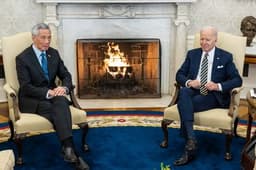
Lee Hsien Loong
Politician · Modern
55.4Total
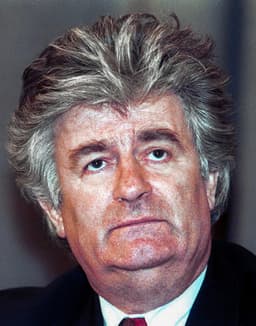
Radovan Karadzic
Politician · Modern
40.6Total
Basic Information
Born
1952
1945
Died
—
—
Era
Modern
Modern
Nationality
Singapore
Bosnia
Occupation
Politician
Politician
Civilization
Eastern
Western
Score Comparison
Military (10%)
14.8
14.9
Political (20%)
75.0
25.0
Influence (20%)
55.0
50.2
Legacy (20%)
58.0
38.3
Leadership (15%)
72.0
51.9
Strategy (15%)
36.4
54.8
TOTAL
55.4
40.6
Lee Hsien Loong — Complete Timeline
2004 AD
Became Prime Minister of SingaporePolitical Action◆ Major
Lee Hsien Loong succeeded Goh Chok Tong as Prime Minister of Singapore. As the eldest son of founding leader Lee Kuan Yew, his appointment continued the People's Action Party's dominance and was seen as a continuation of the country's development model.
LeadershipSingaporeTransition
Impact: national
2015 AD
Introduced the 'SG50' CelebrationsCultural
Lee's government organized the SG50 celebrations to mark Singapore's 50th anniversary of independence. The year-long events fostered national pride and unity, highlighting the country's economic success and social harmony.
CelebrationSingaporeNational Identity
Impact: nationalconstructive
2020 AD
Navigated COVID-19 PandemicPolitical Action◆ Major
Lee's government implemented a series of measures to combat the COVID-19 pandemic, including circuit breaker lockdowns, contact tracing, and a massive vaccination drive. Singapore's response was praised for its effectiveness, though migrant worker dormitories saw major outbreaks.
PandemicSingaporePublic Health
Impact: nationalconstructive
2023 AD
Announced Intention to Step DownPolitical Action◆ Major
Lee Hsien Loong announced his intention to step down as Prime Minister by 2024, paving the way for Deputy Prime Minister Lawrence Wong to succeed him. The announcement marked a planned leadership transition in Singapore's long-ruling People's Action Party.
LeadershipSingaporeTransition
Impact: national
Radovan Karadzic — Complete Timeline
1990 AD
Founding of the Serb Democratic Party (SDS)Political Action◆ Major
Karadžić co-founded the Serb Democratic Party (SDS) in Bosnia and Herzegovina in 1990. The party advocated for the unification of Bosnian Serb territories with Serbia and played a key role in the Bosnian War, promoting ethnic separation and conflict.
Political PartyNationalismBosnian War
Impact: regionaldestructive
1992 AD
Siege of SarajevoWar◆ Major
As leader of the Bosnian Serbs, Karad
SiegeWar CrimesSarajevo
Impact: regionaldestructive
1995 AD
Srebrenica GenocideWar◆ Major
Karadžić was found responsible for the Srebrenica genocide in July 1995, where Bosnian Serb forces killed over 8,000 Bosniak men and boys. The massacre was the worst atrocity in Europe since World War II and led to his indictment for genocide.
GenocideSrebrenicaWar Crimes
Impact: globaldestructive
2008 AD
Arrest and Extradition to The HaguePolitical Action◆ Major
Karadžić was arrested in Belgrade on July 21, 2008, after 13 years as a fugitive. He had been living under the alias Dragan Dabić, working as a New Age healer. He was extradited to the ICTY in The Hague to face trial for war crimes.
ArrestFugitiveICTY
Impact: global
2016 AD
Conviction for Genocide by ICTYPolitical Action◆ Major
Radovan Karad
War CrimesGenocideICTY
Impact: globaldestructive
Expert Analysis
Origins
Lee Hsien Loong was born on February 10, 1952, in Singapore, the eldest son of Lee Kuan Yew, the nation's founding prime minister. He excelled academically, attending the elite Catholic High School and later the National Junior College. He earned a scholarship to the University of Cambridge, where he graduated with a First Class Honours in Mathematics in 1974. He also holds a Master's in Public Administration from Harvard Kennedy School. His early exposure to politics through his father shaped his worldview.
Radovan Karadzic was born on June 19, 1945, in Petnjica, Montenegro, then part of Yugoslavia. His family moved to Sarajevo after World War II. He studied medicine at the University of Sarajevo, specializing in psychiatry. He worked as a psychiatrist in Sarajevo before entering politics. His early life was marked by the tensions of a multi-ethnic Yugoslavia, which influenced his nationalist views.
Rise to Power
Lee Hsien Loong joined the Singapore Armed Forces in 1971, rising to Brigadier-General by 1984. He resigned from the military to enter politics, winning a seat in Parliament in 1984. He held various ministerial portfolios, including Trade and Industry, Finance, and Deputy Prime Minister. On August 12, 2004, he succeeded Goh Chok Tong as Prime Minister, continuing the People's Action Party's dominance.
Karadzic co-founded the Serb Democratic Party (SDS) in 1990, advocating for Bosnian Serb interests. Following Bosnia's independence referendum in 1992, he declared the creation of the Republika Srpska and became its president. He led the Bosnian Serb war effort during the Bosnian War (1992-1995), with key turning points including the siege of Sarajevo and the Srebrenica genocide.
Leadership & Governance
Lee Hsien Loong's leadership style is technocratic and pragmatic, emphasizing economic growth, social stability, and meritocracy. He oversaw policies like the "SG50" celebrations in 2015 to foster national identity and introduced measures to address income inequality, such as the Progressive Wage Model. His governance approach scores 72.0 in leadership and 75.0 in political acumen. He navigated the COVID-19 pandemic with a 57.0 in strategy, implementing circuit breakers and contact tracing.
Karadzic's leadership was authoritarian and nationalist, aimed at creating an ethnically homogeneous Serb state. He directed military operations, including the siege of Sarajevo (1992-1996) and the Srebrenica genocide (1995). His governance score is 51.9, with a strategy score of 54.8, reflecting his tactical use of ethnic cleansing. He was ultimately convicted of genocide, crimes against humanity, and war crimes.
Triumph & Tragedy
Lee Hsien Loong's greatest success is maintaining Singapore's economic prosperity and stability, with GDP per capita growing from $27,000 in 2004 to over $65,000 in 2023. He also successfully managed the COVID-19 pandemic, with one of the lowest mortality rates globally. His failures include a controversial 2017 dispute with his siblings over their father's house, which damaged his personal reputation. He also faced criticism for the city-state's strict laws and limited political freedoms.
Karadzic's success, from his perspective, was the establishment of the Republika Srpska, which remains an entity within Bosnia. However, his career is defined by tragedy: the Srebrenica genocide resulted in over 8,000 deaths, and the siege of Sarajevo killed over 10,000. He was convicted by the ICTY in 2016 and sentenced to 40 years in prison. His legacy is one of destruction and ethnic division.
Character & Destiny
Lee Hsien Loong is known for his analytical, reserved, and disciplined character. He is a skilled mathematician and chess player, reflecting his strategic thinking. His destiny was shaped by his father's legacy and his own competence, leading to a smooth political succession. He announced his intention to step down by 2024, passing power to Lawrence Wong, ensuring continuity.
Karadzic is characterized by his charismatic yet ruthless nationalism. He was a poet and psychiatrist who turned to ethnic extremism. His destiny was sealed by his role in war crimes; he spent 13 years as a fugitive before arrest in 2008. His trial highlighted the consequences of nationalist ideology.
Legacy
Lee Hsien Loong's legacy is one of continued economic success and social stability in Singapore. He scored 58.0 in legacy, with his policies on education, healthcare, and housing enduring. He strengthened Singapore's international standing, particularly in ASEAN. However, his family controversies may tarnish his personal reputation.
Karadzic's legacy is overwhelmingly negative, with a legacy score of 38.3. He is remembered as a war criminal responsible for genocide. His actions contributed to the fragmentation of Bosnia and the lasting ethnic tensions. He serves as a cautionary figure in international law.
Conclusion
Lee Hsien Loong had a greater positive impact on the world. His total score of 55.4 compared to Karadzic's 40.6 reflects his effective governance and constructive legacy. While Karadzic's influence on the Balkans was significant, it was destructive and criminal. Lee's technocratic leadership advanced a nation, whereas Karadzic's nationalism led to ruin. The data supports Lee as the more successful and ethical leader.
Rankings
🥇
Lee Hsien LoongLeader
Mil: 14.8Pol: 75.0Inf: 55.0
55.4
🥈
Radovan Karadzic
Mil: 14.9Pol: 25.0Inf: 50.2
40.6
+14.8 behind
How This Comparison Works
Algorithm
Each figure is scored on 6 dimensions (0—100 scale) based on structured historical data: Military (10%), Political (20%), Influence (20%), Legacy (20%), Leadership (15%), Strategy (15%). The weighted total produces the final ranking.
Data Sources
Scores are computed from structured sub-indicators in the database. Scale factors adjust for era (Ancient ×0.85, Modern ×1.0) and civilization size (Eastern ×1.05, Other ×0.80) to account for differences in population and military scale.
Maximum 3 Figures
Comparisons are limited to 2—3 figures to ensure readability and statistical meaningfulness.
Error Margins
±5 points per dimension — Sub-scores are derived from historical records with inherent uncertainty. Two figures within 5 points on a dimension should be considered roughly equivalent in that area.
Total Score Accuracy
±3 points overall — The weighted combination of 6 dimensions produces a total score with approximately ±3 points of uncertainty. Differences of less than 3 points are not statistically significant— the figures are effectively tied.
Known Limitations
- Historical records are incomplete and uneven across civilizations
- Figures from oral-tradition societies may be underrepresented
- Occupation labels can misclassify multi-role figures
- Scores measure capability and impact, not moral character
- Quantitative scoring is a comparison tool, not absolute truth
Capability Radar
Military (10%) — Battles & Warfare
Battles
12
20
Win Rate
17
15
Expansion
21
15
Political (20%) — Governance & Reform
Reform
80
10
Diplomacy
85
20
Economy
90
10
Influence (20%) — Cultural & Global Reach
Cultural
60
15
Global
70
25
Legacy (20%) — Historical Impact
Historical
65
30
Longevity
60
10
Leadership (15%) — Power & Stability
Tenure
85
40
Stability
95
5
Strategy (15%) — Tactics & Innovation
Strategy
25
20
Tactics
24
25
Reform
27
10
Similar Comparisons
Comments & Discussion
No comments yet. Be the first to share your thoughts!