Loading...
This comparison has not been analyzed yet.
One-time AI generation (~1 minute). Scores and timeline are already available below.
Ramesses I vs Shutruk-Nahhunte I
Shutruk-Nahhunte I leads by 19.5 pts · 2 figures compared
…
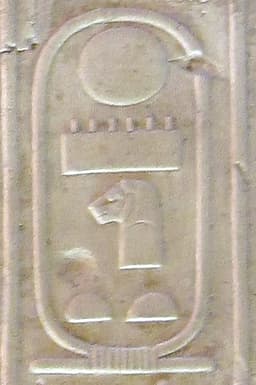
Ramesses I
Emperor · Ancient
38.3Total

Shutruk-Nahhunte I
Emperor · Ancient
57.8Total
Basic Information
Born
-1292
-1190
Died
-1290
-1155
Era
Ancient
Ancient
Nationality
New Kingdom Egypt
Elam
Occupation
Emperor
Emperor
Civilization
Middle Eastern
Middle Eastern
Score Comparison
Military (10%)
25.9
80.0
Political (20%)
29.3
68.0
Influence (20%)
50.2
58.0
Legacy (20%)
40.0
50.0
Leadership (15%)
33.6
40.0
Strategy (15%)
36.8
66.3
TOTAL
38.3
57.8
Ramesses I — Complete Timeline
1292 BC
Founding of the 19th DynastyPolitical Action
Ramesses I ascended the throne after the death of Horemheb, who had no heir. As a military officer and vizier under Horemheb, Ramesses I was chosen to succeed him, founding the 19th Dynasty. His accession marked a new era of stability and military strength after the turmoil of the late 18th Dynasty.
19th DynastySuccessionNew Kingdom
Impact: nationalconstructive
1291 BC
Construction of the Temple of Amun at KarnakCultural◆ Major
Ramesses I began construction on the great hypostyle hall at the Temple of Amun in Karnak, though he died before its completion. His contributions included the decoration of the north wall and the initiation of the massive columns. The hall was later finished by his son Seti I and grandson Ramesses II.
ArchitectureKarnakTemple
Impact: nationalconstructive
1290 BC
Brief Reign and Burial in the Valley of the KingsPolitical Action
Ramesses I ruled for less than two years, making his reign one of the shortest of the New Kingdom. He was buried in a hastily prepared tomb (KV16) in the Valley of the Kings. Despite his brief rule, he established the dynasty that would produce some of Egypt's most famous pharaohs, including Ramesses II.
BurialValley of the KingsShort Reign
Impact: national
Shutruk-Nahhunte I — Complete Timeline
1165 BC
Campaigns in MesopotamiaWar
Shutruk-Nahhunte I conducted multiple military campaigns into Mesopotamia, expanding Elamite influence. He attacked cities such as Eshnunna and Sippar, weakening the Kassite dynasty of Babylon.
Elamite ExpansionMesopotamiaKassites
Impact: regionaldestructive
1160 BC
Conquest of BabylonWar◆ Major
Shutruk-Nahhunte I led an Elamite invasion of Babylonia, capturing the city of Babylon. He plundered the city and removed the stele of Hammurabi, taking it to Susa as a trophy of war.
Elamite ConquestBabylonHammurabi Stele
Impact: regionaldestructive
Removal of the Stele of HammurabiCultural◆ Major
After conquering Babylon, Shutruk-Nahhunte I ordered the removal of the stele inscribed with the Code of Hammurabi. The stele was transported to Susa, the Elamite capital, where it remained until its rediscovery in 1901.
Cultural LootingHammurabiSusa
Impact: global
This comparison has not been analyzed yet.
One-time AI generation (~1 minute). Scores and timeline are already available below.
Rankings
🥇
Shutruk-Nahhunte ILeader
Mil: 80.0Pol: 68.0Inf: 58.0
57.8
🥈
Ramesses I
Mil: 25.9Pol: 29.3Inf: 50.2
38.3
+19.5 behind
How This Comparison Works
Algorithm
Each figure is scored on 6 dimensions (0—100 scale) based on structured historical data: Military (10%), Political (20%), Influence (20%), Legacy (20%), Leadership (15%), Strategy (15%). The weighted total produces the final ranking.
Data Sources
Scores are computed from structured sub-indicators in the database. Scale factors adjust for era (Ancient ×0.85, Modern ×1.0) and civilization size (Eastern ×1.05, Other ×0.80) to account for differences in population and military scale.
Maximum 3 Figures
Comparisons are limited to 2—3 figures to ensure readability and statistical meaningfulness.
Error Margins
±5 points per dimension — Sub-scores are derived from historical records with inherent uncertainty. Two figures within 5 points on a dimension should be considered roughly equivalent in that area.
Total Score Accuracy
±3 points overall — The weighted combination of 6 dimensions produces a total score with approximately ±3 points of uncertainty. Differences of less than 3 points are not statistically significant— the figures are effectively tied.
Known Limitations
- Historical records are incomplete and uneven across civilizations
- Figures from oral-tradition societies may be underrepresented
- Occupation labels can misclassify multi-role figures
- Scores measure capability and impact, not moral character
- Quantitative scoring is a comparison tool, not absolute truth
Capability Radar
Military (10%) — Battles & Warfare
Battles
10
70
Win Rate
10
75
Expansion
10
75
Political (20%) — Governance & Reform
Reform
10
45
Diplomacy
20
55
Economy
10
50
Influence (20%) — Cultural & Global Reach
Cultural
20
60
Global
20
50
Legacy (20%) — Historical Impact
Historical
30
65
Longevity
20
55
Leadership (15%) — Power & Stability
Tenure
10
60
Stability
20
55
Strategy (15%) — Tactics & Innovation
Strategy
10
70
Tactics
10
65
Reform
10
40
Similar Comparisons
Comments & Discussion
No comments yet. Be the first to share your thoughts!