Loading...
Shapur I vs Shutruk-Nahhunte I
Shapur I leads by 4.0 pts · 2 figures compared
…
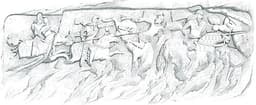
Shapur I
Emperor · Ancient
61.8Total

Shutruk-Nahhunte I
Emperor · Ancient
57.8Total
Basic Information
Born
215
-1190
Died
270
-1155
Era
Ancient
Ancient
Nationality
Sassanid Empire
Elam
Occupation
Emperor
Emperor
Civilization
Middle Eastern
Middle Eastern
Score Comparison
Military (10%)
78.0
80.0
Political (20%)
55.0
68.0
Influence (20%)
56.7
58.0
Legacy (20%)
56.0
50.0
Leadership (15%)
72.0
40.0
Strategy (15%)
68.1
66.3
TOTAL
61.8
57.8
Shapur I — Complete Timeline
244 AD
Battle of MisicheWar◆ Major
Shapur I defeated the Roman emperor Gordian III at Misiche in Mesopotamia. Gordian died during or shortly after the battle, and his successor Philip the Arab signed a peace treaty favorable to the Sassanids, paying a large ransom.
Roman-Persian WarsBattleSassanid Empire
Impact: regional
260 AD
Capture of Emperor ValerianWar
Shapur I captured the Roman emperor Valerian in battle near Edessa. Valerian was taken prisoner and spent the rest of his life in Persian captivity, a humiliation unprecedented in Roman history. Shapur used this victory to extract tribute and territory.
Roman-Persian WarsCaptureSassanid Empire
Impact: global
Sack of AntiochWar◆ Major
Following the capture of Valerian, Shapur I invaded Syria and sacked the city of Antioch, a major Roman center. The Sassanid army plundered the city and deported many inhabitants to Persia, demonstrating the empire's military reach.
Roman-Persian WarsSackAntioch
Impact: regionaldestructive
262 AD
Construction of Naqsh-e Rostam InscriptionsCultural
Shapur I commissioned rock reliefs and inscriptions at Naqsh-e Rostam, depicting his victories over Roman emperors. The trilingual inscription (Middle Persian, Parthian, Greek) details his campaigns and the extent of his empire, serving as a key historical source.
InscriptionPropagandaSassanid Empire
Impact: nationalconstructive
266 AD
Foundation of BishapurCultural
Shapur I founded the city of Bishapur in Fars province, modeled partly on Roman urban planning. The city featured a palace with mosaics and reliefs celebrating his victories, becoming a major Sassanid administrative and cultural center.
City FoundationArchitectureSassanid Empire
Impact: regionalconstructive
Shutruk-Nahhunte I — Complete Timeline
1165 BC
Campaigns in MesopotamiaWar
Shutruk-Nahhunte I conducted multiple military campaigns into Mesopotamia, expanding Elamite influence. He attacked cities such as Eshnunna and Sippar, weakening the Kassite dynasty of Babylon.
Elamite ExpansionMesopotamiaKassites
Impact: regionaldestructive
1160 BC
Conquest of BabylonWar◆ Major
Shutruk-Nahhunte I led an Elamite invasion of Babylonia, capturing the city of Babylon. He plundered the city and removed the stele of Hammurabi, taking it to Susa as a trophy of war.
Elamite ConquestBabylonHammurabi Stele
Impact: regionaldestructive
Removal of the Stele of HammurabiCultural◆ Major
After conquering Babylon, Shutruk-Nahhunte I ordered the removal of the stele inscribed with the Code of Hammurabi. The stele was transported to Susa, the Elamite capital, where it remained until its rediscovery in 1901.
Cultural LootingHammurabiSusa
Impact: global
Expert Analysis
Origins
Shapur I (born 215 CE) was the second shahanshah of the Sassanid Empire, son of Ardashir I, the empire's founder. Raised in the Zoroastrian court of Fars, he was groomed for kingship from an early age. He likely participated in his father's campaigns against the Parthians and Romans, gaining military experience. Shapur's education included Zoroastrian theology, Persian history, and administrative skills, preparing him to rule a vast, multi-ethnic empire.
Shutruk-Nahhunte I (reigned c. 1184–1155 BCE) was king of Elam, a civilization centered in southwestern Iran. His lineage is less clear, but he belonged to the Shutrukid dynasty, which revived Elamite power. He inherited a state that had long been overshadowed by Mesopotamian powers like Babylon and Assyria. Shutruk-Nahhunte likely received training in warfare and diplomacy, but details of his early life remain sparse due to limited records.
Rise to Power
Shapur I succeeded his father in 240 CE, initially ruling as co-king with Ardashir I before becoming sole monarch in 242 CE. His early reign focused on consolidating Sassanid control over former Parthian territories and continuing the aggressive expansion into Roman domains. In 244 CE, he defeated the Roman emperor Gordian III at the Battle of Misiche, forcing the new emperor Philip the Arab to pay a heavy ransom and cede territory. This victory established Shapur as a formidable military leader.
Shutruk-Nahhunte I came to power during a period of Elamite resurgence. He launched a series of campaigns into Mesopotamia, taking advantage of the weakened Kassite dynasty in Babylon. Around 1158 BCE, he conquered Babylon itself, ending the Kassite rule. By plundering the city and carrying off iconic artifacts like the Stele of Hammurabi, he demonstrated Elam's new dominance. His rise was swift, built on military prowess and strategic timing.
Leadership & Governance
Shapur I ruled as an absolute monarch, centralizing authority in the Sassanid tradition. He founded the city of Bishapur, incorporating Roman architectural elements captured from prisoners, showing his ability to adapt and innovate. He also commissioned trilingual inscriptions at Naqsh-e Rostam, which detailed his victories and legitimized his rule through Zoroastrian divine favor. His governance emphasized military expansion and cultural propaganda.
Shutruk-Nahhunte I ruled Elam as a warrior-king, focused on conquest and tribute. He did not establish lasting administrative reforms; his governance relied on military force and the extraction of wealth from conquered lands. The removal of the Stele of Hammurabi to Susa was a symbolic act of dominance, but his empire lacked the bureaucratic infrastructure of the Sassanids. His leadership style was more predatory than constructive.
Triumph & Tragedy
Shapur I's greatest triumph was his capture of the Roman emperor Valerian in 260 CE near Edessa. This unprecedented feat humiliated Rome and brought immense prestige to the Sassanid Empire. He also sacked Antioch, a major Roman city, and extended Persian influence deep into Anatolia. However, his successes were tempered by the rise of the Palmyrene Empire under Odaenathus, who counterattacked and pushed Shapur back, preventing a permanent Roman collapse. Shapur's later campaigns failed to hold all conquered territories.
Shutruk-Nahhunte I's conquest of Babylon was his peak achievement. He brought the Code of Hammurabi to Susa, a trophy that symbolized Elamite supremacy. He also campaigned against Eshnunna and Sippar. Yet, his empire proved ephemeral. After his death, Elamite power declined, and the artifacts he stole were not enough to create a lasting legacy. His failure to establish a stable administration meant his conquests did not endure.
Character & Destiny
Shapur I was a calculating strategist, as shown by his military campaigns and use of propaganda. He scored 72.0 in leadership and 68.1 in strategy. His decision to capture and humiliate Valerian reflected a desire for both practical gain and symbolic victory. However, his overextension allowed Odaenathus to recover Roman positions. His character combined ambition with a degree of pragmatism, but he lacked the diplomatic finesse to secure lasting peace.
Shutruk-Nahhunte I was a ruthless conqueror, scoring 40.0 in leadership but 66.3 in strategy. His choice to loot Babylon and remove the stele shows a focus on immediate spoils rather than long-term control. He did not build alliances or integrate conquered peoples. His destiny was to be remembered primarily for the theft of the Hammurabi stele, not for a sustained empire. His personality was that of a raider king, not a state-builder.
Legacy
Shapur I's legacy is mixed but significant. He permanently weakened Rome's eastern defenses and set a precedent for Sassanid aggression. His inscriptions at Naqsh-e Rostam influenced Persian royal propaganda for centuries. The city of Bishapur remained an important center. He scored 56.7 in influence and 56.0 in legacy. The capture of Valerian became a legendary event, but the Sassanid Empire's long-term survival owed more to later rulers.
Shutruk-Nahhunte I's legacy is mostly archaeological. The Stele of Hammurabi, discovered in Susa in 1901, became a key artifact of ancient law, but his own name is obscure. He scored 58.0 in influence but only 50.0 in legacy. Elamite civilization declined after his reign, and his conquests were reversed. He is remembered for one act of plunder rather than any enduring institution.
Conclusion
Shapur I had a greater impact than Shutruk-Nahhunte I. With a total score of 61.8 compared to 57.8, Shapur's military achievements (78.0 vs 80.0) were slightly lower, but his leadership (72.0 vs 40.0) and strategic vision (68.1 vs 66.3) were superior. Shapur's capture of a Roman emperor was a unique feat that reshaped Roman-Persian relations for generations. Shutruk-Nahhunte's conquests were dramatic but short-lived. Shapur's influence on Persian identity and his role in the Sassanid-Roman conflict had more lasting consequences. While both were successful conquerors, Shapur's ability to combine military victory with cultural and administrative legacy gives him the edge.
Rankings
🥇
Shapur ILeader
Mil: 78.0Pol: 55.0Inf: 56.7
61.8
🥈
Shutruk-Nahhunte I
Mil: 80.0Pol: 68.0Inf: 58.0
57.8
+4.0 behind
How This Comparison Works
Algorithm
Each figure is scored on 6 dimensions (0—100 scale) based on structured historical data: Military (10%), Political (20%), Influence (20%), Legacy (20%), Leadership (15%), Strategy (15%). The weighted total produces the final ranking.
Data Sources
Scores are computed from structured sub-indicators in the database. Scale factors adjust for era (Ancient ×0.85, Modern ×1.0) and civilization size (Eastern ×1.05, Other ×0.80) to account for differences in population and military scale.
Maximum 3 Figures
Comparisons are limited to 2—3 figures to ensure readability and statistical meaningfulness.
Error Margins
±5 points per dimension — Sub-scores are derived from historical records with inherent uncertainty. Two figures within 5 points on a dimension should be considered roughly equivalent in that area.
Total Score Accuracy
±3 points overall — The weighted combination of 6 dimensions produces a total score with approximately ±3 points of uncertainty. Differences of less than 3 points are not statistically significant— the figures are effectively tied.
Known Limitations
- Historical records are incomplete and uneven across civilizations
- Figures from oral-tradition societies may be underrepresented
- Occupation labels can misclassify multi-role figures
- Scores measure capability and impact, not moral character
- Quantitative scoring is a comparison tool, not absolute truth
Capability Radar
Military (10%) — Battles & Warfare
Battles
85
70
Win Rate
80
75
Expansion
85
75
Political (20%) — Governance & Reform
Reform
70
45
Diplomacy
80
55
Economy
65
50
Influence (20%) — Cultural & Global Reach
Cultural
60
60
Global
65
50
Legacy (20%) — Historical Impact
Historical
70
65
Longevity
60
55
Leadership (15%) — Power & Stability
Tenure
75
60
Stability
70
55
Strategy (15%) — Tactics & Innovation
Strategy
80
70
Tactics
75
65
Reform
70
40
Similar Comparisons
Comments & Discussion
No comments yet. Be the first to share your thoughts!