Loading...
Raymond Poincare vs Zhang Zhidong
Raymond Poincare leads by 2.7 pts · 2 figures compared
…
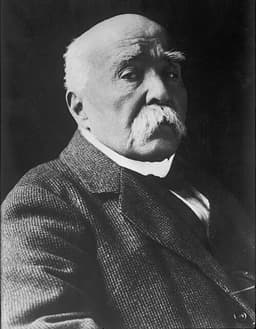
Raymond Poincare
Politician · Modern
57.6Total
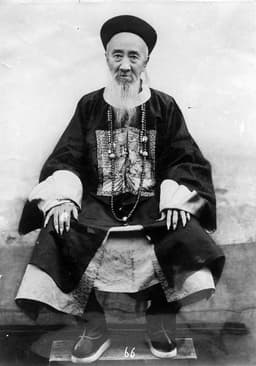
Zhang Zhidong
Politician · Modern
54.9Total
Basic Information
Born
1860
1837
Died
1934
1909
Era
Modern
Modern
Nationality
France
China
Occupation
Politician
Politician
Civilization
Western
Eastern
Score Comparison
Military (10%)
50.0
36.6
Political (20%)
62.7
72.0
Influence (20%)
58.0
55.0
Legacy (20%)
50.0
56.0
Leadership (15%)
79.8
68.0
Strategy (15%)
41.8
25.0
TOTAL
57.6
54.9
Raymond Poincare — Complete Timeline
1912 AD
Became Prime Minister for the First TimePolitical Action◆ Major
Poincaré became Prime Minister of France for the first time, serving from January 1912 to January 1913. His government focused on strengthening the French military and preparing for potential conflict with Germany.
Prime MinisterPre-War
Impact: national
1913 AD
Elected President of FrancePolitical Action◆ Major
Raymond Poincar
PresidencyWorld War I
Impact: national
1922 AD
Became Prime Minister for the Second TimePolitical Action◆ Major
Poincaré returned as Prime Minister from 1922 to 1924. He ordered the occupation of the Ruhr in 1923 to force German reparations payments, a controversial policy that strained Franco-German relations.
Prime MinisterRuhr OccupationReparations
Impact: regionaldestructive
1926 AD
Became Prime Minister for the Third TimePolitical Action◆ Major
Poincaré became Prime Minister for a third term from 1926 to 1929. He implemented austerity measures and stabilized the French franc, restoring confidence in the economy after a period of inflation.
Prime MinisterEconomic Stabilization
Impact: nationalconstructive
Zhang Zhidong — Complete Timeline
1889 AD
Governor-General of Huguang and implemented educational reformsReform◆ Major
As Governor-General of Huguang, Zhang Zhidong established modern schools, including the Lianghu Academy, and sent students abroad for technical training. These reforms aimed to modernize China's education system.
EducationReformModernization
Impact: regionalprogressive
1890 AD
Established the Hanyang Iron and Steel WorksInvention◆ Major
Zhang Zhidong founded the Hanyang Iron and Steel Works in Hubei, one of China's first modern industrial enterprises. The plant produced steel for railways, weapons, and infrastructure, advancing Qing industrialization.
IndustrializationSteelModernization
Impact: nationalconstructive
1898 AD
Promoted the 'Chinese learning as base, Western learning for use' doctrineCultural
Zhang Zhidong published 'Exhortation to Learn', advocating for preserving Confucian values while adopting Western technology and institutions. This doctrine became the ideological foundation of the Self-Strengthening Movement.
ReformConfucianismWestern Learning
Impact: nationalprogressive
Expert Analysis
Origins
Raymond Poincaré was born on August 20, 1860, in Bar-le-Duc, France, into a middle-class family. His father was a civil engineer and meteorologist. Poincaré studied law at the University of Paris, earning his doctorate in 1880. He began his career as a lawyer and entered politics as a moderate Republican.
Zhang Zhidong was born on September 2, 1837, in Xingyi, Guizhou, China, into a scholarly official family. His father was a prefect. Zhang passed the imperial examinations in 1863, earning the jinshi degree, and entered the Hanlin Academy. He was steeped in Confucian classics but also exposed to Western ideas through the Self-Strengthening Movement.
Rise to Power
Poincaré rose rapidly: he became a deputy in 1887, minister of education in 1893, and prime minister for the first time in 1912. His key turning point was his election as President of France in 1913. He strengthened alliances with Russia and Britain, preparing for war. His assertive nationalism shaped French policy.
Zhang Zhidong rose through the Qing bureaucracy, serving as governor of Shanxi (1882) and then Governor-General of Liangjiang (1894) and Huguang (1896-1907). His turning point came during the Sino-Japanese War (1894-1895), when China's defeat convinced him of the need for modernization. He advocated the 'Chinese learning as base, Western learning for use' doctrine in his 1898 work 'Exhortation to Learn'.
Leadership & Governance
Poincaré's leadership style was legalistic and determined. As president during WWI, he worked with Prime Ministers Clemenceau and others to coordinate the war effort. He visited troops and maintained morale. His governance focused on national unity, but he clashed with military leaders. After the war, as prime minister in 1922, he ordered the occupation of the Ruhr in 1923 to force German reparations, a controversial move that damaged France's international standing but showed his resolve.
Zhang Zhidong's governance blended Confucian principles with pragmatic reform. As Governor-General of Huguang, he established the Hanyang Iron and Steel Works (1890), one of China's first modern factories. He also founded modern schools like the Lianghu Academy and sent students abroad. He supported the Hundred Days' Reform in 1898 but later distanced himself after its failure, showing his cautious nature. His administrative score is 72.0, higher than Poincaré's 62.7, reflecting his effectiveness in local governance.
Triumph & Tragedy
Poincaré's greatest success was stabilizing the French franc during his third premiership (1926-1929). He implemented austerity, raised taxes, and restored confidence, saving the economy. His greatest failure was the Ruhr occupation, which alienated allies and failed to secure reparations. It damaged French diplomacy and contributed to German resentment.
Zhang Zhidong's greatest success was the Hanyang Iron and Steel Works, which became a symbol of China's industrial modernization. It produced steel for railways and armaments. His greatest failure was the limited impact of his reforms: they were too cautious to save the Qing dynasty, which fell in 1911. His 'Chinese learning as base' approach preserved Confucian hierarchy while adopting technology, but it did not address systemic corruption or political reform.
Character & Destiny
Poincaré was methodical, patriotic, and stubborn. He believed in legal procedures and national strength. His character drove him to confront Germany directly, but also to pursue economic stability. He scored 79.8 in leadership, reflecting his ability to guide France through war and crisis. His destiny was tied to WWI: he is remembered as the wartime president who held the nation together.
Zhang Zhidong was pragmatic, cautious, and reform-minded. He sought to modernize without upsetting the imperial system. His character led him to support gradual change, but his caution limited his effectiveness. He scored 68.0 in leadership. His destiny was to be a reformer in a dying dynasty; his efforts delayed collapse but could not prevent it.
Legacy
Poincaré's legacy is mixed. He is remembered for stabilizing the franc and his wartime leadership, but also for the Ruhr occupation. His influence on French politics is moderate; he strengthened the presidency but did not transform institutions. His total score is 57.6.
Zhang Zhidong's legacy is more enduring in China. The Hanyang Iron and Steel Works evolved into modern industrial enterprises. His educational reforms laid groundwork for China's modernization. His doctrine of 'Chinese learning as base, Western learning for use' influenced later thinkers. His total score is 54.9.
Conclusion
While Poincaré scored higher overall (57.6 vs 54.9), Zhang Zhidong had a more lasting impact on his country's development. Poincaré's achievements were reactive to war and economic crisis, while Zhang proactively built industrial and educational foundations that outlived the Qing. Zhang's political score (72.0) exceeds Poincaré's (62.7), reflecting his effective governance. However, Poincaré's leadership during WWI and economic stabilization were critical for France. In terms of historical significance, Zhang Zhidong's role in China's modernization gives him greater long-term impact, despite his lower total score.
Rankings
🥇
Raymond PoincareLeader
Mil: 50.0Pol: 62.7Inf: 58.0
57.6
🥈
Zhang Zhidong
Mil: 36.6Pol: 72.0Inf: 55.0
54.9
+2.7 behind
How This Comparison Works
Algorithm
Each figure is scored on 6 dimensions (0—100 scale) based on structured historical data: Military (10%), Political (20%), Influence (20%), Legacy (20%), Leadership (15%), Strategy (15%). The weighted total produces the final ranking.
Data Sources
Scores are computed from structured sub-indicators in the database. Scale factors adjust for era (Ancient ×0.85, Modern ×1.0) and civilization size (Eastern ×1.05, Other ×0.80) to account for differences in population and military scale.
Maximum 3 Figures
Comparisons are limited to 2—3 figures to ensure readability and statistical meaningfulness.
Error Margins
±5 points per dimension — Sub-scores are derived from historical records with inherent uncertainty. Two figures within 5 points on a dimension should be considered roughly equivalent in that area.
Total Score Accuracy
±3 points overall — The weighted combination of 6 dimensions produces a total score with approximately ±3 points of uncertainty. Differences of less than 3 points are not statistically significant— the figures are effectively tied.
Known Limitations
- Historical records are incomplete and uneven across civilizations
- Figures from oral-tradition societies may be underrepresented
- Occupation labels can misclassify multi-role figures
- Scores measure capability and impact, not moral character
- Quantitative scoring is a comparison tool, not absolute truth
Capability Radar
Military (10%) — Battles & Warfare
Battles
27
5
Win Rate
31
5
Expansion
33
5
Political (20%) — Governance & Reform
Reform
55
75
Diplomacy
65
55
Economy
50
65
Influence (20%) — Cultural & Global Reach
Cultural
30
55
Global
50
45
Legacy (20%) — Historical Impact
Historical
55
60
Longevity
40
50
Leadership (15%) — Power & Stability
Tenure
70
60
Stability
60
40
Strategy (15%) — Tactics & Innovation
Strategy
37
15
Tactics
40
10
Reform
43
40
Similar Comparisons
Comments & Discussion
No comments yet. Be the first to share your thoughts!