Loading...
Giulio Andreotti vs Raymond Poincare
Raymond Poincare leads by 1.1 pts · 2 figures compared
…
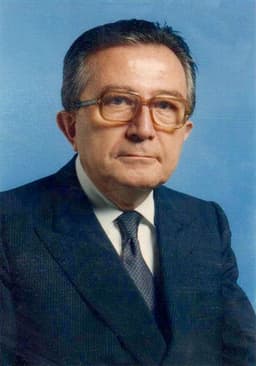
Giulio Andreotti
Politician · Modern
56.5Total
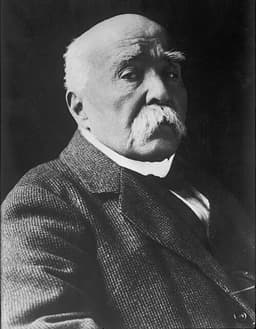
Raymond Poincare
Politician · Modern
57.6Total
Basic Information
Born
1919
1860
Died
2013
1934
Era
Modern
Modern
Nationality
Italy
France
Occupation
Politician
Politician
Civilization
Western
Western
Score Comparison
Military (10%)
50.0
50.0
Political (20%)
59.3
62.7
Influence (20%)
58.3
58.0
Legacy (20%)
52.0
50.0
Leadership (15%)
72.0
79.8
Strategy (15%)
42.7
41.8
TOTAL
56.5
57.6
Giulio Andreotti — Complete Timeline
1972 AD
Seven Terms as Prime MinisterPolitical Action◆ Major
Giulio Andreotti served as Prime Minister of Italy seven times between 1972 and 1992, a record in the post-war republic. His long tenure made him a dominant figure in Italian politics, known for his political maneuvering and ability to form coalitions across the fragmented party system.
Political CareerItalyLongevity
Impact: national
1976 AD
Involvement in the Lockheed ScandalPolitical Action
Andreotti was implicated in the Lockheed bribery scandal, which involved payments to Italian politicians to secure aircraft contracts. He was investigated but never convicted, though the scandal contributed to a climate of political corruption that would later lead to the Tangentopoli investigations.
ScandalCorruptionItaly
Impact: nationaldestructive
1980 AD
Support for European IntegrationPolitical Action
Throughout his career, Andreotti was a strong advocate for European integration, supporting Italy's participation in the European Monetary System and the Maastricht Treaty. He served as Foreign Minister and was involved in key EU decisions, helping to shape Italy's role in the European Community.
European UnionForeign PolicyItaly
Impact: regionalconstructive
1995 AD
Trial for Mafia AssociationPolitical Action◆ Major
Andreotti was put on trial in Palermo for alleged association with the Mafia, accused of having ties to Cosa Nostra during his political career. The trial lasted years and resulted in a conviction in 2002, which was later overturned on appeal in 2003 due to statute of limitations. The case deeply tarnished his legacy.
TrialMafiaCorruption
Impact: nationaldestructive
Raymond Poincare — Complete Timeline
1912 AD
Became Prime Minister for the First TimePolitical Action◆ Major
Poincaré became Prime Minister of France for the first time, serving from January 1912 to January 1913. His government focused on strengthening the French military and preparing for potential conflict with Germany.
Prime MinisterPre-War
Impact: national
1913 AD
Elected President of FrancePolitical Action◆ Major
Raymond Poincar
PresidencyWorld War I
Impact: national
1922 AD
Became Prime Minister for the Second TimePolitical Action◆ Major
Poincaré returned as Prime Minister from 1922 to 1924. He ordered the occupation of the Ruhr in 1923 to force German reparations payments, a controversial policy that strained Franco-German relations.
Prime MinisterRuhr OccupationReparations
Impact: regionaldestructive
1926 AD
Became Prime Minister for the Third TimePolitical Action◆ Major
Poincaré became Prime Minister for a third term from 1926 to 1929. He implemented austerity measures and stabilized the French franc, restoring confidence in the economy after a period of inflation.
Prime MinisterEconomic Stabilization
Impact: nationalconstructive
Expert Analysis
Origins
Giulio Andreotti was born on January 14, 1919, in Rome, Italy, into a middle-class family. His father, a teacher, died when Andreotti was young, and he was raised by his mother. He studied law at the University of Rome, where he became involved in Catholic student groups, laying the foundation for his political career in the Christian Democracy party. Raymond Poincaré was born on August 20, 1860, in Bar-le-Duc, France, into a family of civil servants. His father was a meteorologist, and his cousin Raymond was a noted mathematician. Poincaré studied law in Paris, becoming a lawyer and later entering politics as a moderate republican. His early career was marked by a focus on legal and financial matters.
Rise to Power
Andreotti's rise began in the 1940s as a protégé of Alcide De Gasperi, Italy's post-war prime minister. He was elected to the Constituent Assembly in 1946 and held various ministerial posts from the 1950s onward, including Interior Minister and Foreign Minister. His first term as prime minister came in 1972, and he went on to serve seven terms, a record in Italy. Poincaré rose through the ranks of the French Third Republic, serving as Minister of Finance and Minister of Public Instruction. He became Prime Minister for the first time in 1912, focusing on strengthening the French military and forging alliances. In 1913, he was elected President of France, a position he held during World War I.
Leadership & Governance
Andreotti's leadership style was characterized by pragmatism and backroom deals, earning him the nickname 'The Fox.' He governed through coalition-building, often relying on the support of the Italian Communist Party in the 1970s. His governance focused on maintaining stability and advancing European integration. Poincaré was a staunch nationalist and legalist. As president, he sought to coordinate the war effort, but his role was largely ceremonial. As prime minister after the war, he ordered the occupation of the Ruhr in 1923 to force German reparations, a policy that damaged France's international standing. Later, as prime minister from 1926 to 1929, he implemented austerity measures that stabilized the French franc, restoring economic confidence. Andreotti's political score of 59.3 reflects his adept maneuvering, while Poincaré's 62.7 indicates his effectiveness in crisis management.
Triumph & Tragedy
Andreotti's greatest triumph was his long tenure, serving as prime minister seven times and shaping Italy's post-war foreign policy, particularly its pro-European stance. His tragedy came with accusations of Mafia ties; he was tried for Mafia association in the 1990s, though ultimately acquitted due to statute of limitations. The trial tarnished his legacy. Poincaré's triumph was leading France through World War I as president, symbolizing national unity, and later stabilizing the franc. His tragedy was the Ruhr occupation, which failed to secure reparations and caused international isolation. He scored 79.8 in leadership, higher than Andreotti's 72.0, reflecting his decisive actions during war.
Character & Destiny
Andreotti was known for his cunning and patience, often avoiding direct confrontation. His character allowed him to survive political scandals, but it also led to moral compromises that damaged his reputation. Poincaré was rigid and legalistic, driven by a sense of duty. His determination to enforce the Treaty of Versailles led to the Ruhr disaster, but his fiscal conservatism saved the franc. Their strategies scored similarly: Andreotti 42.7, Poincaré 41.8, indicating a lack of long-term strategic vision in both.
Legacy
Andreotti's legacy is mixed: he was a key figure in Italy's post-war development and European integration, but his association with corruption and Mafia allegations stains his record. He is remembered as a master politician but also a symbol of the flaws in Italy's political system. Poincaré's legacy is more clear-cut: he is remembered as a steadfast leader during World War I and a savior of the French franc. However, his Ruhr occupation is seen as a failure. His total score of 57.6 slightly edges Andreotti's 56.5, reflecting his greater impact on national and international affairs.
Conclusion
While both were influential politicians, Raymond Poincaré had a greater impact due to his role in World War I and his successful economic stabilization. His leadership score of 79.8 versus Andreotti's 72.0 underscores his more decisive governance. Andreotti's longer tenure was marred by scandal, whereas Poincaré's actions, though controversial, had lasting effects on France and Europe. Thus, Poincaré emerges as the more consequential figure.
Rankings
🥇
Raymond PoincareLeader
Mil: 50.0Pol: 62.7Inf: 58.0
57.6
🥈
Giulio Andreotti
Mil: 50.0Pol: 59.3Inf: 58.3
56.5
+1.1 behind
How This Comparison Works
Algorithm
Each figure is scored on 6 dimensions (0—100 scale) based on structured historical data: Military (10%), Political (20%), Influence (20%), Legacy (20%), Leadership (15%), Strategy (15%). The weighted total produces the final ranking.
Data Sources
Scores are computed from structured sub-indicators in the database. Scale factors adjust for era (Ancient ×0.85, Modern ×1.0) and civilization size (Eastern ×1.05, Other ×0.80) to account for differences in population and military scale.
Maximum 3 Figures
Comparisons are limited to 2—3 figures to ensure readability and statistical meaningfulness.
Error Margins
±5 points per dimension — Sub-scores are derived from historical records with inherent uncertainty. Two figures within 5 points on a dimension should be considered roughly equivalent in that area.
Total Score Accuracy
±3 points overall — The weighted combination of 6 dimensions produces a total score with approximately ±3 points of uncertainty. Differences of less than 3 points are not statistically significant— the figures are effectively tied.
Known Limitations
- Historical records are incomplete and uneven across civilizations
- Figures from oral-tradition societies may be underrepresented
- Occupation labels can misclassify multi-role figures
- Scores measure capability and impact, not moral character
- Quantitative scoring is a comparison tool, not absolute truth
Capability Radar
Military (10%) — Battles & Warfare
Battles
27
27
Win Rate
30
31
Expansion
35
33
Political (20%) — Governance & Reform
Reform
60
55
Diplomacy
80
65
Economy
55
50
Influence (20%) — Cultural & Global Reach
Cultural
50
30
Global
60
50
Legacy (20%) — Historical Impact
Historical
65
55
Longevity
60
40
Leadership (15%) — Power & Stability
Tenure
85
70
Stability
40
60
Strategy (15%) — Tactics & Innovation
Strategy
39
37
Tactics
42
40
Reform
42
43
Similar Comparisons
Comments & Discussion
No comments yet. Be the first to share your thoughts!