Loading...
Ricimer vs Yang Hu
Yang Hu leads by 6.6 pts · 2 figures compared
…

Ricimer
General · Ancient
50.7Total
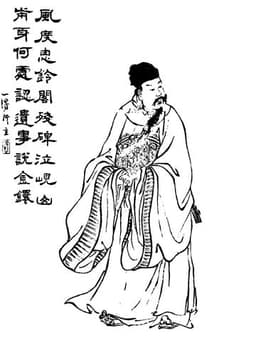
Yang Hu
General · Ancient
57.3Total
Basic Information
Born
405
221
Died
472
278
Era
Ancient
Ancient
Nationality
Western Roman Empire
China
Occupation
General
General
Civilization
Western
Eastern
Score Comparison
Military (10%)
70.0
47.5
Political (20%)
37.9
61.3
Influence (20%)
50.2
56.4
Legacy (20%)
47.5
49.2
Leadership (15%)
54.2
68.0
Strategy (15%)
55.0
67.2
TOTAL
50.7
57.3
Ricimer — Complete Timeline
456 AD
Deposition of Emperor AvitusPolitical Action◆ Major
Ricimer, as magister militum, led a revolt against Emperor Avitus, defeating him at the Battle of Placentia. Avitus was deposed and later died, establishing Ricimer as the power behind the throne in the Western Roman Empire.
Court IntrigueAvitusPower Struggle
Impact: national
461 AD
Execution of Emperor MajorianPolitical Action◆ Major
Ricimer deposed and executed Emperor Majorian, whom he had previously supported. This act demonstrated Ricimer's control over the Western Empire and led to a series of weak emperors who served at his pleasure.
Court IntrigueMajorianAssassination
Impact: nationaldestructive
472 AD
Sack of Rome by RicimerWar◆ Major
Ricimer besieged Rome to depose Emperor Anthemius, whom he had appointed. After capturing the city, Ricimer allowed his troops to sack it, causing widespread destruction. Anthemius was killed, and Ricimer installed Olybrius as emperor.
Civil WarRomeAnthemius
Impact: regionaldestructive
Yang Hu — Complete Timeline
269 AD
Implemented a policy of conciliation toward WuReform◆ Major
Yang Hu adopted a strategy of winning over Wu's border populations through fair treatment and economic incentives, rather than aggressive warfare. This reduced resistance and built goodwill for the eventual invasion.
Jin DynastyEastern WuDiplomacy
Impact: regionalconstructive
Appointed as commander of Jin forces against WuPolitical Action◆ Major
Yang Hu was appointed as the commander of Jin's forces in the Xiangyang region, tasked with preparing for the conquest of Eastern Wu. He focused on building up military strength and winning the loyalty of the local population.
Jin DynastyEastern WuMilitary Command
Impact: regionalconstructive
278 AD
Recommended Du Yu as his successorPolitical Action◆ Major
On his deathbed, Yang Hu recommended Du Yu to the Jin emperor as the commander to lead the final conquest of Wu. This recommendation was accepted and proved crucial to the campaign's success.
Jin DynastySuccessionDu Yu
Impact: nationalconstructive
Died without seeing the conquest of WuOther◆ Major
Yang Hu died of illness before the Jin invasion of Wu began. His preparations and policies laid the groundwork for the eventual unification of China under the Jin dynasty.
Jin DynastyDeathUnification
Impact: nationaltragic
Expert Analysis
Origins
Ricimer was born around 405 AD into a mixed Suebi and Visigothic royal lineage. His father was a Suebian king, his mother a Visigothic princess. Growing up in a collapsing Western Roman Empire, he learned military command in a world of shifting alliances. Yang Hu was born in 221 AD into a prominent Han dynasty scholar-official family in Xiangyang. His grandfather and father served as governors, and he received a Confucian education focused on moral virtue and statecraft. While Ricimer emerged from barbarian nobility, Yang Hu was steeped in Chinese bureaucratic tradition.
Rise to Power
Ricimer rose as a military commander under Emperor Avitus, but in 456 AD he rebelled, defeating Avitus at the Battle of Placentia and deposing him. He then became the power behind the throne, appointing and disposing emperors at will. In 457 AD, he elevated Majorian but executed him in 461 AD when Majorian proved independent. Yang Hu's rise was slower. He served as a local administrator before being appointed commander of Jin forces against Wu in 269 AD. His power came not from military coup but from imperial trust and demonstrated competence.
Leadership & Governance
Ricimer ruled through fear and manipulation. He never took the imperial title but controlled five emperors: Avitus, Majorian, Severus III, Anthemius, and Olybrius. His governance score of 37.9 reflects his destructive pattern—he executed Majorian and sacked Rome in 472 AD to depose Anthemius, causing widespread devastation. Yang Hu, scoring 68.0 in leadership, governed by winning hearts. He implemented a conciliation policy toward Wu, treating border populations fairly and building trust. He reduced tariffs, promoted agriculture, and even repatriated Wu deserters to demonstrate goodwill.
Triumph & Tragedy
Ricimer's triumphs were military: he defeated Avitus, suppressed the Vandals in Sicily, and maintained his personal power for 16 years. But his tragedy was the collapse of the Western Empire—his actions weakened the state, leading to its final fall in 476 AD. Yang Hu's triumph was strategic: he built up Jin's military and economic strength while undermining Wu's will to resist. His tragedy was dying in 278 AD before the conquest he prepared. Yet his recommendation of Du Yu ensured success—Jin conquered Wu in 280 AD, uniting China.
Character & Destiny
Ricimer was ambitious and ruthless, but lacked a vision beyond personal power. His political score of 37.9 shows he failed to stabilize the empire. Yang Hu was prudent and virtuous, focusing on long-term goals. His strategy score of 67.2 reflects his patient approach. Ricimer's character led to a legacy of destruction; Yang Hu's to unification.
Legacy
Ricimer scored 47.5 in legacy. He is remembered as a kingmaker who accelerated Rome's fall. His actions set a precedent for barbarian generals controlling weak emperors. Yang Hu scored 49.2 in legacy. He is honored as a model Confucian official who achieved victory through virtue. His methods of psychological warfare and economic development influenced later Chinese strategy.
Conclusion
Despite Ricimer's higher military score (70.0 vs 47.5), Yang Hu's total score of 57.3 surpasses Ricimer's 50.7. Yang Hu had greater impact by enabling the unification of China, a stable empire that lasted centuries. Ricimer left a trail of collapse. The data supports Yang Hu as the superior figure in lasting influence.
Rankings
🥇
Yang HuLeader
Mil: 47.5Pol: 61.3Inf: 56.4
57.3
🥈
Ricimer
Mil: 70.0Pol: 37.9Inf: 50.2
50.7
+6.6 behind
How This Comparison Works
Algorithm
Each figure is scored on 6 dimensions (0—100 scale) based on structured historical data: Military (10%), Political (20%), Influence (20%), Legacy (20%), Leadership (15%), Strategy (15%). The weighted total produces the final ranking.
Data Sources
Scores are computed from structured sub-indicators in the database. Scale factors adjust for era (Ancient ×0.85, Modern ×1.0) and civilization size (Eastern ×1.05, Other ×0.80) to account for differences in population and military scale.
Maximum 3 Figures
Comparisons are limited to 2—3 figures to ensure readability and statistical meaningfulness.
Error Margins
±5 points per dimension — Sub-scores are derived from historical records with inherent uncertainty. Two figures within 5 points on a dimension should be considered roughly equivalent in that area.
Total Score Accuracy
±3 points overall — The weighted combination of 6 dimensions produces a total score with approximately ±3 points of uncertainty. Differences of less than 3 points are not statistically significant— the figures are effectively tied.
Known Limitations
- Historical records are incomplete and uneven across civilizations
- Figures from oral-tradition societies may be underrepresented
- Occupation labels can misclassify multi-role figures
- Scores measure capability and impact, not moral character
- Quantitative scoring is a comparison tool, not absolute truth
Capability Radar
Military (10%) — Battles & Warfare
Battles
55
35
Win Rate
50
40
Expansion
20
30
Political (20%) — Governance & Reform
Reform
40
60
Diplomacy
75
75
Economy
30
55
Influence (20%) — Cultural & Global Reach
Cultural
20
60
Global
30
30
Legacy (20%) — Historical Impact
Historical
55
55
Longevity
40
50
Leadership (15%) — Power & Stability
Tenure
70
50
Stability
25
65
Strategy (15%) — Tactics & Innovation
Strategy
65
70
Tactics
60
55
Reform
30
65
Similar Comparisons
Comments & Discussion
No comments yet. Be the first to share your thoughts!