Loading...
Stilicho vs Yang Hu
Stilicho leads by 3.8 pts · 2 figures compared
…
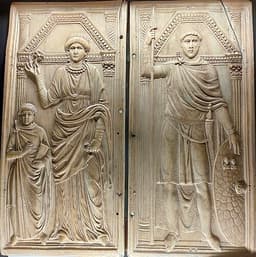
Stilicho
General · Ancient
61.1Total
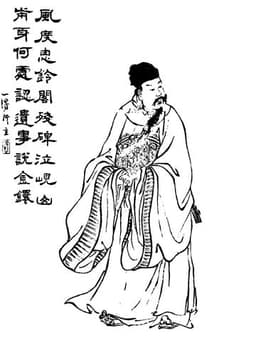
Yang Hu
General · Ancient
57.3Total
Basic Information
Born
359
221
Died
408
278
Era
Ancient
Ancient
Nationality
Roman Empire
China
Occupation
General
General
Civilization
Western
Eastern
Score Comparison
Military (10%)
74.0
47.5
Political (20%)
52.0
61.3
Influence (20%)
58.3
56.4
Legacy (20%)
55.6
49.2
Leadership (15%)
68.0
68.0
Strategy (15%)
72.0
67.2
TOTAL
61.1
57.3
Stilicho — Complete Timeline
401 AD
Withdrawal of Legions from BritainPolitical Action◆ Major
Stilicho withdrew Roman legions from Britain to defend Italy against barbarian invasions. This withdrawal weakened Roman control over Britain and contributed to the eventual abandonment of the province by the Roman Empire.
BritainWithdrawalLegions
Impact: regionaldestructive
402 AD
Battle of PollentiaWar◆ Major
Stilicho defeated the Visigoths under Alaric I at the Battle of Pollentia (modern Pollenzo). The victory forced Alaric to retreat from Italy, temporarily saving the Western Roman Empire from Gothic invasion.
BattleVisigothsAlaric
Impact: regional
403 AD
Battle of VeronaWar◆ Major
Stilicho again defeated Alaric at the Battle of Verona, forcing the Visigoths to withdraw from Italy. Stilicho negotiated a treaty with Alaric, allowing the Visigoths to settle in Illyricum, a decision that later proved controversial.
BattleTreatyVisigoths
Impact: regional
406 AD
Defense of Italy against RadagaisusWar◆ Major
Stilicho defeated a large invasion force of Goths under Radagaisus at Fiesole (modern Florence). Radagaisus was captured and executed, and his followers were enslaved or recruited into the Roman army.
InvasionGothsDefense
Impact: regional
408 AD
Execution of StilichoPolitical Action
Stilicho was executed on the orders of Emperor Honorius, following accusations of treason and conspiracy with the barbarians. His death removed the Western Empire's most capable general and led to a breakdown of Roman defenses.
ExecutionTreasonHonorius
Impact: globaltragic
Yang Hu — Complete Timeline
269 AD
Implemented a policy of conciliation toward WuReform◆ Major
Yang Hu adopted a strategy of winning over Wu's border populations through fair treatment and economic incentives, rather than aggressive warfare. This reduced resistance and built goodwill for the eventual invasion.
Jin DynastyEastern WuDiplomacy
Impact: regionalconstructive
Appointed as commander of Jin forces against WuPolitical Action◆ Major
Yang Hu was appointed as the commander of Jin's forces in the Xiangyang region, tasked with preparing for the conquest of Eastern Wu. He focused on building up military strength and winning the loyalty of the local population.
Jin DynastyEastern WuMilitary Command
Impact: regionalconstructive
278 AD
Recommended Du Yu as his successorPolitical Action◆ Major
On his deathbed, Yang Hu recommended Du Yu to the Jin emperor as the commander to lead the final conquest of Wu. This recommendation was accepted and proved crucial to the campaign's success.
Jin DynastySuccessionDu Yu
Impact: nationalconstructive
Died without seeing the conquest of WuOther◆ Major
Yang Hu died of illness before the Jin invasion of Wu began. His preparations and policies laid the groundwork for the eventual unification of China under the Jin dynasty.
Jin DynastyDeathUnification
Impact: nationaltragic
Expert Analysis
Origins
Flavius Stilicho was born around 359 AD into a Vandal father and Roman mother, giving him a mixed barbarian-Roman heritage. He rose through the ranks of the late Roman army under Emperor Theodosius I, who appointed him regent for his young son Honorius in 395 AD. Stilicho's early career was shaped by the crumbling Western Roman Empire, facing internal usurpers and external barbarian threats.
Yang Hu was born in 221 AD into a prominent family of the Cao Wei state during the Three Kingdoms period. His father Yang Da served as a governor, and his mother was known for her virtue. Yang Hu lost his father at age 11 and was raised by his mother, developing a reputation for filial piety and moral integrity. He entered service under the Jin dynasty (which replaced Wei) and became a trusted advisor to Sima Yan (Emperor Wu of Jin).
Rise to Power
Stilicho's rise began under Emperor Theodosius I, who valued his military talents. In 385 AD, Stilicho was appointed comes (count) and later magister militum (master of soldiers). After Theodosius's death in 395, Stilicho claimed to have been appointed regent for both Honorius in the West and Arcadius in the East, but the Eastern court rejected this. This led to conflict with Eastern officials like Rufinus. Stilicho's power base was in Italy, where he commanded the Western Roman army. His key turning point came in 397 AD when he suppressed the rebellion of Gildo in Africa, securing grain supplies for Rome.
Yang Hu's rise was more gradual. He served as a secretary under Sima Shi and later as a military commander in the border regions. His big break came in 269 AD when Emperor Wu of Jin appointed him as the commander of Jin forces in Xiangyang, tasked with preparing for the conquest of Eastern Wu. Yang Hu was given substantial autonomy and resources to build up infrastructure, train troops, and win over local populations. His reputation for fairness and integrity earned him the trust of both the court and the border populace.
Leadership & Governance
Stilicho's leadership was characterized by military pragmatism and political maneuvering. He relied heavily on foederati (barbarian allies) to fill Roman legions, which increased barbarian influence. His governance focused on defending Italy at the expense of other provinces: he withdrew legions from Britain in 401 AD, weakening Roman control there. Stilicho scored 52.0 in political skill, reflecting his inability to secure lasting alliances with the Eastern Empire or neutralize court rivals. He repeatedly negotiated with Alaric the Visigoth, granting him subsidies and titles, but failed to integrate them effectively.
Yang Hu's governance was built on moral persuasion and long-term planning. He implemented a policy of conciliation toward Wu, treating border populations with respect, providing fair trade, and returning captured soldiers. This approach undermined Wu's morale and encouraged defections. Yang Hu scored 61.3 in political skill, higher than Stilicho, because he built consensus at court and secured support for his strategy. He also focused on logistical preparation: building granaries, constructing ships, and training a navy. His leadership style was consensus-based, earning him the loyalty of subordinates like Du Yu.
Triumph & Tragedy
Stilicho's greatest triumphs were his military victories. At the Battle of Pollentia in 402 AD, he defeated Alaric's Visigoths, forcing them to retreat. At the Battle of Verona in 403 AD, he again repelled Alaric. In 406 AD, he crushed Radagaisus's invasion at Fiesole, capturing and executing the Gothic leader. These victories temporarily saved Italy from barbarian conquest. However, his greatest tragedy was his execution in 408 AD on orders of Emperor Honorius, spurred by court rivals who accused him of treason. His death left the Western Empire leaderless, leading to the sack of Rome by Alaric in 410 AD. Stilicho's military score of 74.0 reflects his battlefield success, but his political score of 52.0 shows his failure to secure his own position.
Yang Hu's triumph was his successful preparation for the conquest of Wu. He built up Jin's military strength, stockpiled resources, and won over Wu's border populations without major battles. His strategy of attrition and diplomacy weakened Wu's will to resist. His tragedy was that he died of illness in 278 AD before the invasion began, never seeing the unification. However, his recommendation of Du Yu as successor ensured his plans were executed. Du Yu led the Jin navy across the Yangtze in 280 AD, conquering Wu and unifying China under Jin. Yang Hu's military score of 47.5 is lower, reflecting his avoidance of direct combat, but his strategic score of 67.2 shows his effectiveness in grand strategy.
Character & Destiny
Stilicho was ambitious and capable, but his mixed heritage made him suspect to Roman aristocrats. He saw himself as a defender of Rome, but his reliance on barbarian troops and his negotiations with Alaric were seen as treacherous. His character was decisive in battle but indecisive in politics; he failed to purge his enemies at court, leading to his downfall. Historical assessments like that of historian A.H.M. Jones note that Stilicho's execution was a turning point in the fall of the Western Roman Empire.
Yang Hu was known for his virtue, humility, and strategic patience. He avoided personal glory, preferring to work behind the scenes. His character earned him widespread respect; even his Wu counterparts admired him. He was not driven by ambition but by duty. His destiny was to die before his greatest achievement, but his legacy was secured through his successors. Chinese historians like Fang Xuanling praised Yang Hu as a model of Confucian statesmanship.
Legacy
Stilicho's legacy is as the last great Roman general of the West. His military reforms and victories delayed the fall of Rome but could not prevent it. His withdrawal of legions from Britain contributed to the end of Roman rule there. He is remembered as a tragic figure, a capable general undone by politics. His influence score of 58.3 reflects his impact on Roman history, but his legacy score of 55.6 shows that his achievements were temporary.
Yang Hu's legacy is more enduring. His policy of conciliation became a model for Chinese border strategy. The unification of China under Jin was directly enabled by his preparations. He is revered in Chinese history as a paragon of virtue and strategic wisdom. The phrase "Yang Hu's strategy" is used to describe patient, ethical warfare. His influence score of 56.4 and legacy score of 49.2 are lower than Stilicho's in part because he operated in a less globally dominant civilization, but within Chinese history, his impact is profound.
Conclusion
Stilicho scores higher overall (61.1 vs 57.3), but his impact was ultimately negative: his death led to catastrophe. Yang Hu's lower total score masks his crucial role in a successful unification. While Stilicho was a better battlefield commander (74.0 vs 47.5), Yang Hu excelled in political skill (61.3 vs 52.0) and strategic planning (67.2 vs 72.0). In terms of lasting positive impact, Yang Hu had the greater effect. He directly enabled the unification of China, while Stilicho merely delayed Rome's fall. Therefore, Yang Hu's contribution to history is more significant, even if his raw scores are lower. Stilicho was a defender of a dying empire; Yang Hu was a builder of a new one.
Rankings
🥇
StilichoLeader
Mil: 74.0Pol: 52.0Inf: 58.3
61.1
🥈
Yang Hu
Mil: 47.5Pol: 61.3Inf: 56.4
57.3
+3.8 behind
How This Comparison Works
Algorithm
Each figure is scored on 6 dimensions (0—100 scale) based on structured historical data: Military (10%), Political (20%), Influence (20%), Legacy (20%), Leadership (15%), Strategy (15%). The weighted total produces the final ranking.
Data Sources
Scores are computed from structured sub-indicators in the database. Scale factors adjust for era (Ancient ×0.85, Modern ×1.0) and civilization size (Eastern ×1.05, Other ×0.80) to account for differences in population and military scale.
Maximum 3 Figures
Comparisons are limited to 2—3 figures to ensure readability and statistical meaningfulness.
Error Margins
±5 points per dimension — Sub-scores are derived from historical records with inherent uncertainty. Two figures within 5 points on a dimension should be considered roughly equivalent in that area.
Total Score Accuracy
±3 points overall — The weighted combination of 6 dimensions produces a total score with approximately ±3 points of uncertainty. Differences of less than 3 points are not statistically significant— the figures are effectively tied.
Known Limitations
- Historical records are incomplete and uneven across civilizations
- Figures from oral-tradition societies may be underrepresented
- Occupation labels can misclassify multi-role figures
- Scores measure capability and impact, not moral character
- Quantitative scoring is a comparison tool, not absolute truth
Capability Radar
Military (10%) — Battles & Warfare
Battles
78
35
Win Rate
72
40
Expansion
55
30
Political (20%) — Governance & Reform
Reform
60
60
Diplomacy
68
75
Economy
55
55
Influence (20%) — Cultural & Global Reach
Cultural
60
60
Global
60
30
Legacy (20%) — Historical Impact
Historical
72
55
Longevity
65
50
Leadership (15%) — Power & Stability
Tenure
70
50
Stability
45
65
Strategy (15%) — Tactics & Innovation
Strategy
82
70
Tactics
80
55
Reform
65
65
Similar Comparisons
Comments & Discussion
No comments yet. Be the first to share your thoughts!