Loading...
This comparison has not been analyzed yet.
One-time AI generation (~1 minute). Scores and timeline are already available below.
Robert Kocharyan vs Sviatlana Tsikhanouskaya
Robert Kocharyan leads by 0.9 pts · 2 figures compared
…

Robert Kocharyan
Politician · Modern
47.2Total
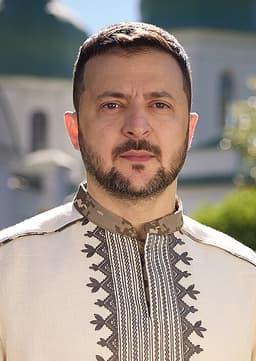
Sviatlana Tsikhanouskaya
Politician · Modern
46.3Total
Basic Information
Born
1954
1982
Died
—
—
Era
Modern
Modern
Nationality
Armenia
Belarus
Occupation
Politician
Politician
Civilization
Western
Western
Score Comparison
Military (10%)
21.2
46.8
Political (20%)
43.7
43.7
Influence (20%)
52.5
59.0
Legacy (20%)
40.8
45.0
Leadership (15%)
65.0
31.2
Strategy (15%)
54.3
43.4
TOTAL
47.2
46.3
Robert Kocharyan — Complete Timeline
1992 AD
Led the Defense of Nagorno-KarabakhWar◆ Major
Kocharyan was a key military and political leader during the First Nagorno-Karabakh War. He served as the chairman of the State Defense Committee of the Nagorno-Karabakh Republic, overseeing the defense of the region against Azerbaijani forces.
Nagorno-Karabakh WarMilitary LeadershipDefense
Impact: regional
1997 AD
Appointed Prime Minister of ArmeniaPolitical Action◆ Major
Kocharyan was appointed Prime Minister by President Ter-Petrosyan. He had previously been the de facto leader of the Nagorno-Karabakh Republic, and his appointment was part of a power-sharing arrangement to integrate Karabakh leaders into Armenian politics.
Prime MinisterNagorno-KarabakhPower-Sharing
Impact: national
Signed the Treaty of Moscow with RussiaPolitical Action
As Prime Minister, Kocharyan signed the Treaty of Moscow, a friendship and cooperation agreement with Russia. This treaty strengthened military and economic ties between Armenia and Russia, including the extension of the Russian military base in Armenia.
TreatyRussia-Armenia RelationsMilitary Alliance
Impact: regionalconstructive
1998 AD
Elected President of ArmeniaPolitical Action◆ Major
Kocharyan won the presidential election with 59% of the vote, succeeding Levon Ter-Petrosyan. He was the first president of Armenia to come from Nagorno-Karabakh, a disputed region, and his election was controversial due to allegations of fraud.
Presidential ElectionNagorno-KarabakhControversy
Impact: national
2019 AD
Arrested on Charges of Overthrowing Constitutional OrderPolitical Action◆ Major
Kocharyan was arrested on charges related to the 2008 post-election crackdown, accused of overthrowing the constitutional order. He was released on bail multiple times, and the case became a major political issue in Armenia, with supporters calling it politically motivated.
Legal CasePolitical Persecution2008 Crackdown
Impact: nationaldestructive
Sviatlana Tsikhanouskaya — Complete Timeline
2020 AD
Tsikhanouskaya's 2020 presidential campaignPolitical Action
Tsikhanouskaya registered as a candidate for the Belarusian presidential election after her husband Sergei was jailed. She ran against Alexander Lukashenko, drawing large crowds at rallies. The election was widely condemned as fraudulent.
ElectionBelarusOpposition
Impact: national
Tsikhanouskaya's exile to LithuaniaPolitical Action◆ Major
After the disputed election, Tsikhanouskaya fled to Lithuania under pressure from Belarusian authorities. She continued to lead the opposition from exile, coordinating protests and international pressure against Lukashenko's government.
ExileOppositionBelarus
Impact: nationaltragic
Tsikhanouskaya's meeting with Western leadersPolitical Action◆ Major
Tsikhanouskaya met with U.S. Secretary of State Mike Pompeo and other Western leaders, seeking support for democratic transition in Belarus. She was recognized by many Western governments as the legitimate winner of the 2020 election.
DiplomacyInternational supportBelarus
Impact: globalconstructive
This comparison has not been analyzed yet.
One-time AI generation (~1 minute). Scores and timeline are already available below.
Rankings
🥇
Robert KocharyanLeader
Mil: 21.2Pol: 43.7Inf: 52.5
47.2
🥈
Sviatlana Tsikhanouskaya
Mil: 46.8Pol: 43.7Inf: 59.0
46.3
+0.9 behind
How This Comparison Works
Algorithm
Each figure is scored on 6 dimensions (0—100 scale) based on structured historical data: Military (10%), Political (20%), Influence (20%), Legacy (20%), Leadership (15%), Strategy (15%). The weighted total produces the final ranking.
Data Sources
Scores are computed from structured sub-indicators in the database. Scale factors adjust for era (Ancient ×0.85, Modern ×1.0) and civilization size (Eastern ×1.05, Other ×0.80) to account for differences in population and military scale.
Maximum 3 Figures
Comparisons are limited to 2—3 figures to ensure readability and statistical meaningfulness.
Error Margins
±5 points per dimension — Sub-scores are derived from historical records with inherent uncertainty. Two figures within 5 points on a dimension should be considered roughly equivalent in that area.
Total Score Accuracy
±3 points overall — The weighted combination of 6 dimensions produces a total score with approximately ±3 points of uncertainty. Differences of less than 3 points are not statistically significant— the figures are effectively tied.
Known Limitations
- Historical records are incomplete and uneven across civilizations
- Figures from oral-tradition societies may be underrepresented
- Occupation labels can misclassify multi-role figures
- Scores measure capability and impact, not moral character
- Quantitative scoring is a comparison tool, not absolute truth
Capability Radar
Military (10%) — Battles & Warfare
Battles
20
31
Win Rate
25
34
Expansion
15
37
Political (20%) — Governance & Reform
Reform
30
40
Diplomacy
40
55
Economy
35
10
Influence (20%) — Cultural & Global Reach
Cultural
20
45
Global
25
50
Legacy (20%) — Historical Impact
Historical
30
40
Longevity
15
30
Leadership (15%) — Power & Stability
Tenure
55
5
Stability
25
10
Strategy (15%) — Tactics & Innovation
Strategy
20
39
Tactics
15
41
Reform
10
45
Similar Comparisons
Comments & Discussion
No comments yet. Be the first to share your thoughts!