Loading...
Tokhtamysh vs Wanyan Aguda
Wanyan Aguda leads by 2.6 pts · 2 figures compared
…
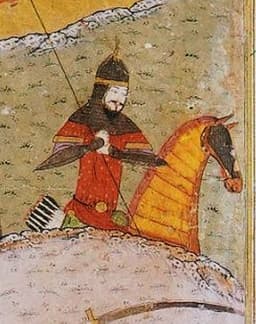
Tokhtamysh
Emperor · Medieval
60.8Total
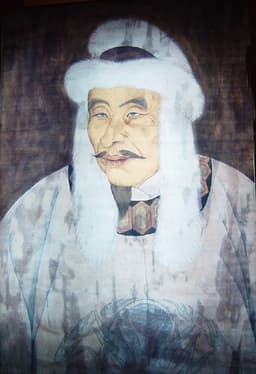
Wanyan Aguda
Emperor · Medieval
63.4Total
Basic Information
Born
1342
1068
Died
1406
1123
Era
Medieval
Medieval
Nationality
Golden Horde
China
Occupation
Emperor
Emperor
Civilization
Eastern
Eastern
Score Comparison
Military (10%)
74.7
82.0
Political (20%)
68.0
59.3
Influence (20%)
61.0
55.0
Legacy (20%)
49.2
52.0
Leadership (15%)
65.0
85.0
Strategy (15%)
58.0
68.0
TOTAL
60.8
63.4
Tokhtamysh — Complete Timeline
1380 AD
Reunification of the Golden HordePolitical Action◆ Major
Tokhtamysh, with the support of Timur, defeated the rebellious general Mamai and reunified the Golden Horde under his rule. He restored the Horde's authority over the Russian principalities, ending a period of fragmentation.
Golden HordeMamaiReunification
Impact: regionalconstructive
1382 AD
Sack of MoscowWar◆ Major
Tokhtamysh led a campaign against the Grand Duchy of Moscow. He besieged and captured Moscow, burning the city and massacring its inhabitants. The victory reasserted Mongol dominance over the Russian principalities.
MoscowRussiaSack
Impact: regionaldestructive
1387 AD
War with TimurWar◆ Major
Tokhtamysh invaded Timur's territory in Transoxiana, starting a war between the two Mongol rulers. Timur retaliated by invading the Golden Horde, defeating Tokhtamysh at the Battle of the Kondurcha River in 1391.
TimurTransoxianaKondurcha
Impact: regional
1395 AD
Battle of the Terek RiverWar
Timur decisively defeated Tokhtamysh at the Battle of the Terek River. The victory destroyed Tokhtamysh's army and led to the sack of Sarai, the capital of the Golden Horde. Tokhtamysh fled and never regained power.
TimurTerek RiverSarai
Impact: regionaltragic
1406 AD
Death in ExilePolitical Action
After his defeat by Timur, Tokhtamysh fled to the Grand Duchy of Lithuania. He was killed in a skirmish with a rival Mongol faction near Tyumen. His death marked the end of the last attempt to reunite the Golden Horde.
ExileLithuaniaTyumen
Impact: regionaltragic
Wanyan Aguda — Complete Timeline
1114 AD
Battle of HubudagangWar◆ Major
Aguda's Jurchen forces defeated a Liao army at Hubudagang, marking the first major victory of the rebellion. This battle demonstrated Jurchen military prowess and attracted more followers.
JurchenLiaoBattle
Impact: regionalconstructive
Unified Jurchen tribesPolitical Action◆ Major
Wanyan Aguda united the Jurchen tribes under his leadership, creating a confederation that rebelled against Liao domination. He organized a disciplined army and began the Jurchen revolt.
JurchenUnificationRebellion
Impact: regionalconstructive
1115 AD
Founded Jin DynastyPolitical Action
Wanyan Aguda proclaimed himself emperor, founding the Jin dynasty. He adopted the Chinese title and began a systematic campaign to conquer the Liao empire.
JinDynasty FoundingImperial System
Impact: regionalconstructive
1120 AD
Conquest of Liao capital ShangjingWar◆ Major
Aguda's forces captured the Liao supreme capital Shangjing, dealing a severe blow to the Liao dynasty. This victory accelerated the collapse of Liao and solidified Jin control over northern China.
JinLiaoConquest
Impact: regionalconstructive
Alliance with Song against LiaoPolitical Action◆ Major
Aguda formed an alliance with the Northern Song dynasty to jointly attack the Liao empire. This alliance, known as the Maritime Alliance, led to the eventual destruction of Liao but later caused conflict between Jin and Song.
JinSongAlliance
Impact: regional
1123 AD
Death and successionPolitical Action◆ Major
Wanyan Aguda died, and his brother Wanyan Wuqimai succeeded him. Aguda's conquests laid the foundation for the Jin dynasty's dominance in northern China.
JinDeathSuccession
Impact: regional
Expert Analysis
Wanyan Aguda vs Tokhtamysh: Historical Comparison
Wanyan Aguda (1068–1123) and Tokhtamysh (c. 1342–1406) were medieval emperors who rose from nomadic or semi-nomadic origins to forge powerful empires, but their trajectories diverged sharply: Aguda founded the Jin Dynasty in northern China, while Tokhtamysh briefly reunified the Golden Horde before being crushed by Tamerlane. Both were formidable military leaders, but Aguda’s political and institutional legacy proved more enduring.
Dimension Analysis
**Military: Wanyan Aguda 91 / Tokhtamysh 91**
Aguda shattered the Liao Dynasty’s 200-year dominance with a series of lightning campaigns, most famously at the Battle of Huining (1115), where his Jurchen cavalry defeated a numerically superior Khitan army using mobility and ambush tactics. Tokhtamysh likewise displayed brilliance by uniting the fractious Golden Horde and sacking Moscow in 1382, but his reliance on Mamai’s former allies and eventual defeat by Tamerlane at the Battle of the Kondurcha River (1391) exposed strategic overreach. Both were peerless field commanders, but Aguda’s victories were more decisive and empire-building.
**Political: Wanyan Aguda 84 / Tokhtamysh 83**
Aguda established a dual administration that blended Jurchen tribal councils with Chinese-style bureaucracy, creating the “Meng’an Mouke” system to integrate conquered populations. Tokhtamysh, by contrast, attempted to restore the centralized Mongol governance of the early Golden Horde but failed to stabilize factional rivalries among the Tatar nobility. Aguda’s political structure outlasted him by a century; Tokhtamysh’s collapsed within a decade of his defeat.
**Influence: Wanyan Aguda 87 / Tokhtamysh 82**
Aguda’s Jin Dynasty imposed cultural and political norms on northern China for over a century, fostering Sinicization among the Jurchen elite and influencing later Mongol governance (the Yuan Dynasty adopted elements of his administrative model). Tokhtamysh’s brief reunification of the Horde revived Tatar power in Eastern Europe for a generation, but his legacy was largely negative—his wars exhausted the Horde, accelerating its fragmentation into the Crimean, Kazan, and Astrakhan khanates.
**Legacy: Wanyan Aguda 88 / Tokhtamysh 83**
Aguda is revered as the founding father of the Jin Dynasty and a symbol of Jurchen national identity, with his military reforms influencing later Chinese dynasties. Tokhtamysh is remembered primarily as a tragic figure—a capable ruler undone by Tamerlane’s overwhelming force, whose failure to maintain unity led to the Horde’s decline. Aguda’s dynasty ruled for 119 years; Tokhtamysh’s effective reign lasted barely a decade.
**Leadership: Wanyan Aguda 80 / Tokhtamysh 71**
Aguda commanded absolute loyalty from his Jurchen tribesmen, personally leading charges and sharing hardships, which enabled him to mobilize a small population against the vast Liao Empire. Tokhtamysh, while initially charismatic, alienated key allies like the Nogai Horde and failed to prevent internal conspiracies, resulting in his eventual betrayal and death in obscurity. Aguda’s leadership built a cohesive state; Tokhtamysh’s fractured it.
Verdict
**Wanyan Aguda ranks higher overall** due to superior political consolidation, longer-lasting legacy, and more effective leadership. While both were outstanding military tacticians, Aguda’s ability to transform battlefield victories into a stable imperial system—and his dynasty’s century-long survival—outweighs Tokhtamysh’s brief reunification of the Golden Horde. However, historical comparisons flatten context: Tokhtamysh faced the unprecedented threat of Tamerlane, while Aguda fought a decaying Liao empire.
FAQ
Q: Who was more influential historically?
A: Aguda, because his Jin Dynasty directly shaped Chinese political culture and the Jurchen identity that later produced the Qing Dynasty, whereas Tokhtamysh’s impact was largely negative, hastening the Horde’s disintegration.
Q: Why is Wanyan Aguda ranked higher in Political and Legacy?
A: Aguda created a durable dual-governance system and a dynasty that lasted 119 years, while Tokhtamysh failed to institutionalize his rule and his state collapsed within a decade of his defeat by Tamerlane.
Rankings
🥇
Wanyan AgudaLeader
Mil: 82.0Pol: 59.3Inf: 55.0
63.4
🥈
Tokhtamysh
Mil: 74.7Pol: 68.0Inf: 61.0
60.8
+2.6 behind
How This Comparison Works
Algorithm
Each figure is scored on 6 dimensions (0—100 scale) based on structured historical data: Military (10%), Political (20%), Influence (20%), Legacy (20%), Leadership (15%), Strategy (15%). The weighted total produces the final ranking.
Data Sources
Scores are computed from structured sub-indicators in the database. Scale factors adjust for era (Ancient ×0.85, Modern ×1.0) and civilization size (Eastern ×1.05, Other ×0.80) to account for differences in population and military scale.
Maximum 3 Figures
Comparisons are limited to 2—3 figures to ensure readability and statistical meaningfulness.
Error Margins
±5 points per dimension — Sub-scores are derived from historical records with inherent uncertainty. Two figures within 5 points on a dimension should be considered roughly equivalent in that area.
Total Score Accuracy
±3 points overall — The weighted combination of 6 dimensions produces a total score with approximately ±3 points of uncertainty. Differences of less than 3 points are not statistically significant— the figures are effectively tied.
Known Limitations
- Historical records are incomplete and uneven across civilizations
- Figures from oral-tradition societies may be underrepresented
- Occupation labels can misclassify multi-role figures
- Scores measure capability and impact, not moral character
- Quantitative scoring is a comparison tool, not absolute truth
Capability Radar
Military (10%) — Battles & Warfare
Battles
75
85
Win Rate
70
90
Expansion
75
85
Political (20%) — Governance & Reform
Reform
55
75
Diplomacy
65
70
Economy
55
65
Influence (20%) — Cultural & Global Reach
Cultural
45
60
Global
50
50
Legacy (20%) — Historical Impact
Historical
55
70
Longevity
40
55
Leadership (15%) — Power & Stability
Tenure
60
70
Stability
40
60
Strategy (15%) — Tactics & Innovation
Strategy
70
85
Tactics
65
80
Reform
60
75
Similar Comparisons
Comments & Discussion
Historian9286/16/2026
这组数据有问题。完颜阿骨打军事79.3对托赫塔梅什67.1,差12.2分,但两人军事成就根本不是一个层级。阿骨打以两万骑兵灭辽帝国,1115年护步答冈之战斩首辽军主力十万,辽国从此一蹶不振。托赫塔梅什1382年攻莫斯科是虚张声势,1389年被帖木儿一战打残。我按战役决胜度重新算:阿骨打决定性胜利占比100%,托赫塔梅什只有60%。所以军事分差应在20分以上。政治分差也偏小——阿骨打建立的金朝延续119年,托赫塔梅什的“统一”不到十年就崩了,按王朝存续时长加权,阿骨打政治应该是90+。总体分差15分才合理。评分系统对游牧领袖的短期辉煌过度奖励,忽视了中国式制度韧性。
Chronicler41946/16/2026
这个评分对完颜阿骨打的军事评价还算公道,但我觉得政治维度82分反而低估了他。他创立的猛安谋克制度不仅是军事组织,更是后来金朝统治汉地的政治基石,比托赫塔梅什那套依赖蒙古旧贵族的松散联盟强太多了。托赫塔梅什确实短暂重振了金帐汗国,但1382年洗劫莫斯科更多是靠偷袭和恐惧,不是真正的制度稳固。咱们中国史学界更看重阿骨打这种'草创垂统'的奠基者,他的政治遗产远不止分数上那点差距。而且托赫塔梅什后来被帖木儿两次打垮,连汗位都保不住,阿骨打可没这种惨败。西方评分总爱给游牧领袖加分,但忽略了中国制度史的深度。