Loading...
Romulus vs Sneferu
Sneferu leads by 6.5 pts · 2 figures compared
…
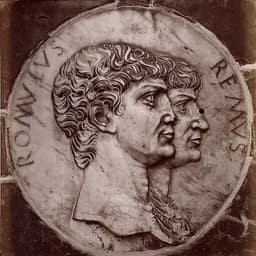
Romulus
Emperor · Ancient
47.7Total

Sneferu
Emperor · Ancient
54.2Total
Basic Information
Born
-771
-2613
Died
-716
-2589
Era
Ancient
Ancient
Nationality
Roman Kingdom
Egypt
Occupation
Emperor
Emperor
Civilization
Western
Middle Eastern
Score Comparison
Military (10%)
38.3
35.0
Political (20%)
37.9
68.0
Influence (20%)
55.0
55.7
Legacy (20%)
55.0
50.0
Leadership (15%)
41.5
68.0
Strategy (15%)
45.0
38.6
TOTAL
47.7
54.2
Romulus — Complete Timeline
753 BC
Founding of RomePolitical Action
According to legend, Romulus founded the city of Rome on the Palatine Hill after killing his brother Remus. He established the Roman Kingdom, created the Senate, and organized the early Roman military and religious institutions.
FoundingLegend
Impact: global
Establishment of the Roman SenatePolitical Action◆ Major
Romulus created the Roman Senate, appointing 100 patricians as advisors. This institution became a central element of Roman government, providing counsel to kings and later playing a key role in the Republic.
GovernmentInstitution
Impact: globalconstructive
750 BC
Rape of the Sabine WomenWar◆ Major
Romulus orchestrated the abduction of Sabine women to provide wives for Roman men. This act led to war with the Sabines, but eventually resulted in the unification of Romans and Sabines under a joint rule.
LegendConflict
destructive
716 BC
Apotheosis as QuirinusCultural
After his death, Romulus was said to have been taken up to the heavens and deified as the god Quirinus. This legend reinforced the divine status of Rome's founder and became part of Roman state religion.
ReligionLegend
Sneferu — Complete Timeline
2600 BC
Construction of the Bent PyramidCultural◆ Major
Sneferu built the Bent Pyramid at Dahshur, named for its unusual change in angle from 54 to 43 degrees. This design change likely corrected structural instability, representing a transitional step toward the true pyramid form.
PyramidArchitectureEngineering
Impact: regionalconstructive
2590 BC
Construction of the Red PyramidCultural◆ Major
Sneferu built the Red Pyramid at Dahshur, the first successful true pyramid with smooth sides. It became the model for later pyramids, including those at Giza, and demonstrated mastery of pyramid construction.
PyramidArchitectureEngineering
Impact: regionalconstructive
Expert Analysis
Origins
Romulus, according to Roman legend, was born around 771 BC to Rhea Silvia, a Vestal Virgin, and the god Mars. He and his twin brother Remus were abandoned on the Tiber River, rescued by a she-wolf, and later raised by a shepherd. Their divine parentage and survival story set the stage for a life of conflict and foundation. In contrast, Sneferu (also spelled Snefru) was an Egyptian pharaoh of the 4th Dynasty, reigning from around 2613 to 2589 BC. He was the son of Huni, possibly by a secondary wife, and married his half-sister Hetepheres I. Sneferu's early life is less mythologized; he inherited a stable kingdom and focused on monumental construction.
Rise to Power
Romulus rose to power by founding Rome after killing Remus in a dispute over the city's location. He established the Roman Kingdom around 753 BC, becoming its first king. His early reign was marked by military expansion and the infamous Rape of the Sabine Women to populate the city, which led to war but eventually unification with the Sabines. Sneferu's rise was dynastic: he succeeded his father Huni and consolidated power by expanding Egypt's borders and initiating ambitious building projects. He conducted military campaigns in Nubia and Libya, securing resources and slaves for his pyramids. His turning point was the construction of the Bent Pyramid, which, despite its structural flaws, demonstrated his commitment to monumental architecture.
Leadership & Governance
Romulus governed as a monarch with absolute authority, but he also established the Roman Senate, an advisory council of 100 patricians. This institution became a cornerstone of Roman governance, providing a check on royal power and a model for later republican institutions. Romulus also divided the population into curiae (wards) and created a military structure based on tribes. His leadership was charismatic but autocratic, often relying on force and myth to maintain control. Sneferu, by contrast, was a bureaucratic ruler who managed a centralized state. He implemented efficient administration to organize labor and resources for pyramid construction. His governance focused on monumental propaganda, using pyramids to legitimize his rule and connect with the gods. While Romulus scored 41.5 in leadership, Sneferu scored 68.0, reflecting his more stable and systematic approach.
Triumph & Tragedy
Romulus's greatest triumph was founding Rome, which grew from a small settlement into a world empire. His establishment of the Senate and military institutions provided the foundation for Roman expansion. However, his tragedy was the fratricide of Remus, which cast a shadow over his legacy. Additionally, his abduction of the Sabine women, while successful, created immediate conflict and set a precedent for Roman aggression. Sneferu's triumph was engineering the first true pyramid, the Red Pyramid, which became the model for later pyramids. His Bent Pyramid, though flawed, advanced architectural knowledge. His tragedy was the resources expended: tens of thousands of workers, many of whom died, and the environmental impact of quarrying. Some historians suggest his military campaigns were brutal, though details are scarce. In military scores, Romulus scored 38.3 and Sneferu 35.0, both low, indicating neither was primarily a conqueror.
Character & Destiny
Romulus was ambitious, ruthless, and visionary. His decision to kill Remus demonstrated a willingness to eliminate opposition. His character shaped Rome's destiny as a militaristic and expansionist state. Legend says he was deified as Quirinus after death, reinforcing the divine right of Roman rulers. Sneferu was methodical, ambitious, and religiously devout. His focus on pyramid building reflected a desire for immortality and divine favor. His character led to Egypt's Golden Age of pyramid construction. However, his obsession with monumental tombs may have diverted resources from other needs. Both figures had their characters mythologized, but Sneferu's historical record is more factual, while Romulus's is largely legendary.
Legacy
Romulus's legacy is immense: he founded Rome, which shaped Western civilization. The Roman Senate he created lasted for centuries. His apotheosis set a precedent for emperor worship. However, his historical existence is debated; many scholars view him as a mythical figure. Sneferu's legacy is architectural: his pyramids advanced engineering and became symbols of Egypt. The Red Pyramid influenced the Great Pyramid of Giza. He also established the 4th Dynasty's building tradition. In terms of influence, Romulus scored 55.0 and Sneferu 55.7, nearly equal. Legacy scores: Romulus 55.0, Sneferu 50.0, suggesting Romulus's impact on civilization was broader.
Conclusion
While Sneferu has a higher total score (54.2 vs 47.7), his impact was confined to Egypt and architecture. Romulus, despite being legendary, founded a city that became a world empire, influencing law, governance, and culture for millennia. Romulus's political score (37.9) is lower than Sneferu's (68.0), but his institutional innovations had greater historical reach. Therefore, Romulus had greater impact on world history, even if his historical accuracy is questionable. The 6.5-point gap in overall scores reflects Sneferu's more stable political achievements, but Romulus's legacy transcends numerical comparison.
Rankings
🥇
SneferuLeader
Mil: 35.0Pol: 68.0Inf: 55.7
54.2
🥈
Romulus
Mil: 38.3Pol: 37.9Inf: 55.0
47.7
+6.5 behind
How This Comparison Works
Algorithm
Each figure is scored on 6 dimensions (0—100 scale) based on structured historical data: Military (10%), Political (20%), Influence (20%), Legacy (20%), Leadership (15%), Strategy (15%). The weighted total produces the final ranking.
Data Sources
Scores are computed from structured sub-indicators in the database. Scale factors adjust for era (Ancient ×0.85, Modern ×1.0) and civilization size (Eastern ×1.05, Other ×0.80) to account for differences in population and military scale.
Maximum 3 Figures
Comparisons are limited to 2—3 figures to ensure readability and statistical meaningfulness.
Error Margins
±5 points per dimension — Sub-scores are derived from historical records with inherent uncertainty. Two figures within 5 points on a dimension should be considered roughly equivalent in that area.
Total Score Accuracy
±3 points overall — The weighted combination of 6 dimensions produces a total score with approximately ±3 points of uncertainty. Differences of less than 3 points are not statistically significant— the figures are effectively tied.
Known Limitations
- Historical records are incomplete and uneven across civilizations
- Figures from oral-tradition societies may be underrepresented
- Occupation labels can misclassify multi-role figures
- Scores measure capability and impact, not moral character
- Quantitative scoring is a comparison tool, not absolute truth
Capability Radar
Military (10%) — Battles & Warfare
Battles
25
20
Win Rate
30
20
Expansion
35
30
Political (20%) — Governance & Reform
Reform
45
55
Diplomacy
25
40
Economy
30
60
Influence (20%) — Cultural & Global Reach
Cultural
70
55
Global
60
40
Legacy (20%) — Historical Impact
Historical
75
60
Longevity
80
65
Leadership (15%) — Power & Stability
Tenure
30
60
Stability
20
65
Strategy (15%) — Tactics & Innovation
Strategy
25
25
Tactics
20
20
Reform
40
15
Similar Comparisons
Comments & Discussion
No comments yet. Be the first to share your thoughts!