Loading...
Rurik vs Taejo of Joseon
Taejo of Joseon leads by 10.8 pts · 2 figures compared
…
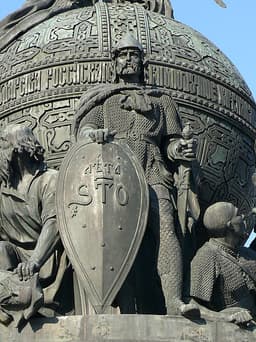
Rurik
Emperor · Medieval
59.6Total
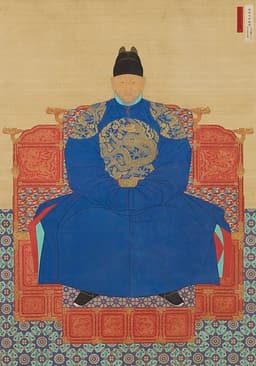
Taejo of Joseon
Emperor · Medieval
70.4Total
Basic Information
Born
830
1335
Died
879
1408
Era
Medieval
Medieval
Nationality
Kievan Rus
Korea
Occupation
Emperor
Emperor
Civilization
Western
Eastern
Score Comparison
Military (10%)
50.0
74.7
Political (20%)
35.1
65.0
Influence (20%)
82.0
65.0
Legacy (20%)
68.0
80.0
Leadership (15%)
55.3
72.0
Strategy (15%)
35.7
61.2
TOTAL
59.6
70.4
Rurik — Complete Timeline
860 AD
Sent Askold and Dir to ConstantinopleWar
According to tradition, Rurik sent his lieutenants Askold and Dir to raid Constantinople. While the historicity is uncertain, this event is associated with the first Rus' attack on the Byzantine Empire, highlighting early Rus' expansion.
RaidByzantine EmpireExpansion
Impact: regional
862 AD
Founded the Rurik dynastyPolitical Action
According to the Primary Chronicle, Rurik, a Varangian chieftain, was invited by Slavic and Finnic tribes to rule over them. He established his capital at Novgorod, founding the Rurik dynasty that would rule Kievan Rus' and later the Tsardom of Russia until 1598.
FoundationVarangianKievan Rus'
Impact: global
864 AD
Consolidated control over NovgorodPolitical Action◆ Major
Rurik consolidated his rule over Novgorod and the surrounding territories, suppressing a rebellion led by Vadim the Bold. He established a centralized authority that became the basis for the early Russian state.
ConsolidationNovgorodRebellion
Impact: regional
Taejo of Joseon — Complete Timeline
1380 AD
Battle of HwangsanWar
General Yi Seong-gye defeated a Japanese pirate (wokou) force at Hwangsan. This victory enhanced his military reputation and demonstrated his capability as a commander.
WokouGoryeo Military
1388 AD
Wihwado RetreatPolitical Action
General Yi Seong-gye, ordered to invade the Ming dynasty's Liaodong region, turned his army back at Wihwado Island. This act of defiance against the Goryeo court led to a coup that eventually brought him to power.
CoupGoryeo-Ming RelationsPower Shift
Impact: national
1391 AD
Land Reform and the Gwajeon LawReform◆ Major
Taejo implemented the Gwajeon Law, a land reform that redistributed land from the old Goryeo aristocracy to his supporters and the state. This weakened the old elite and strengthened the new Joseon ruling class.
Land ReformSocial ChangeJoseon
Impact: nationalconstructive
1392 AD
Founding of the Joseon DynastyPolitical Action
Yi Seong-gye deposed the last Goryeo king and founded the Joseon dynasty, with its capital at Hanyang (modern Seoul). He established a new ruling class based on Confucian ideology, replacing the Buddhist-influenced Goryeo system.
Joseon DynastyConfucianismKorean History
Impact: regionalconstructive
1394 AD
Promulgation of the Gyeongguk DaejeonReform◆ Major
Taejo of Joseon ordered the compilation of the Gyeongguk Daejeon, a comprehensive legal code that established the administrative and social structure of the Joseon dynasty. This code remained in effect for centuries.
Legal CodeGovernanceConfucianism
Impact: nationalconstructive
Expert Analysis
Taejo of Joseon vs Rurik
### The Founder and the Viking: Two Paths to a Dynasty
On a summer day in 1388, a Korean general named Yi Seong-gye stood on an island in the Yalu River, his army behind him, and made a decision that would echo through centuries. He had been ordered by the king of Goryeo to invade Ming China’s Liaodong region—a suicidal campaign that would pit his exhausted troops against the might of the new Ming dynasty. Instead, Yi turned his army around and marched back toward the capital. That single act of defiance, the Wihwado Retreat, was not a retreat at all. It was the pivot on which Korean history turned. Half a millennium earlier and half a continent away, another leader, a Varangian chieftain named Rurik, had taken a different kind of step into history—not by turning back, but by arriving. According to the *Primary Chronicle*, Slavic and Finnic tribes, weary of their own internal strife, sent an invitation across the Baltic: “Come and rule over us.” Rurik came, and with him, the seeds of a dynasty that would shape Russia for seven hundred years. One founder was a rebel general who seized power through calculated risk; the other was a semi-legendary warlord invited to bring order. How did such different origins produce two of Eurasia’s most enduring ruling houses?
### Origins
Yi Seong-gye was born in 1335 into a military family of the Goryeo dynasty, a kingdom already in decline. The Mongol Empire had weakened, and the Ming were rising. Japan’s wokou pirates ravaged the coasts. Korea was a pressure cooker. Yi grew up in a world where survival depended on martial skill and political cunning. His father served as a local official, but the boy learned war early. By contrast, Rurik emerged from the fog of the 9th century, a time when Viking longships were the terror and the engine of Europe. He was a Varangian, a Norse adventurer who plied the rivers of Eastern Europe, trading furs and slaves, raiding when profitable. If Yi was a product of a sophisticated, literate Confucian bureaucracy, Rurik was a creature of the warrior’s code—honor, plunder, and the sword. The *Primary Chronicle* is our only source for his life, and it reads more like legend than history. Yet the difference in their eras is stark: Yi lived in a world of written law and centralized kingship; Rurik ruled in an age of tribal chieftains and oral tradition.
### Rise to Power
Yi’s rise was a masterclass in opportunism. In 1380, at the Battle of Hwangsan, he crushed a wokou pirate force, earning a reputation as Korea’s most capable general. But his real brilliance was political. The Wihwado Retreat of 1388 was not just a military decision—it was a declaration. By refusing to invade Ming China, Yi sided with the people and the Confucian scholars who wanted reform, not war. He then deposed the last Goryeo king in 1392 and founded the Joseon dynasty, moving the capital to Hanyang, modern Seoul. Rurik’s rise, if the chronicle is to be believed, was almost the opposite. In 862, he was invited by warring tribes to rule Novgorod. He did not conquer—he was summoned. By 864, he had consolidated control, suppressing a rebellion by one Vadim the Bold. Where Yi fought his way to power, Rurik was handed a crown. One path was violent ambition; the other, a kind of political vacuum that demanded a strongman.
### Leadership & Governance
As king, Taejo of Joseon was a reformer. In 1391, he enacted the Gwajeon Law, a land redistribution that broke the power of the old Goryeo aristocracy and rewarded his supporters. He then ordered the compilation of the Gyeongguk Daejeon, a comprehensive legal code that established the administrative framework of Joseon for five centuries. He built a Confucian state, with a centralized bureaucracy, civil service exams, and a capital designed according to feng shui. Rurik left no such legacy. He ruled Novgorod as a Varangian prince, relying on the tribute system and the loyalty of his warriors. He sent his lieutenants Askold and Dir to raid Constantinople in 860, but his own governance was rudimentary—personal, tribal, and oral. The difference is the gap between a bureaucrat and a Viking. Yi governed through institutions; Rurik governed through presence. One built a state that would last until 1910; the other founded a dynasty that would evolve into the Tsardom of Russia, but his own rule was brief and shadowy.
### Triumph & Tragedy
Yi’s greatest triumph was the founding of Joseon itself—a dynasty that gave Korea its longest period of stability, cultural flowering, and the creation of Hangul by his descendant King Sejong. But his tragedy was personal. He abdicated in 1398 after a bloody succession struggle between his sons, a civil war that stained his new dynasty with fratricide. Rurik’s triumph was the dynasty itself. His descendants—Oleg, Vladimir the Great, Yaroslav the Wise—would turn a collection of tribes into Kievan Rus’, a medieval power. But Rurik’s tragedy is that we know almost nothing about him. He is a ghost, a placeholder. His historical existence is debated. He may be a legend invented to give the Rurikids a heroic origin. Yi is solidly real; Rurik is a whisper in the chronicle.
### Character & Destiny
Yi Seong-gye was a pragmatist. He was not a visionary like his grandson Sejong, but a soldier who saw the moment and seized it. His Wihwado Retreat shows a man who could defy his king, read the political winds, and act. He was ruthless when needed—he executed Goryeo loyalists—but also a builder. Rurik, if the legend holds, was a chieftain who accepted an invitation to power. His character is opaque, but the invitation itself suggests a reputation for fairness or strength. Their destinies were shaped by their eras: Yi lived in an age of Confucian statecraft, where a founder needed laws and land reforms; Rurik lived in an age of migration and war, where a leader needed swords and loyalty.
### Legacy
Taejo of Joseon is remembered as the founder of Korea’s last and longest dynasty. His portrait hangs in the royal shrine of Jongmyo; his tomb is a UNESCO World Heritage site. His legacy is the Joseon state itself—its Confucian order, its bureaucracy, its cultural achievements. Rurik’s legacy is more diffuse. The Rurik dynasty ruled Russia until 1598, and its last tsar, Ivan the Terrible, was a Rurikid. But Rurik himself is a symbol, not a person. He is the ancestor, the founder of a myth. Yi is a historical figure; Rurik is a story.
### Conclusion
Standing on the Wihwado Island in 1388, Yi Seong-gye turned his back on the past. He chose the future—a new dynasty, a new capital, a new order. Rurik, arriving in Novgorod in 862, also chose the future, but he could not have known what he was starting. One founder was a man of flesh and blood, whose decisions we can trace; the other is a figure of legend, whose reality we must guess. Both founded dynasties that shaped millions of lives. But in the end, the difference is this: Yi built a state; Rurik started a story. And sometimes, a story is enough.
Rankings
🥇
Taejo of JoseonLeader
Mil: 74.7Pol: 65.0Inf: 65.0
70.4
🥈
Rurik
Mil: 50.0Pol: 35.1Inf: 82.0
59.6
+10.8 behind
How This Comparison Works
Algorithm
Each figure is scored on 6 dimensions (0—100 scale) based on structured historical data: Military (10%), Political (20%), Influence (20%), Legacy (20%), Leadership (15%), Strategy (15%). The weighted total produces the final ranking.
Data Sources
Scores are computed from structured sub-indicators in the database. Scale factors adjust for era (Ancient ×0.85, Modern ×1.0) and civilization size (Eastern ×1.05, Other ×0.80) to account for differences in population and military scale.
Maximum 3 Figures
Comparisons are limited to 2—3 figures to ensure readability and statistical meaningfulness.
Error Margins
±5 points per dimension — Sub-scores are derived from historical records with inherent uncertainty. Two figures within 5 points on a dimension should be considered roughly equivalent in that area.
Total Score Accuracy
±3 points overall — The weighted combination of 6 dimensions produces a total score with approximately ±3 points of uncertainty. Differences of less than 3 points are not statistically significant— the figures are effectively tied.
Known Limitations
- Historical records are incomplete and uneven across civilizations
- Figures from oral-tradition societies may be underrepresented
- Occupation labels can misclassify multi-role figures
- Scores measure capability and impact, not moral character
- Quantitative scoring is a comparison tool, not absolute truth
Capability Radar
Military (10%) — Battles & Warfare
Battles
15
75
Win Rate
20
80
Expansion
30
65
Political (20%) — Governance & Reform
Reform
30
85
Diplomacy
35
70
Economy
25
65
Influence (20%) — Cultural & Global Reach
Cultural
50
80
Global
60
60
Legacy (20%) — Historical Impact
Historical
70
85
Longevity
80
80
Leadership (15%) — Power & Stability
Tenure
40
70
Stability
30
75
Strategy (15%) — Tactics & Innovation
Strategy
20
75
Tactics
15
70
Reform
10
60
Similar Comparisons
Comments & Discussion
Historian6416/16/2026
The Wihwado Retreat is Yi's real masterstroke; it's not a rebellion but strategic genius. Rurik's "invitation" reeks of myth-making—likely a story cooked up later to legitimize Varangian rule. Yi turned down certain defeat and civil war, while Rurik just walked into a power vacuum. Compare that: one gambled with a sword, the other with a legend. Give me the general any day.