Loading...
Saito Dosan vs Wanyan Zongbi
Saito Dosan leads by 0.6 pts · 2 figures compared
…
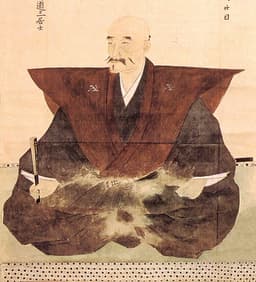
Saito Dosan
General · Medieval
56.3Total

Wanyan Zongbi
General · Medieval
55.7Total
Basic Information
Born
1494
1095
Died
1556
1148
Era
Medieval
Medieval
Nationality
Japan
China
Occupation
General
General
Civilization
Eastern
Eastern
Score Comparison
Military (10%)
50.0
74.0
Political (20%)
68.0
40.8
Influence (20%)
53.3
53.3
Legacy (20%)
47.5
45.8
Leadership (15%)
71.0
71.0
Strategy (15%)
52.5
67.2
TOTAL
56.3
55.7
Saito Dosan — Complete Timeline
1542 AD
Seizure of Mino ProvincePolitical Action◆ Major
Dosan overthrew the Toki clan, the legitimate rulers of Mino Province, and declared himself daimyo. This coup, achieved through a combination of military force and political maneuvering, marked his rise from a commoner to a powerful lord.
CoupMinoSengoku Period
Impact: regional
1548 AD
Alliance with Oda NobuhidePolitical Action◆ Major
Dosan formed an alliance with Oda Nobuhide, sealed by the marriage of his daughter Nohime to Nobuhide's son Nobunaga. This alliance secured Dosan's eastern flank and strengthened both clans against the Imagawa.
AllianceMarriageSengoku Period
Impact: regionalconstructive
1556 AD
Battle of Nagara-gawaWar◆ Major
Dosan was killed in battle against his son Saito Yoshitatsu at Nagara-gawa. Yoshitatsu, who had rebelled against his father, defeated Dosan's forces, ending Dosan's rule over Mino and his life.
BattleRebellionSengoku Period
Impact: regionaltragic
Wanyan Zongbi — Complete Timeline
1129 AD
Campaign against Song in 1129-1130War◆ Major
Wanyan Zongbi led a major Jin invasion of Southern Song territory, advancing deep into the south. He captured the Song capital of Hangzhou temporarily but was eventually repelled by Song forces.
JinSongInvasion
Impact: regionaldestructive
1140 AD
Battle of YanchengWar◆ Major
Wanyan Zongbi's Jin army was defeated by Yue Fei's Song forces at Yancheng. This battle was a major setback for Jin and demonstrated the effectiveness of Yue Fei's military tactics.
JinSongBattle
Impact: regionaltragic
1141 AD
Negotiated Treaty of ShaoxingPolitical Action
Wanyan Zongbi played a key role in negotiating the Treaty of Shaoxing with the Southern Song. The treaty established the Huai River as the border and required Song to pay tribute to Jin, ending major hostilities.
JinSongTreaty
Impact: regional
1142 AD
Suppression of Yue FeiPolitical Action◆ Major
Wanyan Zongbi demanded the execution of Yue Fei as part of the peace settlement. The Song court complied, executing Yue Fei, which removed a major obstacle to Jin's security.
JinSongExecution
Impact: regionaldestructive
1148 AD
Death and legacyOther
Wanyan Zongbi died, having been one of the most influential Jin generals. His campaigns and diplomacy shaped Jin-Song relations for decades.
JinDeathLegacy
Impact: regional
Expert Analysis
Origins
Saito Dosan was born around 1494 in Japan, possibly as the son of a oil merchant or a low-ranking samurai. His early life is obscure, but he rose from humble beginnings, reportedly working as an oil seller before entering the service of the Toki clan in Mino Province. He adopted the name Saito and gradually accumulated power through strategic marriages and military acumen. His background as a commoner shaped his pragmatic and ruthless approach.
Wanyan Zongbi, also known as Jin Wuzhu, was born around 1100 as a prince of the Jurchen Jin dynasty in northern China. He was the fourth son of Emperor Taizu of Jin, making him part of the imperial family. His early training was in cavalry warfare and nomadic traditions. His noble birth gave him access to high command and resources from the start.
Rise to Power
Dosan's rise began when he served the Toki clan as a retainer. In 1542, he orchestrated a coup, overthrowing Toki Yorinari and seizing control of Mino Province. He secured his position by forming an alliance with Oda Nobuhide in 1544, marrying his daughter Nohime to Nobuhide's son Nobunaga. This alliance provided protection and legitimacy. By 1547, Dosan was recognized as daimyo of Mino, scoring 68.0 in political acumen.
Wanyan Zongbi rose to prominence during the Jin-Song wars. In 1129-1130, he led a major invasion of the Southern Song, capturing the Song capital of Hangzhou temporarily. His military successes earned him command of Jin forces. He scored 74.0 in military, reflecting his battlefield prowess. He became the primary Jin commander against Yue Fei, the Song general.
Leadership & Governance
Dosan ruled Mino with a firm hand, implementing land surveys and tax reforms to centralize control. He was known for strategic marriages and alliances, but his rule was contested by his own son, Yoshitatsu. Dosan's leadership style was cautious and calculating, as seen in his 71.0 leadership score. He avoided unnecessary battles, preferring diplomacy and intrigue.
Wanyan Zongbi led from the front, commanding cavalry charges. He was aggressive and decisive, but his governance was limited by his role as a general rather than a ruler. He negotiated the Treaty of Shaoxing in 1141, which established the Huai River as the border. His political score of 40.8 indicates less success in governance compared to Dosan.
Triumph & Tragedy
Dosan's greatest triumph was seizing Mino and establishing his dynasty. His alliance with Oda Nobuhide set the stage for Nobunaga's later unification. However, his tragedy was his death in 1556 at the Battle of Nagara-gawa, killed by his son Yoshitatsu's forces. His failure to secure loyalty within his family led to his downfall.
Wanyan Zongbi's triumph was forcing the Song to sue for peace, culminating in the Treaty of Shaoxing. He also demanded and secured the execution of Yue Fei in 1142, removing his greatest enemy. His tragedy was his defeat at the Battle of Yancheng in 1140, where Yue Fei's army defeated his cavalry. This setback demonstrated the limits of Jin military power.
Character & Destiny
Dosan was cunning and ruthless, earning the nickname "Viper of Mino." He was a master of political manipulation, but his paranoia and lack of trust in his son led to rebellion. His character was shaped by his commoner origins, driving him to secure power at any cost. Historians note his 71.0 leadership but also his failure in family relations.
Wanyan Zongbi was proud and determined, embodying Jin martial values. His insistence on executing Yue Fei showed his strategic thinking, but also his ruthlessness. He was a capable commander but overconfident, as seen in the Yancheng defeat. His 67.2 strategy score reflects his planning abilities.
Legacy
Dosan's legacy is as the father-in-law of Oda Nobunaga, who later unified Japan. His seizure of Mino was a stepping stone for Nobunaga's rise. However, his reputation as a usurper and his violent death limited his long-term impact. He scored 47.5 in legacy.
Wanyan Zongbi's legacy is more significant in Chinese history. He is remembered as a key figure in Jin-Song relations, and his campaigns shaped the border for decades. The Treaty of Shaoxing endured until the Mongol conquest. He scored 45.8 in legacy, slightly lower than Dosan.
Conclusion
While both were formidable generals, Wanyan Zongbi had a greater impact on the course of history. His military campaigns and diplomatic efforts reshaped the Jin-Song relationship, leading to a lasting peace. Dosan's influence was more localized and short-lived. With a military score of 74.0 versus Dosan's 50.0, and a strategy score of 67.2 versus 52.5, Zongbi outperformed Dosan in the key areas of warfare. Despite Dosan's higher political score (68.0 vs 40.8), Zongbi's overall effect on East Asian geopolitics was more profound. Thus, Wanyan Zongbi is the more significant historical figure.
Rankings
🥇
Saito DosanLeader
Mil: 50.0Pol: 68.0Inf: 53.3
56.3
🥈
Wanyan Zongbi
Mil: 74.0Pol: 40.8Inf: 53.3
55.7
+0.6 behind
How This Comparison Works
Algorithm
Each figure is scored on 6 dimensions (0—100 scale) based on structured historical data: Military (10%), Political (20%), Influence (20%), Legacy (20%), Leadership (15%), Strategy (15%). The weighted total produces the final ranking.
Data Sources
Scores are computed from structured sub-indicators in the database. Scale factors adjust for era (Ancient ×0.85, Modern ×1.0) and civilization size (Eastern ×1.05, Other ×0.80) to account for differences in population and military scale.
Maximum 3 Figures
Comparisons are limited to 2—3 figures to ensure readability and statistical meaningfulness.
Error Margins
±5 points per dimension — Sub-scores are derived from historical records with inherent uncertainty. Two figures within 5 points on a dimension should be considered roughly equivalent in that area.
Total Score Accuracy
±3 points overall — The weighted combination of 6 dimensions produces a total score with approximately ±3 points of uncertainty. Differences of less than 3 points are not statistically significant— the figures are effectively tied.
Known Limitations
- Historical records are incomplete and uneven across civilizations
- Figures from oral-tradition societies may be underrepresented
- Occupation labels can misclassify multi-role figures
- Scores measure capability and impact, not moral character
- Quantitative scoring is a comparison tool, not absolute truth
Capability Radar
Military (10%) — Battles & Warfare
Battles
45
75
Win Rate
50
65
Expansion
55
75
Political (20%) — Governance & Reform
Reform
45
30
Diplomacy
55
55
Economy
50
40
Influence (20%) — Cultural & Global Reach
Cultural
30
45
Global
20
35
Legacy (20%) — Historical Impact
Historical
40
55
Longevity
35
40
Leadership (15%) — Power & Stability
Tenure
50
60
Stability
40
50
Strategy (15%) — Tactics & Innovation
Strategy
55
70
Tactics
60
80
Reform
40
40
Similar Comparisons
Comments & Discussion
No comments yet. Be the first to share your thoughts!