Loading...
Sarit Thanarat vs Zachary Taylor
Sarit Thanarat leads by 7.0 pts · 2 figures compared
…
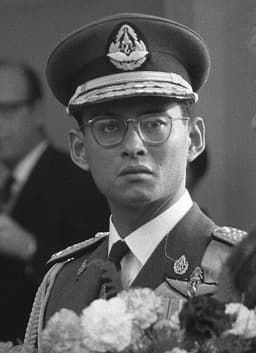
Sarit Thanarat
General · Modern
55.1Total
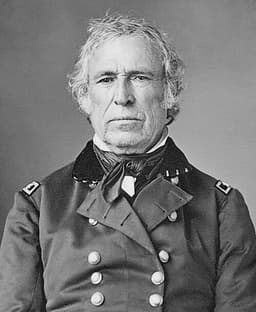
Zachary Taylor
General · Modern
48.1Total
Basic Information
Born
1908
1784
Died
1963
1850
Era
Modern
Modern
Nationality
Thailand
United States
Occupation
General
General
Civilization
Eastern
Western
Score Comparison
Military (10%)
47.5
63.3
Political (20%)
72.0
29.3
Influence (20%)
53.3
53.3
Legacy (20%)
44.2
44.2
Leadership (15%)
72.0
48.4
Strategy (15%)
43.3
57.5
TOTAL
55.1
48.1
Sarit Thanarat — Complete Timeline
1957 AD
Seized power in a coupPolitical Action◆ Major
Sarit Thanarat led a bloodless coup that overthrew the government of Phibun. He established a military dictatorship, dissolved parliament, and imposed martial law.
CoupDictatorshipMilitary Rule
Impact: national
Restored the monarchy's prestigePolitical Action◆ Major
Sarit revived the role of the monarchy, promoting King Bhumibol as a symbol of national unity. He reversed the anti-royalist policies of previous regimes and strengthened the king's ceremonial and political influence.
MonarchyRoyal RestorationNational Unity
Impact: nationalconstructive
1958 AD
Suppressed political opposition and dissentPolitical Action
Sarit cracked down on political opponents, including communists, intellectuals, and journalists. He arrested hundreds, closed newspapers, and banned political parties, consolidating his authoritarian rule.
RepressionAuthoritarianismHuman Rights
Impact: nationaldestructive
1961 AD
Launched the National Economic Development PlanReform◆ Major
Sarit initiated Thailand's first National Economic Development Plan, focusing on infrastructure, industrialization, and agriculture. This plan laid the foundation for Thailand's rapid economic growth in the following decades.
Economic DevelopmentPlanningModernization
Impact: nationalconstructive
Zachary Taylor — Complete Timeline
1846 AD
Battle of Palo AltoWar◆ Major
Taylor commanded U.S. forces in the first major battle of the Mexican-American War near present-day Brownsville, Texas. His army defeated Mexican forces under General Mariano Arista, securing the Rio Grande border.
Mexican-American WarBattleMilitary
Impact: regional
1847 AD
Battle of Buena VistaWar◆ Major
Taylor's outnumbered army defeated a larger Mexican force led by Santa Anna at Buena Vista, Coahuila. The victory made Taylor a national hero and boosted his presidential prospects.
Mexican-American WarBattleSanta Anna
Impact: regional
1848 AD
Elected President of the United StatesPolitical Action◆ Major
Taylor won the 1848 presidential election as the Whig candidate, defeating Democrat Lewis Cass and Free Soil candidate Martin Van Buren. His military fame and ambiguous stance on slavery secured victory.
PresidencyElectionWhig Party
Impact: national
1850 AD
Threatened to Veto Compromise of 1850Political Action◆ Major
Taylor opposed the Compromise of 1850, threatening to veto it and even to lead troops against secessionists. His death in July 1850 removed the main obstacle to the compromise's passage.
Compromise of 1850SlaverySecession
Impact: national
Died in OfficeOther◆ Major
Taylor died suddenly on July 9, 1850, after a brief illness likely caused by gastroenteritis. His death elevated Millard Fillmore to the presidency, who then signed the Compromise of 1850.
DeathPresidential Succession
Impact: nationaltragic
Expert Analysis
Origins
Sarit Thanarat was born on June 16, 1908, in Bangkok, Thailand, into a military family. His father was a colonel in the Royal Thai Army, and Sarit attended the Chulachomklao Royal Military Academy, graduating in 1929. He rose through the ranks with a focus on discipline and order.
Zachary Taylor was born on November 24, 1784, in Orange County, Virginia, to a prominent planter family. He grew up on a plantation in Kentucky and received a rudimentary education. Taylor joined the U.S. Army in 1808 as a first lieutenant, learning military tactics through experience rather than formal schooling.
Rise to Power
Sarit Thanarat's rise began with his role in suppressing rebellions and his loyalty to Field Marshal Phibun. In 1947, he supported the coup that brought Phibun back to power, earning key military posts. On September 16, 1957, Sarit led a bloodless coup against Phibun, citing corruption and electoral fraud. He declared martial law, dissolved parliament, and banned political parties, establishing himself as the de facto leader.
Zachary Taylor's rise came through military success in the Mexican-American War. His victory at the Battle of Palo Alto on May 8, 1846, and the Battle of Buena Vista on February 22–23, 1847, made him a national hero. Despite no political experience, the Whig Party nominated him for president in 1848, and he won the election, taking office on March 5, 1849.
Leadership & Governance
Sarit Thanarat ruled as a military dictator with absolute authority. He scored 72.0 in leadership and 72.0 in political skills. He launched Thailand's first National Economic Development Plan in 1961, focusing on infrastructure, industrialization, and agriculture. He restored the monarchy's prestige, promoting King Bhumibol as a symbol of unity. However, he suppressed opposition: arrested hundreds of communists and intellectuals, closed newspapers, and banned political parties. His regime prioritized stability over democracy.
Zachary Taylor, with a political score of 29.3, was a novice in governance. He took a strong stance against secession, threatening to veto the Compromise of 1850 and even to lead troops against secessionists. He died before implementing significant policies. His leadership was marked by indecision and lack of political acumen, scoring 48.4 in leadership.
Triumph & Tragedy
Sarit Thanarat's greatest success was economic development: Thailand's GDP growth averaged 7% annually during his rule. He also strengthened the monarchy, which remains influential. His failures include severe human rights abuses and the suppression of democratic institutions. His death in 1963 left a legacy of military intervention in politics.
Zachary Taylor's military triumphs at Palo Alto and Buena Vista earned him national fame and the presidency, with a military score of 63.3. His tragedy was his sudden death in office on July 9, 1850, after only 16 months. His death allowed the Compromise of 1850 to pass, delaying the Civil War but also strengthening the Fugitive Slave Act.
Character & Destiny
Sarit Thanarat was authoritarian, pragmatic, and nationalistic. He believed in strong central control and used modernization to legitimize his rule. His decision to restore the monarchy shaped Thailand's political destiny, but his suppression of dissent planted seeds for future instability.
Zachary Taylor was blunt, straightforward, and politically naive. His military mindset led him to view secession as treason, and he threatened force. His stubbornness on the Compromise of 1850 alienated Southern Whigs. His death removed a key obstacle to compromise, altering the course of US history.
Legacy
Sarit Thanarat's legacy is mixed: he modernized Thailand's economy and revived the monarchy, but his authoritarian methods set a precedent for military coups. His economic policies laid groundwork for Thailand's industrialization, but his suppression of democracy left a lasting stain. He scored 44.2 in legacy and 53.3 in influence.
Zachary Taylor is remembered as a war hero but a failed president. His brief tenure and lack of political achievements limit his legacy. However, his firm stance against secession foreshadowed the Civil War. He scored 44.2 in legacy and 53.3 in influence, identical to Sarit.
Conclusion
Sarit Thanarat had a greater impact than Zachary Taylor. Sarit's total score of 55.1 surpasses Taylor's 48.1. While both were influential, Sarit's governance reshaped Thailand's economy and monarchy for decades, whereas Taylor's presidency was too short to leave a lasting mark. Sarit's authoritarian development model influenced many developing nations, while Taylor's legacy is confined to military history and a failed presidency. Thus, Sarit Thanarat is the more consequential figure.
Rankings
🥇
Sarit ThanaratLeader
Mil: 47.5Pol: 72.0Inf: 53.3
55.1
🥈
Zachary Taylor
Mil: 63.3Pol: 29.3Inf: 53.3
48.1
+7.0 behind
How This Comparison Works
Algorithm
Each figure is scored on 6 dimensions (0—100 scale) based on structured historical data: Military (10%), Political (20%), Influence (20%), Legacy (20%), Leadership (15%), Strategy (15%). The weighted total produces the final ranking.
Data Sources
Scores are computed from structured sub-indicators in the database. Scale factors adjust for era (Ancient ×0.85, Modern ×1.0) and civilization size (Eastern ×1.05, Other ×0.80) to account for differences in population and military scale.
Maximum 3 Figures
Comparisons are limited to 2—3 figures to ensure readability and statistical meaningfulness.
Error Margins
±5 points per dimension — Sub-scores are derived from historical records with inherent uncertainty. Two figures within 5 points on a dimension should be considered roughly equivalent in that area.
Total Score Accuracy
±3 points overall — The weighted combination of 6 dimensions produces a total score with approximately ±3 points of uncertainty. Differences of less than 3 points are not statistically significant— the figures are effectively tied.
Known Limitations
- Historical records are incomplete and uneven across civilizations
- Figures from oral-tradition societies may be underrepresented
- Occupation labels can misclassify multi-role figures
- Scores measure capability and impact, not moral character
- Quantitative scoring is a comparison tool, not absolute truth
Capability Radar
Military (10%) — Battles & Warfare
Battles
20
65
Win Rate
25
70
Expansion
15
55
Political (20%) — Governance & Reform
Reform
60
10
Diplomacy
50
20
Economy
65
10
Influence (20%) — Cultural & Global Reach
Cultural
30
30
Global
20
20
Legacy (20%) — Historical Impact
Historical
40
40
Longevity
25
25
Leadership (15%) — Power & Stability
Tenure
55
15
Stability
45
25
Strategy (15%) — Tactics & Innovation
Strategy
35
65
Tactics
30
60
Reform
40
20
Similar Comparisons
Comments & Discussion
No comments yet. Be the first to share your thoughts!