Loading...
This comparison has not been analyzed yet.
One-time AI generation (~1 minute). Scores and timeline are already available below.
Savang Vatthana vs Sawai Jai Singh III
Sawai Jai Singh III leads by 1.9 pts · 2 figures compared
…

Savang Vatthana
Emperor · Modern
41.7Total
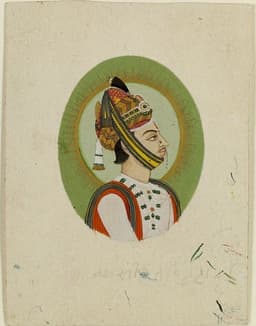
Sawai Jai Singh III
Emperor · Modern
43.6Total
Basic Information
Born
1907
1819
Died
1978
1835
Era
Modern
Modern
Nationality
Laos
India
Occupation
Emperor
Emperor
Civilization
Eastern
Indian
Score Comparison
Military (10%)
53.6
43.3
Political (20%)
27.9
32.2
Influence (20%)
47.1
47.1
Legacy (20%)
34.2
35.8
Leadership (15%)
37.4
55.3
Strategy (15%)
62.6
54.3
TOTAL
41.7
43.6
Savang Vatthana — Complete Timeline
1959 AD
Accession to the Throne of LaosPolitical Action◆ Major
Savang Vatthana became king of Laos following the death of his father Sisavang Vong. He inherited a kingdom already embroiled in civil war between the royal government, neutralists, and the communist Pathet Lao. His reign was marked by political instability and foreign intervention.
CoronationCivil WarMonarchy
Impact: national
1973 AD
Signing of the Vientiane AgreementPolitical Action◆ Major
Savang Vatthana endorsed the Vientiane Agreement, a ceasefire accord between the royal government and the Pathet Lao. The agreement established a coalition government and temporarily halted fighting in the Laotian Civil War, but failed to resolve the underlying political conflict.
CeasefireCoalitionCivil War
Impact: nationalconstructive
1975 AD
Abdication and Communist TakeoverPolitical Action
Following the Pathet Lao's military victory, Savang Vatthana abdicated the throne on December 2, 1975. The Lao People's Democratic Republic was proclaimed, ending 600 years of Lao monarchy. The king was appointed a 'private citizen' and 'adviser' to the new government.
AbdicationCommunist RevolutionEnd of Monarchy
Impact: nationaltragic
1978 AD
Death in Re-education CampPolitical Action◆ Major
Savang Vatthana, along with his family, was sent to a communist re-education camp in Houaphan Province. He died there in 1978 under unclear circumstances, likely from malnutrition and harsh conditions. His death was not officially acknowledged by the Lao government for decades.
Re-education CampDeathCommunist Repression
Impact: nationaltragic
Sawai Jai Singh III — Complete Timeline
1819 AD
Accession to Jaipur ThronePolitical Action
Sawai Jai Singh III became Maharaja of Jaipur at age 0 after the death of his father, Maharaja Jagat Singh II. His reign was brief and marked by regency due to his young age, with limited personal impact on governance.
JaipurSuccession
1835 AD
Death of Sawai Jai Singh IIIOther
Sawai Jai Singh III died at age 16, ending his brief reign. His death led to a succession crisis and the eventual accession of his relative, Sawai Ram Singh II. His rule had minimal lasting impact on Jaipur's history.
JaipurDeath
tragic
This comparison has not been analyzed yet.
One-time AI generation (~1 minute). Scores and timeline are already available below.
Rankings
🥇
Sawai Jai Singh IIILeader
Mil: 43.3Pol: 32.2Inf: 47.1
43.6
🥈
Savang Vatthana
Mil: 53.6Pol: 27.9Inf: 47.1
41.7
+1.9 behind
How This Comparison Works
Algorithm
Each figure is scored on 6 dimensions (0—100 scale) based on structured historical data: Military (10%), Political (20%), Influence (20%), Legacy (20%), Leadership (15%), Strategy (15%). The weighted total produces the final ranking.
Data Sources
Scores are computed from structured sub-indicators in the database. Scale factors adjust for era (Ancient ×0.85, Modern ×1.0) and civilization size (Eastern ×1.05, Other ×0.80) to account for differences in population and military scale.
Maximum 3 Figures
Comparisons are limited to 2—3 figures to ensure readability and statistical meaningfulness.
Error Margins
±5 points per dimension — Sub-scores are derived from historical records with inherent uncertainty. Two figures within 5 points on a dimension should be considered roughly equivalent in that area.
Total Score Accuracy
±3 points overall — The weighted combination of 6 dimensions produces a total score with approximately ±3 points of uncertainty. Differences of less than 3 points are not statistically significant— the figures are effectively tied.
Known Limitations
- Historical records are incomplete and uneven across civilizations
- Figures from oral-tradition societies may be underrepresented
- Occupation labels can misclassify multi-role figures
- Scores measure capability and impact, not moral character
- Quantitative scoring is a comparison tool, not absolute truth
Capability Radar
Military (10%) — Battles & Warfare
Battles
55
5
Win Rate
54
5
Expansion
58
5
Political (20%) — Governance & Reform
Reform
10
20
Diplomacy
15
25
Economy
10
20
Influence (20%) — Cultural & Global Reach
Cultural
15
15
Global
5
5
Legacy (20%) — Historical Impact
Historical
10
15
Longevity
5
10
Leadership (15%) — Power & Stability
Tenure
19
30
Stability
5
20
Strategy (15%) — Tactics & Innovation
Strategy
60
5
Tactics
64
5
Reform
65
5
Similar Comparisons
Comments & Discussion
No comments yet. Be the first to share your thoughts!