Loading...
Seleucus I Nicator vs Shoshenq I
Seleucus I Nicator leads by 9.5 pts · 2 figures compared
…
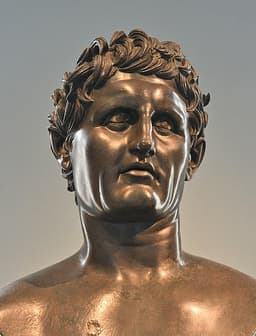
Seleucus I Nicator
Emperor · Ancient
66.5Total
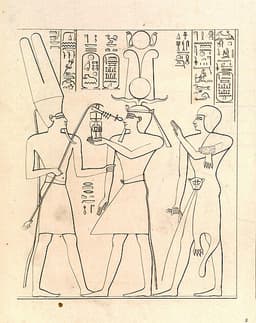
Shoshenq I
Emperor · Ancient
57.0Total
Basic Information
Born
-358
-943
Died
-281
-922
Era
Ancient
Ancient
Nationality
Seleucid Empire
Third Intermediate Egypt
Occupation
Emperor
Emperor
Civilization
Western
Middle Eastern
Score Comparison
Military (10%)
78.5
70.0
Political (20%)
72.0
68.0
Influence (20%)
62.0
54.9
Legacy (20%)
55.0
49.2
Leadership (15%)
78.0
53.2
Strategy (15%)
69.1
57.5
TOTAL
66.5
57.0
Seleucus I Nicator — Complete Timeline
312 BC
Foundation of the Seleucid EmpirePolitical Action◆ Major
After the death of Alexander, Seleucus established control over Babylon and the eastern satrapies. He founded the Seleucid Empire, which stretched from Anatolia to India, and adopted the title of king. This marked the beginning of the Hellenistic period in the East.
DiadochiEmpireHellenistic
Impact: globalconstructive
301 BC
Battle of IpsusWar
Seleucus I Nicator fought against Antigonus I Monophthalmus at Ipsus. The allied forces of Seleucus, Lysimachus, and Cassander defeated Antigonus, who was killed. This battle solidified the division of Alexander's empire, with Seleucus gaining control of Syria and Mesopotamia.
DiadochiBattleSeleucid Empire
Impact: regionaldestructive
300 BC
Founding of AntiochCultural◆ Major
Seleucus I founded the city of Antioch on the Orontes River, which became the capital of the Seleucid Empire. The city grew into a major center of Hellenistic culture, trade, and politics, rivaling Alexandria in importance.
Seleucid EmpireCity FoundationHellenistic
Impact: regionalconstructive
281 BC
Assassination by Ptolemy CeraunusPolitical Action◆ Major
Seleucus I was assassinated by Ptolemy Ceraunus, a son of Ptolemy I, while campaigning in Thrace. His death ended the last major Diadochi conflict and left the Seleucid Empire to his son Antiochus I, who faced challenges from within and without.
DiadochiAssassinationSeleucid Empire
Impact: regionaltragic
Shoshenq I — Complete Timeline
943 BC
Foundation of the 22nd DynastyPolitical Action
Shoshenq I, a Libyan chieftain, founded the 22nd Dynasty, ruling from Bubastis. This marked the rise of Libyan influence in Egypt, with Shoshenq consolidating power by appointing family members to key priestly and military positions.
Dynasty FoundationLibyan RuleBubastis
Impact: national
925 BC
Sack of JerusalemWar
Shoshenq I invaded the Kingdom of Judah and sacked Jerusalem, looting the Temple of Solomon and the royal palace. This campaign, recorded in the Hebrew Bible and on the Bubastite Portal at Karnak, brought immense wealth to Egypt and weakened Judah.
JerusalemTemple LootingBiblical Shishak
Impact: regionaldestructive
Campaign in Palestine and the NegevWar◆ Major
Shoshenq I led a major military campaign through Palestine and the Negev, attacking over 150 cities and towns. The campaign reasserted Egyptian dominance in the region and is documented on the Bubastite Portal at Karnak.
PalestineMilitary CampaignKarnak
Impact: regionalconstructive
Construction of the Bubastite PortalCultural◆ Major
Shoshenq I commissioned the Bubastite Portal at the Temple of Karnak, a monumental gateway recording his military victories in Palestine. The portal served as a propaganda tool, showcasing his achievements and legitimizing his Libyan dynasty.
KarnakMonumentPropaganda
Impact: nationalconstructive
Expert Analysis
Origins
Seleucus I Nicator was born around 358 BC in Europus, Macedonia. His father Antiochus was a general under Philip II. Seleucus served as a bodyguard to Alexander the Great and accompanied him on his Asian campaigns. After Alexander's death in 323 BC, he initially served as a cavalry commander under the regent Perdiccas. Shoshenq I was born around 950 BC, likely in Libya, as a chieftain of the Meshwesh tribe. His father Nimlot was a Libyan chief who settled in Egypt. Shoshenq rose through the Egyptian military and administrative system, serving under the last pharaohs of the 21st Dynasty.
Rise to Power
Seleucus rose during the Wars of the Diadochi. In 321 BC, he was appointed satrap of Babylon after Perdiccas's death. He fled in 316 BC when Antigonus took control, but returned in 312 BC with Ptolemy's support, defeating Antigonus's son Demetrius at the Battle of Gaza. He then reconquered Babylon and began expanding eastward. By 305 BC, he declared himself king. His victory at the Battle of Ipsus in 301 BC, where he commanded the largest contingent, solidified his control over Syria and Anatolia. Shoshenq I rose by consolidating power as a powerful military commander under Pharaoh Psusennes II. He founded the 22nd Dynasty in 943 BC after the death of the previous pharaoh, likely through political maneuvering and military support from his Libyan followers. He established his capital at Bubastis.
Leadership & Governance
Seleucus ruled a vast multicultural empire from the Mediterranean to India. He practiced administrative decentralization, founding cities like Antioch and Seleucia to spread Hellenistic culture. He also maintained diplomacy, notably exchanging ambassadors with the Mauryan Emperor Chandragupta, ceding territories for 500 war elephants. His leadership score of 78.0 reflects his ability to manage diverse populations. Shoshenq I ruled Egypt with a more centralized approach, but relied on Libyan chiefs as local governors. He commissioned the Bubastite Portal at Karnak to legitimize his rule and recorded his campaigns. His political score of 68.0 shows effective consolidation, but his leadership score of 53.2 indicates less innovative governance.
Triumph & Tragedy
Seleucus's greatest success was founding the Seleucid Empire, which lasted nearly 250 years. His military score of 78.5 is demonstrated by his victory at Ipsus and his expansion to the Indus. His tragedy was his assassination in 281 BC by Ptolemy Ceraunus, just as he was poised to reunify Alexander's empire. Shoshenq's triumph was his campaign in Palestine, sacking Jerusalem and looting the Temple of Solomon, recorded in the Bible and his Karnak inscription. He reasserted Egyptian dominance in the region, attacking over 150 cities. His tragedy was the short-lived nature of his dynasty; by his death around 922 BC, internal divisions weakened the 22nd Dynasty, leading to fragmentation.
Character & Destiny
Seleucus was a patient and strategic leader, known for his ambition and ability to form alliances. His strategy score of 69.1 reflects his calculated moves, but his assassination shows a lapse in caution. Historical assessments praise his administrative skills and city-building. Shoshenq was a pragmatic conqueror who used military force and religious legitimacy. His strategy score of 57.5 indicates less strategic depth. He is often identified with the biblical Shishak, but his dynasty's decline suggests limited long-term planning.
Legacy
Seleucus's legacy is immense: the Seleucid Empire spread Hellenistic culture across the Middle East, influencing art, governance, and trade for centuries. His influence score of 62.0 and legacy score of 55.0 reflect this enduring impact. Shoshenq's legacy is more localized: the 22nd Dynasty ruled Egypt for about 200 years, but his biblical mention ensures his name persists. His influence score of 54.9 and legacy score of 49.2 show less global impact.
Conclusion
Seleucus I Nicator had a greater impact on world history than Shoshenq I. With a total score of 66.5 against 57.0, Seleucus outperforms in military (78.5 vs 70.0), political (72.0 vs 68.0), and leadership (78.0 vs 53.2). His empire shaped the Hellenistic world, whereas Shoshenq's reign was a brief resurgence of Egyptian power. Seleucus's founding of cities and administrative systems had lasting effects, while Shoshenq's achievements were limited to a single campaign and a short-lived dynasty. Therefore, Seleucus I Nicator is the more significant historical figure.
Rankings
🥇
Seleucus I NicatorLeader
Mil: 78.5Pol: 72.0Inf: 62.0
66.5
🥈
Shoshenq I
Mil: 70.0Pol: 68.0Inf: 54.9
57.0
+9.5 behind
How This Comparison Works
Algorithm
Each figure is scored on 6 dimensions (0—100 scale) based on structured historical data: Military (10%), Political (20%), Influence (20%), Legacy (20%), Leadership (15%), Strategy (15%). The weighted total produces the final ranking.
Data Sources
Scores are computed from structured sub-indicators in the database. Scale factors adjust for era (Ancient ×0.85, Modern ×1.0) and civilization size (Eastern ×1.05, Other ×0.80) to account for differences in population and military scale.
Maximum 3 Figures
Comparisons are limited to 2—3 figures to ensure readability and statistical meaningfulness.
Error Margins
±5 points per dimension — Sub-scores are derived from historical records with inherent uncertainty. Two figures within 5 points on a dimension should be considered roughly equivalent in that area.
Total Score Accuracy
±3 points overall — The weighted combination of 6 dimensions produces a total score with approximately ±3 points of uncertainty. Differences of less than 3 points are not statistically significant— the figures are effectively tied.
Known Limitations
- Historical records are incomplete and uneven across civilizations
- Figures from oral-tradition societies may be underrepresented
- Occupation labels can misclassify multi-role figures
- Scores measure capability and impact, not moral character
- Quantitative scoring is a comparison tool, not absolute truth
Capability Radar
Military (10%) — Battles & Warfare
Battles
85
55
Win Rate
80
60
Expansion
90
60
Political (20%) — Governance & Reform
Reform
75
50
Diplomacy
80
55
Economy
70
50
Influence (20%) — Cultural & Global Reach
Cultural
60
45
Global
70
45
Legacy (20%) — Historical Impact
Historical
80
55
Longevity
75
50
Leadership (15%) — Power & Stability
Tenure
80
65
Stability
65
55
Strategy (15%) — Tactics & Innovation
Strategy
85
55
Tactics
75
50
Reform
70
40
Similar Comparisons
Comments & Discussion
No comments yet. Be the first to share your thoughts!