Loading...
Selim I vs Tughril
Selim I leads by 8.9 pts · 2 figures compared
…
Selim I
Emperor · Medieval
70.6Total
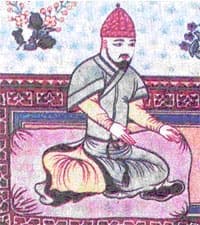
Tughril
Emperor · Medieval
61.7Total
Basic Information
Born
1470
990
Died
1520
1063
Era
Medieval
Medieval
Nationality
Ottoman Empire
Seljuk Empire
Occupation
Emperor
Emperor
Civilization
Middle Eastern
Middle Eastern
Score Comparison
Military (10%)
78.5
78.0
Political (20%)
70.3
45.0
Influence (20%)
65.0
68.0
Legacy (20%)
68.0
55.0
Leadership (15%)
80.0
66.0
Strategy (15%)
70.0
65.4
TOTAL
70.6
61.7
Selim I — Complete Timeline
1513 AD
Execution of Prince Mustafa and Prince KorkutPolitical Action
To secure his succession, Selim I ordered the execution of his brothers, Prince Mustafa and Prince Korkut, who were potential rivals for the throne. This act followed the Ottoman practice of fratricide to prevent civil war. It eliminated internal opposition and consolidated Selim's rule.
FratricideSuccessionOttoman Politics
Impact: nationaldestructive
1514 AD
Battle of ChaldiranWar
Selim I led the Ottoman army against the Safavid Empire under Shah Ismail I at Chaldiran in eastern Anatolia. The Ottomans, using superior artillery and gunpowder tactics, decisively defeated the Safavids. This victory secured Ottoman control over eastern Anatolia and prevented Safavid expansion westward.
BattleSafavid WarOttoman Victory
Impact: regional
1517 AD
Conquest of Egypt and the HejazWar
Selim I led a campaign against the Mamluk Sultanate, defeating them at the Battle of Marj Dabiq and the Battle of Ridaniya. He conquered Cairo and the Hejaz, including the holy cities of Mecca and Medina. This brought the Islamic caliphate under Ottoman control and expanded Ottoman territory into North Africa and Arabia.
ConquestMamluk SultanateCaliphate
Impact: global
Assumption of the CaliphatePolitical Action◆ Major
After conquering Cairo, Selim I received the keys to the Kaaba and the relics of the Prophet Muhammad from the last Abbasid caliph, Al-Mutawakkil III. Selim I assumed the title of Caliph, claiming spiritual leadership of the Islamic world. This transfer established the Ottoman sultans as caliphs until 1924.
CaliphateIslamic LeadershipOttoman Empire
Impact: global
Tughril — Complete Timeline
1040 AD
Battle of DandanaqanWar
Tughril led the Seljuk Turks to a decisive victory over the Ghaznavid Empire at Dandanaqan in Khorasan. This battle ended Ghaznavid control over the region and established the Seljuk Empire as a major power in Persia and Central Asia.
BattleSeljuk EmpireGhaznavids
Impact: regional
1048 AD
Campaigns Against the Byzantine EmpireWar
Tughril launched raids into Byzantine Anatolia, capturing cities such as Erzurum. These campaigns weakened Byzantine control in the east and paved the way for later Seljuk expansion, though they did not result in permanent conquest at this time.
Byzantine WarsRaidsAnatolia
Impact: regional
1055 AD
Conquest of BaghdadWar◆ Major
Tughril entered Baghdad at the invitation of the Abbasid caliph Al-Qa'im, who sought protection from the Buyid dynasty. Tughril overthrew the Buyids and was granted the title of Sultan, becoming the de facto ruler of the Islamic world while preserving the caliph as a figurehead.
ConquestBaghdadSultanate
Impact: regional
1063 AD
Marriage to the Abbasid PrincessPolitical Action
Tughril married the daughter of the Abbasid caliph Al-Qa'im, solidifying the alliance between the Seljuk sultans and the caliphate. This union legitimized Seljuk rule and established a precedent for future sultan-caliph relations.
MarriageAllianceCaliphate
Impact: regionalconstructive
Expert Analysis
Origins
Selim I was born in 1470 in Amasya, Ottoman Empire, as the son of Sultan Bayezid II. His mother was Gülbahar Hatun, a concubine of Greek origin. Selim received a princely education, learning Islamic theology, law, and military strategy. He served as governor of Trabzon, gaining administrative experience. His early life was marked by rivalry with his brothers for the throne, which shaped his ruthless ambition.
Tughril was born around 990 in the steppes of Central Asia, likely near the Aral Sea. He was a grandson of Seljuk, the eponymous founder of the Seljuk tribe. Tughril grew up as a nomadic warrior, with no formal education but extensive training in horsemanship and archery. His early life was defined by tribal conflicts and migration, as the Seljuks sought pastures and plunder.
Rise to Power
Selim I rose to power through a coup against his father. In 1511, he led a rebellion with Janissary support, forcing Bayezid II to abdicate. Selim then executed his brothers, Prince Mustafa and Prince Korkut, to eliminate rivals. His accession in 1512 was brutal but secured his rule. He immediately focused on expanding Ottoman territory eastward, targeting the Safavids and Mamluks.
Tughril rose by uniting Turkmen tribes under his leadership. In 1035, he and his brother Chaghri led the Seljuks into Khorasan, serving as mercenaries for local rulers. The turning point was the Battle of Dandanaqan in 1040, where Tughril’s 20,000-strong army defeated the Ghaznavid force of 50,000. This victory established Seljuk control over Khorasan and made Tughril the dominant power in Persia. By 1055, he entered Baghdad, overthrew the Buyids, and was granted the title of Sultan by the Abbasid caliph.
Leadership & Governance
Selim I ruled with centralized authority, relying on the Janissary corps and firearms. He implemented a policy of expansion, doubling the empire's size in four years. His governance was efficient but harsh; he executed officials for corruption and suppressed rebellions. He also adopted the title of Caliph, merging political and religious authority. His military strategy emphasized artillery and disciplined infantry, as seen at Chaldiran.
Tughril’s leadership was more decentralized, typical of nomadic confederations. He delegated authority to tribal chiefs and his brother Chaghri. He maintained the Abbasid caliph as a figurehead, ruling as a Sunni protector. His governance was less bureaucratic than the Ottomans, relying on Persian administrators. He focused on raiding and conquest, but his empire lacked institutional cohesion. Tughril scored 66.0 in leadership compared to Selim’s 80.0.
Triumph & Tragedy
Selim I’s greatest triumph was the conquest of Egypt and the Hejaz in 1517, which brought Mecca and Medina under Ottoman control. He also defeated the Safavids at Chaldiran in 1514, securing eastern Anatolia. His tragedy was his short reign (8 years) and the execution of his brothers, which created a precedent of fratricide that destabilized later successions. He also died of cancer at age 50, leaving his successor, Suleiman, a vast empire.
Tughril’s triumph was founding the Seljuk Empire, which became a major power. His conquest of Baghdad in 1055 restored Sunni authority and earned him caliphal recognition. His tragedy was his failure to establish a stable succession; he died without a son, leading to a civil war between his nephew Alp Arslan and others. His campaigns in Anatolia were limited, and the Byzantine Empire remained strong.
Character & Destiny
Selim I was known as 'Yavuz' (the Grim) for his severity. He was decisive, ruthless, and ambitious, willing to kill family for power. His character led to rapid conquests but also to internal instability. He was a patron of the arts, composing poetry, but his legacy is overshadowed by his brutality. Historian Halil İnalcık described him as 'a great conqueror but a flawed statesman.'
Tughril was more cautious and diplomatic. He was a skilled military commander but lacked the vision to build lasting institutions. His character was shaped by nomadic traditions of loyalty and plunder. He respected the caliphate, which gave him legitimacy. However, his reliance on tribal alliances made the empire fragile. The Seljuk Empire peaked after his death, but its foundations were weak.
Legacy
Selim I’s legacy is immense: he transformed the Ottoman Empire into a caliphate, controlling the holy cities. His conquests provided the resources for Suleiman’s golden age. The Ottoman Empire lasted until 1924, partly due to his centralization. He scored 68.0 in legacy, reflecting his impact on Islamic history.
Tughril’s legacy is the Seljuk Empire, which revived Sunni Islam and fought the Crusades. However, the empire fragmented within a century. His influence on Turkish history is significant, but his personal legacy is overshadowed by later Seljuk rulers. He scored 55.0 in legacy.
Conclusion
Selim I had greater impact than Tughril. His military score of 78.5 versus Tughril’s 78.0 is close, but Selim’s political (70.3 vs 45.0) and leadership (80.0 vs 66.0) scores show his superior statecraft. Selim’s conquests created a durable empire that shaped the modern Middle East, while Tughril’s empire collapsed. Therefore, Selim I is the more consequential figure.
Rankings
🥇
Selim ILeader
Mil: 78.5Pol: 70.3Inf: 65.0
70.6
🥈
Tughril
Mil: 78.0Pol: 45.0Inf: 68.0
61.7
+8.9 behind
How This Comparison Works
Algorithm
Each figure is scored on 6 dimensions (0—100 scale) based on structured historical data: Military (10%), Political (20%), Influence (20%), Legacy (20%), Leadership (15%), Strategy (15%). The weighted total produces the final ranking.
Data Sources
Scores are computed from structured sub-indicators in the database. Scale factors adjust for era (Ancient ×0.85, Modern ×1.0) and civilization size (Eastern ×1.05, Other ×0.80) to account for differences in population and military scale.
Maximum 3 Figures
Comparisons are limited to 2—3 figures to ensure readability and statistical meaningfulness.
Error Margins
±5 points per dimension — Sub-scores are derived from historical records with inherent uncertainty. Two figures within 5 points on a dimension should be considered roughly equivalent in that area.
Total Score Accuracy
±3 points overall — The weighted combination of 6 dimensions produces a total score with approximately ±3 points of uncertainty. Differences of less than 3 points are not statistically significant— the figures are effectively tied.
Known Limitations
- Historical records are incomplete and uneven across civilizations
- Figures from oral-tradition societies may be underrepresented
- Occupation labels can misclassify multi-role figures
- Scores measure capability and impact, not moral character
- Quantitative scoring is a comparison tool, not absolute truth
Capability Radar
Military (10%) — Battles & Warfare
Battles
85
75
Win Rate
90
80
Expansion
90
80
Political (20%) — Governance & Reform
Reform
75
60
Diplomacy
80
75
Economy
70
60
Influence (20%) — Cultural & Global Reach
Cultural
60
65
Global
75
70
Legacy (20%) — Historical Impact
Historical
80
75
Longevity
70
70
Leadership (15%) — Power & Stability
Tenure
70
70
Stability
65
65
Strategy (15%) — Tactics & Innovation
Strategy
85
75
Tactics
80
70
Reform
70
65
Similar Comparisons
Comments & Discussion
No comments yet. Be the first to share your thoughts!