Loading...
Nur ad-Din vs Tughril
Nur ad-Din leads by 6.6 pts · 2 figures compared
…
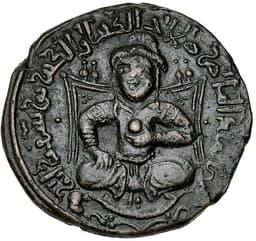
Nur ad-Din
Emperor · Medieval
68.3Total
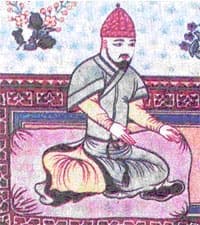
Tughril
Emperor · Medieval
61.7Total
Basic Information
Born
1118
990
Died
1174
1063
Era
Medieval
Medieval
Nationality
Zengid dynasty
Seljuk Empire
Occupation
Emperor
Emperor
Civilization
Middle Eastern
Middle Eastern
Score Comparison
Military (10%)
78.0
78.0
Political (20%)
62.7
45.0
Influence (20%)
56.7
68.0
Legacy (20%)
72.0
55.0
Leadership (15%)
79.8
66.0
Strategy (15%)
69.1
65.4
TOTAL
68.3
61.7
Nur ad-Din — Complete Timeline
1149 AD
Battle of InabWar◆ Major
Nur ad-Din defeated the Crusader Principality of Antioch at the Battle of Inab. Prince Raymond of Antioch was killed, and the victory weakened Crusader control in northern Syria, marking a turning point in the Muslim counter-crusade.
BattleCrusadesAntioch
Impact: regional
1150 AD
Promotion of Sunni OrthodoxyCultural◆ Major
Nur ad-Din built numerous madrasas, mosques, and hospitals across Syria, promoting Sunni Islam and countering Shi'a influence. His patronage of religious institutions strengthened the Sunni identity of his realm and laid the ideological foundation for jihad against the Crusaders.
Sunni RevivalMadrasaJihad
Impact: regionalconstructive
1154 AD
Unification of SyriaWar◆ Major
Nur ad-Din captured Damascus from the Burid dynasty, uniting Syria under his rule. This consolidation created a powerful Muslim state that could effectively confront the Crusader states in the Levant.
ConquestSyriaUnification
Impact: regional
1164 AD
Siege of HarimWar
Nur ad-Din captured the fortress of Harim from the Crusaders after a prolonged siege. This victory further reduced Crusader territory in Syria and demonstrated Nur ad-Din's military persistence.
SiegeCrusadesFortress
1169 AD
Mentorship of SaladinPolitical Action◆ Major
Nur ad-Din sent his general Shirkuh, accompanied by his nephew Saladin, to Egypt to intervene in Fatimid politics. After Shirkuh's death, Saladin became vizier of Egypt, eventually breaking from Nur ad-Din's control, but the campaign laid the groundwork for Saladin's later successes.
SaladinEgyptFatimids
Impact: regional
Tughril — Complete Timeline
1040 AD
Battle of DandanaqanWar
Tughril led the Seljuk Turks to a decisive victory over the Ghaznavid Empire at Dandanaqan in Khorasan. This battle ended Ghaznavid control over the region and established the Seljuk Empire as a major power in Persia and Central Asia.
BattleSeljuk EmpireGhaznavids
Impact: regional
1048 AD
Campaigns Against the Byzantine EmpireWar
Tughril launched raids into Byzantine Anatolia, capturing cities such as Erzurum. These campaigns weakened Byzantine control in the east and paved the way for later Seljuk expansion, though they did not result in permanent conquest at this time.
Byzantine WarsRaidsAnatolia
Impact: regional
1055 AD
Conquest of BaghdadWar◆ Major
Tughril entered Baghdad at the invitation of the Abbasid caliph Al-Qa'im, who sought protection from the Buyid dynasty. Tughril overthrew the Buyids and was granted the title of Sultan, becoming the de facto ruler of the Islamic world while preserving the caliph as a figurehead.
ConquestBaghdadSultanate
Impact: regional
1063 AD
Marriage to the Abbasid PrincessPolitical Action
Tughril married the daughter of the Abbasid caliph Al-Qa'im, solidifying the alliance between the Seljuk sultans and the caliphate. This union legitimized Seljuk rule and established a precedent for future sultan-caliph relations.
MarriageAllianceCaliphate
Impact: regionalconstructive
Expert Analysis
Origins
Nur ad-Din (1118–1174) was born into the Zengid dynasty, the son of Imad ad-Din Zengi, the atabeg of Mosul and Aleppo. Growing up in a court focused on jihad against the Crusaders, he received a rigorous education in Islamic law, military tactics, and governance. His father's assassination in 1146 thrust him into power at age 28, inheriting a fractured realm.
Tughril (c. 990–1063) was born into the Seljuk clan of Oghuz Turks, nomadic warriors from the steppes of Central Asia. His grandfather Seljuk had converted to Islam and led the tribe into Khorasan. Tughril and his brother Chaghri grew up as tribal chieftains, learning steppe warfare and diplomacy. Their early lives were marked by constant conflict with neighboring Turkic and Persian powers.
Rise to Power
Nur ad-Din's rise began with the consolidation of his father's territories. In 1154, he captured Damascus from the Burid dynasty, unifying Syria under his rule. This was a careful campaign of siege and negotiation, avoiding a direct assault that might alienate the populace. His victory at the Battle of Inab in 1149, where he killed Prince Raymond of Antioch, established him as the premier Muslim leader in the Levant. By 1170, he had extended his influence into Egypt through his general Shirkuh and his nephew Saladin.
Tughril's rise was more dramatic. In 1040, he led the Seljuks to a decisive victory at the Battle of Dandanaqan against the Ghaznavid Empire. This battle, fought in the desert of Khorasan, shattered Ghaznavid power and opened the way for Seljuk conquest of Persia. Tughril then marched west, entering Baghdad in 1055 at the invitation of the Abbasid caliph Al-Qa'im. He overthrew the Buyid dynasty and was granted the title of Sultan, becoming the de facto ruler of the Islamic world.
Leadership & Governance
Nur ad-Din ruled as a pious, centralized monarch. He built numerous madrasas, mosques, and hospitals across Syria, promoting Sunni orthodoxy and countering Shi'a influence. His governance emphasized justice and religious unity; he personally oversaw the construction of the Great Mosque of Aleppo and the Maristan (hospital) of Damascus. He also maintained a disciplined army, funded by a centralized tax system, and used propaganda to frame his wars as jihad. His leadership scored 79.8, reflecting his ability to inspire loyalty and administer a complex state.
Tughril governed as a traditional steppe ruler, relying on Turkic tribal structures melded with Persian bureaucracy. He left much of the administration to Persian viziers like Al-Kunduri, focusing on military campaigns. He introduced the iqta system, granting land in exchange for military service, which became a cornerstone of Seljuk rule. However, his political score of 45.0 reflects his limited state-building; he did not establish lasting institutions, and his death led to succession struggles. His leadership score of 66.0 indicates a more hands-off approach compared to Nur ad-Din's direct involvement.
Triumph & Tragedy
Nur ad-Din's greatest triumph was unifying Syria and weakening the Crusader states. His capture of Damascus and victory at Inab set the stage for Saladin's later successes. He also promoted Sunni education, establishing 40 madrasas in Damascus alone. However, his greatest failure was his inability to conquer Egypt himself; his plan to annex Egypt after Shirkuh's death was thwarted by Saladin's independent rule. He died in 1174, leaving his empire to a minor heir, which led to its rapid disintegration.
Tughril's triumph was founding the Seljuk Empire, which at its height stretched from Anatolia to India. His conquest of Baghdad restored Sunni authority and ended Buyid Shi'a dominance. He also launched raids into Byzantine Anatolia, capturing cities like Erzurum. But his tragedy was the lack of a stable succession. He had no sons, and his death in 1063 triggered a civil war between his nephew Alp Arslan and other claimants. His legacy score of 55.0 reflects the empire's eventual fragmentation.
Character & Destiny
Nur ad-Din was methodical, patient, and deeply religious. He believed in the duty of jihad and worked tirelessly to build a unified Muslim front. His personality was shaped by a sense of responsibility; he often consulted scholars and sought legitimacy through Islamic law. This cautious, strategic mindset (strategy 69.1) allowed him to build a stable state but also made him hesitant to directly confront Saladin when he asserted independence.
Tughril was a bold, charismatic warrior, typical of steppe conquerors. He relied on personal prestige and tribal loyalty rather than institutions. His decision to marry the Abbasid princess was a masterstroke of diplomacy, but his failure to name an heir proved fatal. His character was suited for conquest but not for governance, leading to a rapid decline after his death. His military score of 78.0 matches Nur ad-Din's, but his political score is 17.7 points lower.
Legacy
Nur ad-Din's legacy is profound but indirect. He laid the groundwork for Saladin's recapture of Jerusalem by unifying Syria and promoting Sunni orthodoxy. His institutions, especially the madrasas and hospitals, influenced later Islamic education and healthcare. He is remembered as a pious, just ruler, but his empire collapsed within decades. His total score of 68.3 reflects his high leadership and legacy but moderate political skill.
Tughril's legacy is the Seljuk Empire itself, which dominated the Middle East for generations. He revived the Abbasid caliphate's political role, and his iqta system shaped medieval Islamic governance. However, his personal legacy is overshadowed by his successors Alp Arslan and Malik Shah, who expanded the empire further. His total score of 61.7, while respectable, is 6.6 points lower due to weaker political and legacy scores.
Conclusion
Nur ad-Din had a greater impact on the course of history. While Tughril founded a vast empire, his achievements were primarily military and dynastic, lacking the institutional and ideological depth of Nur ad-Din's work. Nur ad-Din's unification of Syria and promotion of Sunni orthodoxy directly enabled Saladin's victories, which reshaped the Crusader-Muslim conflict. His leadership score of 79.8 vs. Tughril's 66.0 underscores his superior governance. In contrast, Tughril's empire, though larger, fragmented quickly due to weak institutions. The 6.6-point gap in total scores reflects this: Nur ad-Din's legacy, though less vast, was more enduring and transformative.
Rankings
🥇
Nur ad-DinLeader
Mil: 78.0Pol: 62.7Inf: 56.7
68.3
🥈
Tughril
Mil: 78.0Pol: 45.0Inf: 68.0
61.7
+6.6 behind
How This Comparison Works
Algorithm
Each figure is scored on 6 dimensions (0—100 scale) based on structured historical data: Military (10%), Political (20%), Influence (20%), Legacy (20%), Leadership (15%), Strategy (15%). The weighted total produces the final ranking.
Data Sources
Scores are computed from structured sub-indicators in the database. Scale factors adjust for era (Ancient ×0.85, Modern ×1.0) and civilization size (Eastern ×1.05, Other ×0.80) to account for differences in population and military scale.
Maximum 3 Figures
Comparisons are limited to 2—3 figures to ensure readability and statistical meaningfulness.
Error Margins
±5 points per dimension — Sub-scores are derived from historical records with inherent uncertainty. Two figures within 5 points on a dimension should be considered roughly equivalent in that area.
Total Score Accuracy
±3 points overall — The weighted combination of 6 dimensions produces a total score with approximately ±3 points of uncertainty. Differences of less than 3 points are not statistically significant— the figures are effectively tied.
Known Limitations
- Historical records are incomplete and uneven across civilizations
- Figures from oral-tradition societies may be underrepresented
- Occupation labels can misclassify multi-role figures
- Scores measure capability and impact, not moral character
- Quantitative scoring is a comparison tool, not absolute truth
Capability Radar
Military (10%) — Battles & Warfare
Battles
75
75
Win Rate
80
80
Expansion
80
80
Political (20%) — Governance & Reform
Reform
85
60
Diplomacy
90
75
Economy
75
60
Influence (20%) — Cultural & Global Reach
Cultural
65
65
Global
60
70
Legacy (20%) — Historical Impact
Historical
80
75
Longevity
70
70
Leadership (15%) — Power & Stability
Tenure
80
70
Stability
70
65
Strategy (15%) — Tactics & Innovation
Strategy
85
75
Tactics
70
70
Reform
75
65
Similar Comparisons
Comments & Discussion
No comments yet. Be the first to share your thoughts!