Loading...
Sigismund III Vasa vs William III
William III leads by 7.7 pts · 2 figures compared
…
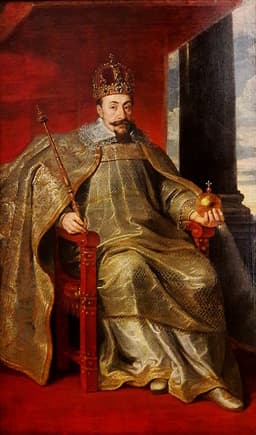
Sigismund III Vasa
Emperor · Modern
56.9Total

William III
Emperor · Modern
64.6Total
Basic Information
Born
1566
1650
Died
1632
1702
Era
Modern
Modern
Nationality
Poland
England
Occupation
Emperor
Emperor
Civilization
Western
Western
Score Comparison
Military (10%)
40.0
61.7
Political (20%)
68.0
82.0
Influence (20%)
59.0
55.0
Legacy (20%)
49.2
55.0
Leadership (15%)
74.0
80.0
Strategy (15%)
45.0
66.3
TOTAL
56.9
64.6
Sigismund III Vasa — Complete Timeline
1587 AD
Elected King of PolandPolitical Action◆ Major
Sigismund III Vasa was elected King of Poland and Grand Duke of Lithuania, establishing the Polish
ElectionPolish–Swedish UnionMonarchy
Impact: regional
1596 AD
Union of BrestPolitical Action◆ Major
Sigismund III supported the Union of Brest, which created the Ukrainian Greek Catholic Church. This union brought Orthodox Christians in the Polish
ReligionUnionEastern Europe
Impact: regional
Transfer of the capital from Kraków to WarsawPolitical Action◆ Major
Sigismund III moved the royal court from Krak
CapitalGovernmentPoland
Impact: nationalconstructive
1609 AD
Polish–Muscovite War (1609–1618)War◆ Major
Sigismund III launched a war against Russia, aiming to place his son W
WarRussiaTime of Troubles
Impact: regional
William III — Complete Timeline
1688 AD
Glorious RevolutionPolitical Action
William III, Stadtholder of the Dutch Republic, invaded England at the invitation of Protestant nobles. King James II fled, and William and his wife Mary II were declared joint monarchs, establishing parliamentary supremacy and Protestant succession.
Constitutional ChangeInvasionMonarchy
Impact: nationalconstructive
1690 AD
Battle of the BoyneWar◆ Major
William III personally led Williamite forces to victory over the Jacobite army of James II at the River Boyne in Ireland. The battle secured Protestant dominance in Ireland and William's hold on the English throne.
Jacobite WarIrelandProtestant-Catholic Conflict
Impact: regional
1697 AD
Treaty of RyswickPolitical Action◆ Major
William III negotiated the Treaty of Ryswick ending the Nine Years' War with France. Louis XIV recognized William as King of England and agreed to cease supporting James II's claims, temporarily stabilizing European borders.
DiplomacyPeace TreatyFrance
Impact: regionalconstructive
1702 AD
Death from a riding accidentOther◆ Major
William III died from pneumonia after breaking his collarbone in a riding accident at Hampton Court Palace. His death ended the Stuart line's direct rule and passed the throne to Queen Anne, leading to the Act of Union 1707.
DeathSuccessionStuart Dynasty
Impact: nationaltragic
Expert Analysis
Origins
Sigismund III Vasa was born on June 20, 1566, at Gripsholm Castle in Sweden, the son of King John III of Sweden and Catherine Jagiellon of Poland. His mixed heritage placed him at the center of two royal dynasties. After his father's death, Sigismund inherited the Swedish throne in 1592, but his Catholic faith alienated the Protestant Swedish nobility. His mother's Polish lineage, combined with the death of King Stephen Báthory, opened the path to the Polish throne. In 1587, Sigismund was elected King of Poland and Grand Duke of Lithuania, establishing a personal union between Poland and Sweden.
William III was born on November 4, 1650, in The Hague, Netherlands, the son of William II, Prince of Orange, and Mary, Princess Royal of England. His father died a week before his birth, leaving him as the posthumous sovereign Prince of Orange. His mother was the daughter of King Charles I of England, giving William a claim to the English throne. He was raised in the Dutch Republic amid political turmoil, with republican factions limiting the power of the House of Orange. His education was rigorous, focusing on military and statecraft, preparing him for a life of leadership.
Rise to Power
Sigismund III's rise to power was marked by contested elections. In 1587, he was elected King of Poland over Maximilian III of Austria, but Maximilian invaded Poland to claim the throne. Sigismund's forces defeated Maximilian at the Battle of Byczyna in 1588, securing his position. However, his attempts to maintain the Polish-Swedish union failed when his uncle Charles IX usurped the Swedish throne in 1599, leading to a long-standing conflict. Sigismund's focus on reclaiming Sweden and promoting Catholicism shaped his policies.
William III's rise came through the Glorious Revolution of 1688. As Stadtholder of the Dutch Republic, he faced constant threats from Louis XIV's France. In 1688, a group of English Protestant nobles invited William to invade England to overthrow the Catholic King James II. William landed at Torbay with a Dutch army, and James fled, leading to a bloodless transfer of power. William and his wife Mary were crowned joint monarchs in 1689, with William becoming the de facto ruler. This event reshaped English politics and established Protestant succession.
Leadership & Governance
Sigismund III ruled the Polish-Lithuanian Commonwealth, a vast but decentralized state. He aimed to strengthen royal power and promote Catholicism, often clashing with the nobility (szlachta) who prized their Golden Liberty. His support for the Union of Brest in 1596 created the Ukrainian Greek Catholic Church, but deepened religious divisions. He moved the capital from Kraków to Warsaw in 1596, centralizing administration. However, his foreign policy—especially the war with Sweden (1600–1629) and intervention in Russia (1609–1618)—strained resources. Sigismund's political score of 68.0 reflects his ability to navigate the Sejm (parliament) but also his failure to achieve lasting reforms.
William III governed as a pragmatic constitutional monarch. He accepted the Bill of Rights in 1689, which limited royal powers and established parliamentary supremacy. He focused on foreign policy, building coalitions against France. His leadership score of 80.0 stems from his military and diplomatic skills. He reorganized the English army and navy, and his reign saw the founding of the Bank of England in 1694, which stabilized finances. Unlike Sigismund, William worked within constitutional constraints, using his political acumen to achieve his goals.
Triumph & Tragedy
Sigismund III's greatest success was the capture of Moscow in 1610 during the Polish–Muscovite War. Polish forces occupied the Kremlin, and Sigismund's son Władysław was elected Tsar by a boyar faction. However, the occupation collapsed due to resistance and Sigismund's refusal to convert his son to Orthodoxy. The war ended with the Truce of Deulino in 1618, gaining territory but failing to secure the throne. His tragedy was the loss of the Swedish throne and the long-term decline of the Commonwealth due to religious strife and noble privileges. His legacy score of 49.2 reflects these mixed outcomes.
William III's triumph was the Glorious Revolution, which secured Protestant rule and parliamentary sovereignty. His victory at the Battle of the Boyne in 1690 cemented Protestant dominance in Ireland. The Treaty of Ryswick in 1697 ended the Nine Years' War, with Louis XIV recognizing William as king. His tragedy was the failure to fully curb French power—the War of the Spanish Succession broke out after his death. He also faced personal tragedy: the death of his wife Mary in 1694 left him deeply affected. His military score of 61.7 and strategy score of 66.3 indicate competence but not brilliance.
Character & Destiny
Sigismund III was devoutly Catholic, stubborn, and convinced of his divine right. He prioritized religious unity over political pragmatism, alienating Protestant subjects in Sweden and Poland. His refusal to compromise on Orthodoxy cost him the Russian throne. Historians describe him as a ruler who lacked flexibility, contributing to the Commonwealth's stagnation. His character led to a destiny of unfulfilled ambitions—he died in 1632 with his Swedish claim unrealized and the Commonwealth weakened.
William III was reserved, calculating, and tenacious. He was a skilled diplomat and military commander, but often cold and distant. His determination to resist French expansion drove his policies. He was pragmatic, accepting constitutional limits to achieve his goals. His character shaped a destiny of successful revolution and balanced governance. He died in 1702 from a riding accident, leaving a legacy of parliamentary monarchy.
Legacy
Sigismund III's legacy is complex. He is remembered for moving the capital to Warsaw, which remains Poland's capital. The Union of Brest created the Ukrainian Greek Catholic Church, still existing today. However, his reign is seen as a period of decline, with the Commonwealth losing its position as a great power. His total score of 56.9 reflects his limited impact.
William III's legacy is more profound. The Glorious Revolution established constitutional monarchy, influencing the British political system and later democratic movements. The Bill of Rights and the Toleration Act of 1689 set precedents for religious freedom. His wars against France helped establish the European balance of power. His total score of 64.6 underscores his greater effectiveness.
Conclusion
William III had a greater impact than Sigismund III Vasa. His political score (82.0) and leadership score (80.0) far exceed Sigismund's (68.0 and 74.0). William's actions reshaped English governance and international relations, while Sigismund's reign contributed to the decline of the Polish-Lithuanian Commonwealth. William's legacy of parliamentary monarchy endures, whereas Sigismund's achievements are more localized and contested. The score gap of 7.7 points reflects this disparity. While Sigismund's cultural impact is significant, William's influence on modern political systems is more far-reaching.
Rankings
🥇
William IIILeader
Mil: 61.7Pol: 82.0Inf: 55.0
64.6
🥈
Sigismund III Vasa
Mil: 40.0Pol: 68.0Inf: 59.0
56.9
+7.7 behind
How This Comparison Works
Algorithm
Each figure is scored on 6 dimensions (0—100 scale) based on structured historical data: Military (10%), Political (20%), Influence (20%), Legacy (20%), Leadership (15%), Strategy (15%). The weighted total produces the final ranking.
Data Sources
Scores are computed from structured sub-indicators in the database. Scale factors adjust for era (Ancient ×0.85, Modern ×1.0) and civilization size (Eastern ×1.05, Other ×0.80) to account for differences in population and military scale.
Maximum 3 Figures
Comparisons are limited to 2—3 figures to ensure readability and statistical meaningfulness.
Error Margins
±5 points per dimension — Sub-scores are derived from historical records with inherent uncertainty. Two figures within 5 points on a dimension should be considered roughly equivalent in that area.
Total Score Accuracy
±3 points overall — The weighted combination of 6 dimensions produces a total score with approximately ±3 points of uncertainty. Differences of less than 3 points are not statistically significant— the figures are effectively tied.
Known Limitations
- Historical records are incomplete and uneven across civilizations
- Figures from oral-tradition societies may be underrepresented
- Occupation labels can misclassify multi-role figures
- Scores measure capability and impact, not moral character
- Quantitative scoring is a comparison tool, not absolute truth
Capability Radar
Military (10%) — Battles & Warfare
Battles
45
75
Win Rate
40
70
Expansion
35
60
Political (20%) — Governance & Reform
Reform
50
80
Diplomacy
45
85
Economy
40
70
Influence (20%) — Cultural & Global Reach
Cultural
55
60
Global
40
70
Legacy (20%) — Historical Impact
Historical
50
80
Longevity
45
75
Leadership (15%) — Power & Stability
Tenure
60
70
Stability
30
65
Strategy (15%) — Tactics & Innovation
Strategy
40
78
Tactics
35
72
Reform
30
65
Similar Comparisons
Comments & Discussion
No comments yet. Be the first to share your thoughts!