Loading...
Augustus the Younger of Brunswick vs Sigismund III Vasa
Augustus the Younger of Brunswick leads by 1.6 pts · 2 figures compared
…

Augustus the Younger of Brunswick
Emperor · Modern
58.5Total
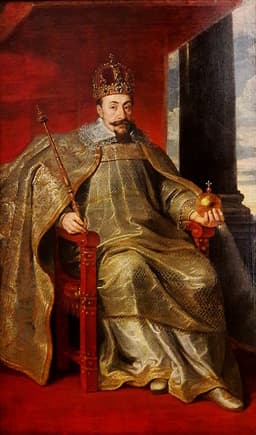
Sigismund III Vasa
Emperor · Modern
56.9Total
Basic Information
Born
1579
1566
Died
1666
1632
Era
Modern
Modern
Nationality
Brunswick
Poland
Occupation
Emperor
Emperor
Civilization
Western
Western
Score Comparison
Military (10%)
64.8
40.0
Political (20%)
68.0
68.0
Influence (20%)
54.1
59.0
Legacy (20%)
44.2
49.2
Leadership (15%)
77.2
74.0
Strategy (15%)
56.9
45.0
TOTAL
58.5
56.9
Augustus the Younger of Brunswick — Complete Timeline
1635 AD
Ruled Brunswick-Wolfenbüttel for 31 yearsPolitical Action◆ Major
Augustus the Younger became Duke of Brunswick-Wolfenb
ReignDukeCultural Patronage
Impact: regionalconstructive
1644 AD
Acquired the Bibliotheca AugustaCultural◆ Major
Augustus the Younger acquired the library of the humanist scholar Marquard Gude, which formed the core of the Bibliotheca Augusta in Wolfenb
LibraryBook CollectingScholarship
Impact: regionalconstructive
Sigismund III Vasa — Complete Timeline
1587 AD
Elected King of PolandPolitical Action◆ Major
Sigismund III Vasa was elected King of Poland and Grand Duke of Lithuania, establishing the Polish
ElectionPolish–Swedish UnionMonarchy
Impact: regional
1596 AD
Union of BrestPolitical Action◆ Major
Sigismund III supported the Union of Brest, which created the Ukrainian Greek Catholic Church. This union brought Orthodox Christians in the Polish
ReligionUnionEastern Europe
Impact: regional
Transfer of the capital from Kraków to WarsawPolitical Action◆ Major
Sigismund III moved the royal court from Krak
CapitalGovernmentPoland
Impact: nationalconstructive
1609 AD
Polish–Muscovite War (1609–1618)War◆ Major
Sigismund III launched a war against Russia, aiming to place his son W
WarRussiaTime of Troubles
Impact: regional
Expert Analysis
Origins
Augustus the Younger of Brunswick was born in 1579 in Hitzacker, the seventh child of Henry III, Duke of Brunswick-Lüneburg. His family provided a cultured environment, but as a younger son, he was not destined to rule. He turned to scholarship, studying at the University of Rostock and later traveling across Europe, amassing a vast personal library. His passion for books was evident early; by his twenties, he had already collected over 10,000 volumes. In contrast, Sigismund III Vasa was born in 1566 at Gripsholm Castle in Sweden, the son of King John III of Sweden and Catherine Jagiellon of Poland. His mixed heritage placed him at the intersection of two royal dynasties. He was raised Catholic, influenced by his mother's Polish roots, and educated in the arts of war and statecraft. His early life was marked by political intrigue, as his father's reign faced challenges from Protestant factions.
Rise to Power
Augustus the Younger's rise was unexpected. In 1635, after the deaths of his older brothers and the extinction of other lines, he became Duke of Brunswick-Wolfenbüttel at age 56. He had spent decades as a scholar, and his accession was a surprise. He used his knowledge to govern effectively, focusing on cultural patronage rather than military expansion. Sigismund III's rise was more dramatic. In 1587, he was elected King of Poland, thanks to the support of his aunt Anna Jagiellon and the powerful Zamoyski family. His election was contested by Maximilian III of Austria, leading to a brief war that ended with Maximilian's capture. In 1592, upon his father's death, Sigismund also became King of Sweden, creating a personal union. However, his staunch Catholicism alienated Protestant Sweden, leading to his deposition in 1599. He lost his Swedish throne but retained Poland, shifting his focus eastward.
Leadership & Governance
Augustus the Younger ruled Brunswick-Wolfenbüttel for 31 years with a steady hand. He avoided major wars, focusing on rebuilding after the Thirty Years' War. His governance was marked by administrative reforms, promoting trade and education. He personally cataloged his library, which grew to over 130,000 volumes by his death. His leadership score of 77.2 reflects his effective, scholarly governance. Sigismund III's political score matches at 68.0, but his leadership style was more assertive and controversial. He centralized power, moving the capital from Kraków to Warsaw in 1596 to be closer to the political center of the Commonwealth. He supported the Union of Brest in 1596, creating the Ukrainian Greek Catholic Church to bring Orthodox subjects under Rome. This alienated many Orthodox nobles and led to religious tensions. His military ventures included wars with Sweden and Russia, but his strategy score of 45.0 indicates poor planning. The Polish–Muscovite War (1609–1618) saw Polish forces capture Moscow in 1610, but Sigismund's refusal to let his son convert to Orthodoxy cost him the Russian throne, leading to a costly stalemate.
Triumph & Tragedy
Augustus the Younger's greatest triumph was the creation of the Bibliotheca Augusta, one of Europe's finest libraries. He acquired the library of Marquard Gude in 1643, adding to his own collection, and opened it to scholars. This legacy endures today as the Herzog August Bibliothek. His tragedy was that his rule was overshadowed by the Thirty Years' War, leaving little political impact beyond his duchy. His influence score of 54.1 reflects his limited reach. Sigismund III's triumphs include the Union of Brest, which still exists, and his successful centralization of power in Warsaw. His tragedy was his failure to reclaim the Swedish throne, which consumed resources and led to the Polish–Swedish War (1600–1629). His military score of 40.0 reflects his ineptitude in war. The Polish–Muscovite War ended without lasting gains, exhausting the Commonwealth.
Character & Destiny
Augustus the Younger was introverted, methodical, and deeply intellectual. His character as a bibliophile prince shaped his destiny: he ruled peacefully, leaving a cultural legacy rather than a political one. He scored 77.2 in leadership but only 44.2 in legacy, as his impact was confined to his library. Sigismund III was stubborn, pious, and ambitious. His Catholic zeal and desire to reclaim Sweden drove his decisions, often against the advice of his nobles. His character led to conflict: his refusal to compromise cost him Sweden and Russia. His legacy score of 49.2 is slightly higher than Augustus's, but his political miscalculations weakened the Commonwealth.
Legacy
Augustus the Younger's legacy is his library, now a major research institution. He is remembered as a patron of learning, not a political leader. Sigismund III's legacy is more visible: he made Warsaw the capital, a decision that lasted until the 20th century. The Union of Brest created a lasting religious institution. However, his wars drained the Commonwealth, contributing to its decline. His total score of 56.9 is slightly lower than Augustus's 58.5, but his influence score of 59.0 exceeds Augustus's 54.1.
Conclusion
While Augustus the Younger of Brunswick scores higher overall (58.5 vs 56.9), Sigismund III Vasa had a greater impact on history. Augustus's legacy is primarily cultural, confined to one library. Sigismund's decisions—moving the capital, the Union of Brest, and his wars—shaped the Polish–Lithuanian Commonwealth for centuries. His influence score of 59.0 reflects this broader reach. Despite his military failures, Sigismund's political actions had lasting consequences. Therefore, Sigismund III Vasa had the greater historical impact, even if Augustus was a more effective leader in his own sphere.
Rankings
🥇
Augustus the Younger of BrunswickLeader
Mil: 64.8Pol: 68.0Inf: 54.1
58.5
🥈
Sigismund III Vasa
Mil: 40.0Pol: 68.0Inf: 59.0
56.9
+1.6 behind
How This Comparison Works
Algorithm
Each figure is scored on 6 dimensions (0—100 scale) based on structured historical data: Military (10%), Political (20%), Influence (20%), Legacy (20%), Leadership (15%), Strategy (15%). The weighted total produces the final ranking.
Data Sources
Scores are computed from structured sub-indicators in the database. Scale factors adjust for era (Ancient ×0.85, Modern ×1.0) and civilization size (Eastern ×1.05, Other ×0.80) to account for differences in population and military scale.
Maximum 3 Figures
Comparisons are limited to 2—3 figures to ensure readability and statistical meaningfulness.
Error Margins
±5 points per dimension — Sub-scores are derived from historical records with inherent uncertainty. Two figures within 5 points on a dimension should be considered roughly equivalent in that area.
Total Score Accuracy
±3 points overall — The weighted combination of 6 dimensions produces a total score with approximately ±3 points of uncertainty. Differences of less than 3 points are not statistically significant— the figures are effectively tied.
Known Limitations
- Historical records are incomplete and uneven across civilizations
- Figures from oral-tradition societies may be underrepresented
- Occupation labels can misclassify multi-role figures
- Scores measure capability and impact, not moral character
- Quantitative scoring is a comparison tool, not absolute truth
Capability Radar
Military (10%) — Battles & Warfare
Battles
49
45
Win Rate
57
40
Expansion
56
35
Political (20%) — Governance & Reform
Reform
40
50
Diplomacy
45
45
Economy
50
40
Influence (20%) — Cultural & Global Reach
Cultural
55
55
Global
20
40
Legacy (20%) — Historical Impact
Historical
40
50
Longevity
35
45
Leadership (15%) — Power & Stability
Tenure
55
60
Stability
60
30
Strategy (15%) — Tactics & Innovation
Strategy
63
40
Tactics
62
35
Reform
69
30
Similar Comparisons
Comments & Discussion
No comments yet. Be the first to share your thoughts!