Loading...
This comparison has not been analyzed yet.
One-time AI generation (~1 minute). Scores and timeline are already available below.
Sin-shar-ishkun vs Vima Takto
Vima Takto leads by 1.9 pts · 2 figures compared
…

Sin-shar-ishkun
Emperor · Ancient
38.7Total
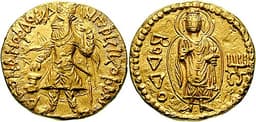
Vima Takto
Emperor · Ancient
40.6Total
Basic Information
Born
-627
80
Died
-612
90
Era
Ancient
Ancient
Nationality
Assyria
Kushan Empire
Occupation
Emperor
Emperor
Civilization
Middle Eastern
Indian
Score Comparison
Military (10%)
45.0
30.0
Political (20%)
30.7
29.3
Influence (20%)
44.0
47.1
Legacy (20%)
35.8
36.7
Leadership (15%)
39.0
41.5
Strategy (15%)
38.3
60.0
TOTAL
38.7
40.6
Sin-shar-ishkun — Complete Timeline
627 BC
Accession as king of AssyriaPolitical Action◆ Major
Sin-shar-ishkun became king of Assyria after the death of his brother Ashur-etil-ilani. His accession occurred during a period of civil war and external threats, including the rise of the Neo-Babylonian Empire under Nabopolassar and the Medes under Cyaxares.
SuccessionAssyrian EmpireCrisis
Impact: regional
626 BC
War against the Neo-Babylonian EmpireWar◆ Major
Sin-shar-ishkun fought a prolonged war against Nabopolassar of Babylon. Despite initial Assyrian successes, the Babylonians gradually gained ground, capturing key cities such as Nippur and Uruk. The war drained Assyrian resources and manpower.
WarBabylonDecline
Impact: regionaldestructive
614 BC
Loss of the city of AshurWar◆ Major
The Medes under Cyaxares captured and sacked the ancient Assyrian capital of Ashur. Sin-shar-ishkun was unable to prevent the fall of this religious and political center, which severely weakened Assyrian morale and prestige.
BattleCapitalMedes
Impact: regionaltragic
612 BC
Siege and fall of NinevehWar
A coalition of Babylonians, Medes, Scythians, and others besieged and sacked Nineveh, the capital of the Assyrian Empire. Sin-shar-ishkun was killed during the siege, and the city was destroyed. This event marked the end of the Assyrian Empire as a major power.
SiegeFall of EmpireNineveh
Impact: globaltragic
Vima Takto — Complete Timeline
85 AD
Expansion into the Indus ValleyWar◆ Major
Vima Takto, known as the 'Soter Megas' (Great Saviour), led Kushan armies to conquer the Indus Valley from the Indo-Parthians. This brought the Kushan Empire to its greatest territorial extent in India.
ConquestIndus ValleyExpansion
Impact: regional
Issuance of Anonymous CoinsCultural
Vima Takto issued coins with the legend 'Soter Megas' in Greek, without his personal name. These coins were widely circulated across the Kushan Empire and are a key source for his reign.
CoinageNumismaticsSoter Megas
Impact: regionalconstructive
This comparison has not been analyzed yet.
One-time AI generation (~1 minute). Scores and timeline are already available below.
Rankings
🥇
Vima TaktoLeader
Mil: 30.0Pol: 29.3Inf: 47.1
40.6
🥈
Sin-shar-ishkun
Mil: 45.0Pol: 30.7Inf: 44.0
38.7
+1.9 behind
How This Comparison Works
Algorithm
Each figure is scored on 6 dimensions (0—100 scale) based on structured historical data: Military (10%), Political (20%), Influence (20%), Legacy (20%), Leadership (15%), Strategy (15%). The weighted total produces the final ranking.
Data Sources
Scores are computed from structured sub-indicators in the database. Scale factors adjust for era (Ancient ×0.85, Modern ×1.0) and civilization size (Eastern ×1.05, Other ×0.80) to account for differences in population and military scale.
Maximum 3 Figures
Comparisons are limited to 2—3 figures to ensure readability and statistical meaningfulness.
Error Margins
±5 points per dimension — Sub-scores are derived from historical records with inherent uncertainty. Two figures within 5 points on a dimension should be considered roughly equivalent in that area.
Total Score Accuracy
±3 points overall — The weighted combination of 6 dimensions produces a total score with approximately ±3 points of uncertainty. Differences of less than 3 points are not statistically significant— the figures are effectively tied.
Known Limitations
- Historical records are incomplete and uneven across civilizations
- Figures from oral-tradition societies may be underrepresented
- Occupation labels can misclassify multi-role figures
- Scores measure capability and impact, not moral character
- Quantitative scoring is a comparison tool, not absolute truth
Capability Radar
Military (10%) — Battles & Warfare
Battles
35
30
Win Rate
20
40
Expansion
10
50
Political (20%) — Governance & Reform
Reform
10
20
Diplomacy
15
25
Economy
10
25
Influence (20%) — Cultural & Global Reach
Cultural
15
20
Global
5
20
Legacy (20%) — Historical Impact
Historical
25
25
Longevity
10
15
Leadership (15%) — Power & Stability
Tenure
20
30
Stability
5
20
Strategy (15%) — Tactics & Innovation
Strategy
25
40
Tactics
30
35
Reform
10
20
Similar Comparisons
Comments & Discussion
No comments yet. Be the first to share your thoughts!