Loading...
Honorius vs Vima Takto
Vima Takto leads by 4.3 pts · 2 figures compared
…
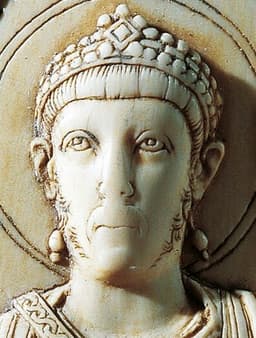
Honorius
Emperor · Ancient
36.3Total
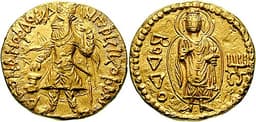
Vima Takto
Emperor · Ancient
40.6Total
Basic Information
Born
384
80
Died
423
90
Era
Ancient
Ancient
Nationality
Western Roman Empire
Kushan Empire
Occupation
Emperor
Emperor
Civilization
Western
Indian
Score Comparison
Military (10%)
10.2
30.0
Political (20%)
32.1
29.3
Influence (20%)
44.8
47.1
Legacy (20%)
38.3
36.7
Leadership (15%)
34.6
41.5
Strategy (15%)
45.0
60.0
TOTAL
36.3
40.6
Honorius — Complete Timeline
408 AD
Execution of StilichoPolitical Action◆ Major
Honorius ordered the execution of his magister militum Stilicho, who had effectively ruled the Western Empire. Stilicho was accused of treason and executed, leading to the massacre of barbarian soldiers' families and weakening Roman defenses.
Court IntrigueStilichoMilitary
Impact: nationaldestructive
410 AD
Sack of Rome by AlaricWar
The Visigoths under King Alaric sacked the city of Rome, the first time in 800 years that the city had fallen to a foreign enemy. Honorius, residing in Ravenna, failed to prevent the sack, which shocked the Roman world.
Barbarian InvasionsVisigothsFall of Rome
Impact: globaltragic
Loss of BritainPolitical Action◆ Major
Honorius wrote to the cities of Britain telling them to look to their own defense, effectively ending Roman rule in Britain. This withdrawal allowed Anglo-Saxon settlement and the formation of early medieval kingdoms.
BritainRoman WithdrawalAnglo-Saxons
Impact: regional
Vima Takto — Complete Timeline
85 AD
Expansion into the Indus ValleyWar◆ Major
Vima Takto, known as the 'Soter Megas' (Great Saviour), led Kushan armies to conquer the Indus Valley from the Indo-Parthians. This brought the Kushan Empire to its greatest territorial extent in India.
ConquestIndus ValleyExpansion
Impact: regional
Issuance of Anonymous CoinsCultural
Vima Takto issued coins with the legend 'Soter Megas' in Greek, without his personal name. These coins were widely circulated across the Kushan Empire and are a key source for his reign.
CoinageNumismaticsSoter Megas
Impact: regionalconstructive
Expert Analysis
Origins
Honorius was born in 384 AD in Constantinople, the second son of Emperor Theodosius I and Aelia Flaccilla. He was raised in the imperial court, receiving a Christian education but little military training. At the age of ten, he was appointed co-Augustus, and upon his father's death in 395 AD, he inherited the Western Roman Empire, while his brother Arcadius took the East. His early life was dominated by courtiers and generals, particularly the half-Vandal general Stilicho, who acted as his regent.
Vima Takto, also known as the 'Soter Megas' (Great Saviour), was a Kushan emperor who ruled around 80-100 AD. His origins are obscure, but he was likely a grandson of Kujula Kadphises, the founder of the Kushan Empire. He inherited a realm that included Bactria and parts of modern Afghanistan, and he expanded it through military campaigns. His name appears only on coins, where he is called 'Soter Megas' in Greek, without his personal name, suggesting a deliberate anonymity or a title that emphasized his role as a savior.
Rise to Power
Honorius became Western Emperor at age 10, but real power lay with Stilicho, who defended the empire against barbarian incursions. Honorius's rise was not through personal achievement but by birth. His reign saw constant power struggles, with Stilicho effectively ruling until his execution in 408 AD. After Stilicho's fall, Honorius relied on a series of weak advisors, leading to further decline.
Vima Takto rose to prominence through military conquest. He is credited with expanding the Kushan Empire into the Indus Valley, defeating the Indo-Parthians and Scythians. His conquests brought the Kushans into direct contact with the Roman world through trade routes. His anonymous coinage, bearing the legend 'Soter Megas', was a strategic move to establish a stable currency across his diverse empire. Unlike Honorius, Vima Takto's rise was based on his own military and political acumen.
Leadership & Governance
Honorius was a weak and indecisive leader, heavily reliant on subordinates. His governance was marked by neglect of the provinces and military. He famously moved the capital to Ravenna for safety, abandoning Rome. His response to the sack of Rome in 410 AD was to focus on securing Ravenna, showing a lack of concern for the traditional capital. He scored only 34.6 in leadership and 10.2 in military, reflecting his inability to command.
Vima Takto, in contrast, was a capable administrator and military leader. He issued a standardized coinage that facilitated trade across his empire, which included parts of modern India, Pakistan, and Afghanistan. His title 'Soter Megas' suggests a ruler who presented himself as a protector and unifier. He scored 60.0 in strategy, indicating a clear vision for expansion and consolidation. His governance was decentralized, allowing local rulers to maintain authority under Kushan suzerainty.
Triumph & Tragedy
Honorius's greatest triumph was surviving his reign without being overthrown, but this was due to the efforts of his generals. His greatest tragedy was the sack of Rome in 410 AD by Alaric the Visigoth, a humiliating event that symbolized the empire's decline. He also lost Britain, as he told the cities to look to their own defense. His execution of Stilicho removed the empire's best defender, leading to disaster.
Vima Takto's triumph was the expansion of the Kushan Empire into the Indus Valley, securing trade routes and spreading Buddhism. His anonymous coinage became a model for later rulers. His tragedy is the lack of historical records about his personal life and reign; we know him only through coins and indirect sources. His legacy was overshadowed by his successor, Kanishka the Great.
Character & Destiny
Honorius was characterized by apathy and poor judgment. He was more interested in religious matters and court intrigue than military affairs. His decision to execute Stilicho was a catastrophic mistake that led to the sack of Rome. Historians like Procopius later mocked him for his incompetence. His character sealed the fate of the Western Empire, which continued to decline after his death in 423 AD.
Vima Takto was a pragmatic conqueror who used propaganda effectively. His choice to remain anonymous on coins suggests a focus on the empire rather than personal glory. He was likely a capable strategist, as his conquests were lasting. His character, though unknown in detail, points to a ruler who understood the importance of stable currency and cultural integration.
Legacy
Honorius's legacy is that of a failed emperor who presided over the collapse of the Western Roman Empire. He is remembered as the ruler during the first sack of Rome in 800 years. His actions led to the loss of Britain and the weakening of imperial authority. He scores 38.3 in legacy, reflecting his negative impact.
Vima Takto's legacy is more positive but less known. He expanded the Kushan Empire and established a coinage that facilitated trade across Central and South Asia. His reign helped spread Buddhism and connect the Roman and Indian worlds. He scores 36.7 in legacy, slightly lower than Honorius, but his impact was more constructive.
Conclusion
Vima Takto had a greater impact than Honorius, despite scoring only 4.3 points higher overall (40.6 vs 36.3). Honorius's reign was marked by failure and decline, while Vima Takto's conquests and administrative reforms strengthened the Kushan Empire. Honorius's military score of 10.2 contrasts sharply with Vima Takto's strategic score of 60.0. While Honorius is more famous due to the sack of Rome, Vima Takto's achievements in empire-building and cultural integration are more substantial. Therefore, Vima Takto emerges as the more effective ruler.
Rankings
🥇
Vima TaktoLeader
Mil: 30.0Pol: 29.3Inf: 47.1
40.6
🥈
Honorius
Mil: 10.2Pol: 32.1Inf: 44.8
36.3
+4.3 behind
How This Comparison Works
Algorithm
Each figure is scored on 6 dimensions (0—100 scale) based on structured historical data: Military (10%), Political (20%), Influence (20%), Legacy (20%), Leadership (15%), Strategy (15%). The weighted total produces the final ranking.
Data Sources
Scores are computed from structured sub-indicators in the database. Scale factors adjust for era (Ancient ×0.85, Modern ×1.0) and civilization size (Eastern ×1.05, Other ×0.80) to account for differences in population and military scale.
Maximum 3 Figures
Comparisons are limited to 2—3 figures to ensure readability and statistical meaningfulness.
Error Margins
±5 points per dimension — Sub-scores are derived from historical records with inherent uncertainty. Two figures within 5 points on a dimension should be considered roughly equivalent in that area.
Total Score Accuracy
±3 points overall — The weighted combination of 6 dimensions produces a total score with approximately ±3 points of uncertainty. Differences of less than 3 points are not statistically significant— the figures are effectively tied.
Known Limitations
- Historical records are incomplete and uneven across civilizations
- Figures from oral-tradition societies may be underrepresented
- Occupation labels can misclassify multi-role figures
- Scores measure capability and impact, not moral character
- Quantitative scoring is a comparison tool, not absolute truth
Capability Radar
Military (10%) — Battles & Warfare
Battles
5
30
Win Rate
5
40
Expansion
5
50
Political (20%) — Governance & Reform
Reform
10
20
Diplomacy
10
25
Economy
10
25
Influence (20%) — Cultural & Global Reach
Cultural
10
20
Global
15
20
Legacy (20%) — Historical Impact
Historical
20
25
Longevity
20
15
Leadership (15%) — Power & Stability
Tenure
30
30
Stability
10
20
Strategy (15%) — Tactics & Innovation
Strategy
5
40
Tactics
5
35
Reform
5
20
Similar Comparisons
Comments & Discussion
No comments yet. Be the first to share your thoughts!