Loading...
This comparison has not been analyzed yet.
One-time AI generation (~1 minute). Scores and timeline are already available below.
Suleiman Frangieh vs Vital Kamerhe
Vital Kamerhe leads by 1.7 pts · 2 figures compared
…

Suleiman Frangieh
Politician · Modern
37.8Total
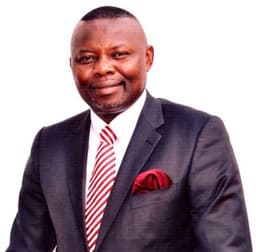
Vital Kamerhe
Politician · Modern
39.5Total
Basic Information
Born
1910
1959
Died
1992
—
Era
Modern
Modern
Nationality
Lebanon
DR Congo
Occupation
Politician
Politician
Civilization
Middle Eastern
Other
Score Comparison
Military (10%)
28.3
19.2
Political (20%)
26.4
30.8
Influence (20%)
47.1
48.6
Legacy (20%)
37.5
37.5
Leadership (15%)
38.1
48.4
Strategy (15%)
41.1
41.4
TOTAL
37.8
39.5
Suleiman Frangieh — Complete Timeline
1970 AD
Elected President of LebanonPolitical Action◆ Major
Suleiman Frangieh was elected President of Lebanon on August 17, 1970, by a single-vote majority in Parliament, defeating Elias Sarkis. His presidency marked a shift away from Chehabist policies toward a more traditional, pro-Western and Maronite-dominated approach, which exacerbated sectarian tensions.
PresidencyElectionLebanon
Impact: national
1975 AD
Presided during the outbreak of the Lebanese Civil WarWar
The Lebanese Civil War began in April 1975 during Frangieh's presidency, triggered by clashes between Phalangist militias and Palestinian factions. Frangieh's weak and sectarian-leaning government failed to contain the violence, and the conflict rapidly escalated into a multi-sided civil war involving Christian, Muslim, Druze, and Palestinian forces, lasting until 1990.
Civil WarOutbreakSectarian Violence
Impact: nationaltragic
1976 AD
Ordered the massacre of Palestinian refugees at KarantinaWar◆ Major
In January 1976, under Frangieh's presidency, Lebanese Christian militias (with alleged support from the president's son, Tony Frangieh) attacked the Karantina district in Beirut, a slum inhabited by Palestinian refugees and Lebanese Muslims. The massacre killed an estimated 1,000-1,500 civilians, leading to retaliatory massacres by Palestinian forces at Damour and deepening the cycle of violence.
MassacrePalestiniansCivil War
Impact: nationaldestructive
End of presidential term and exilePolitical Action◆ Major
Suleiman Frangieh's presidential term ended in September 1976, but due to the civil war, he was unable to hand over power peacefully. He left Lebanon for exile in France, where he remained until his death in 1992. His presidency is widely regarded as a failure that contributed to the destruction of the Lebanese state.
ExileEnd of TermLegacy
Impact: nationaltragic
Vital Kamerhe — Complete Timeline
2006 AD
Appointed Chief of Staff to President KabilaPolitical Action◆ Major
Vital Kamerhe was appointed Chief of Staff to President Joseph Kabila after the 2006 elections. This position made him one of the most powerful figures in the government, overseeing the president's agenda and political strategy.
Chief of StaffKabilaGovernment
Impact: national
2007 AD
Elected President of the National AssemblyPolitical Action◆ Major
Kamerhe was elected President of the National Assembly, the third-highest position in the DRC. He served as a key ally of Kabila, but later broke with him over the 2008 Goma peace conference, which Kamerhe opposed.
National AssemblySpeakerKabila
Impact: national
2009 AD
Resigned as President of the National AssemblyPolitical Action◆ Major
Kamerhe resigned as President of the National Assembly after falling out with Kabila over the government's handling of the conflict in eastern DRC. He accused Kabila of negotiating with armed groups and violating the constitution, moving into opposition.
ResignationOppositionKabila
Impact: national
2011 AD
Presidential Candidacy in 2011 ElectionPolitical Action◆ Major
Kamerhe ran as a presidential candidate in the 2011 election, finishing third with about 7.7% of the vote. He alleged fraud in the election, which was won by Kabila, and his campaign highlighted the fragmentation of the opposition.
ElectionOppositionFragmentation
Impact: national
2020 AD
Convicted of Corruption and EmbezzlementPolitical Action◆ Major
Kamerhe was convicted of embezzling public funds intended for a road construction project and sentenced to 20 years of penal servitude. The case was seen as a test of Tshisekedi's anti-corruption drive, but also criticized as politically motivated.
CorruptionConvictionAnti-corruption
Impact: nationaldestructive
2022 AD
Released from Prison on AppealPolitical Action◆ Major
Kamerhe was released from prison after an appeals court reduced his sentence and he was granted provisional release. His release was controversial, with critics alleging political interference, while supporters saw it as a correction of a flawed verdict.
AppealReleaseControversy
Impact: national
This comparison has not been analyzed yet.
One-time AI generation (~1 minute). Scores and timeline are already available below.
Rankings
🥇
Vital KamerheLeader
Mil: 19.2Pol: 30.8Inf: 48.6
39.5
🥈
Suleiman Frangieh
Mil: 28.3Pol: 26.4Inf: 47.1
37.8
+1.7 behind
How This Comparison Works
Algorithm
Each figure is scored on 6 dimensions (0—100 scale) based on structured historical data: Military (10%), Political (20%), Influence (20%), Legacy (20%), Leadership (15%), Strategy (15%). The weighted total produces the final ranking.
Data Sources
Scores are computed from structured sub-indicators in the database. Scale factors adjust for era (Ancient ×0.85, Modern ×1.0) and civilization size (Eastern ×1.05, Other ×0.80) to account for differences in population and military scale.
Maximum 3 Figures
Comparisons are limited to 2—3 figures to ensure readability and statistical meaningfulness.
Error Margins
±5 points per dimension — Sub-scores are derived from historical records with inherent uncertainty. Two figures within 5 points on a dimension should be considered roughly equivalent in that area.
Total Score Accuracy
±3 points overall — The weighted combination of 6 dimensions produces a total score with approximately ±3 points of uncertainty. Differences of less than 3 points are not statistically significant— the figures are effectively tied.
Known Limitations
- Historical records are incomplete and uneven across civilizations
- Figures from oral-tradition societies may be underrepresented
- Occupation labels can misclassify multi-role figures
- Scores measure capability and impact, not moral character
- Quantitative scoring is a comparison tool, not absolute truth
Capability Radar
Military (10%) — Battles & Warfare
Battles
19
21
Win Rate
26
22
Expansion
26
25
Political (20%) — Governance & Reform
Reform
10
20
Diplomacy
15
25
Economy
10
15
Influence (20%) — Cultural & Global Reach
Cultural
10
10
Global
10
10
Legacy (20%) — Historical Impact
Historical
15
15
Longevity
10
10
Leadership (15%) — Power & Stability
Tenure
20
30
Stability
5
10
Strategy (15%) — Tactics & Innovation
Strategy
32
29
Tactics
36
35
Reform
36
38
Similar Comparisons
Comments & Discussion
No comments yet. Be the first to share your thoughts!