Loading...
This comparison has not been analyzed yet.
One-time AI generation (~1 minute). Scores and timeline are already available below.
Matteo Renzi vs Suleiman Frangieh
Matteo Renzi leads by 12.6 pts · 2 figures compared
…
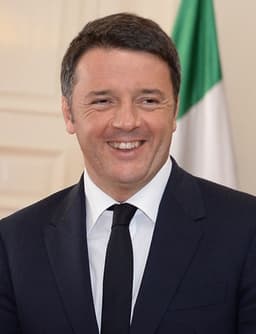
Matteo Renzi
Politician · Modern
50.4Total

Suleiman Frangieh
Politician · Modern
37.8Total
Basic Information
Born
1975
1910
Died
—
1992
Era
Modern
Modern
Nationality
Italy
Lebanon
Occupation
Politician
Politician
Civilization
Western
Middle Eastern
Score Comparison
Military (10%)
13.3
28.3
Political (20%)
68.0
26.4
Influence (20%)
56.4
47.1
Legacy (20%)
42.5
37.5
Leadership (15%)
67.0
38.1
Strategy (15%)
41.1
41.1
TOTAL
50.4
37.8
Matteo Renzi — Complete Timeline
2013 AD
Elected Secretary of the Democratic PartyPolitical Action◆ Major
Renzi was elected Secretary of the Democratic Party in a primary election, defeating the incumbent Pier Luigi Bersani. His victory signaled a shift towards a more centrist and reformist agenda within the party.
Party LeadershipDemocratic PartyPrimary
Impact: nationalconstructive
2014 AD
Passed the Jobs Act Labor ReformReform◆ Major
Renzi's government passed the Jobs Act, a major labor market reform that relaxed dismissal rules and expanded temporary contracts. The reform aimed to reduce unemployment but was criticized for increasing job precarity.
Labor ReformEconomic PolicyJobs Act
Impact: national
Appointed Prime Minister of ItalyPolitical Action◆ Major
Renzi became the youngest Prime Minister in Italian history at age 39, succeeding Enrico Letta. He promised sweeping reforms and a new political style, initially enjoying high popularity and media attention.
YouthReform AgendaPolitical Change
Impact: nationalconstructive
2016 AD
Lost Constitutional Referendum and ResignedPolitical Action◆ Major
Renzi staked his premiership on a constitutional referendum to reduce the Senate's power and streamline legislation. The proposal was rejected by 59% of voters, leading to his resignation and a political crisis.
ReferendumConstitutional ReformPolitical Defeat
Impact: nationaldestructive
Suleiman Frangieh — Complete Timeline
1970 AD
Elected President of LebanonPolitical Action◆ Major
Suleiman Frangieh was elected President of Lebanon on August 17, 1970, by a single-vote majority in Parliament, defeating Elias Sarkis. His presidency marked a shift away from Chehabist policies toward a more traditional, pro-Western and Maronite-dominated approach, which exacerbated sectarian tensions.
PresidencyElectionLebanon
Impact: national
1975 AD
Presided during the outbreak of the Lebanese Civil WarWar
The Lebanese Civil War began in April 1975 during Frangieh's presidency, triggered by clashes between Phalangist militias and Palestinian factions. Frangieh's weak and sectarian-leaning government failed to contain the violence, and the conflict rapidly escalated into a multi-sided civil war involving Christian, Muslim, Druze, and Palestinian forces, lasting until 1990.
Civil WarOutbreakSectarian Violence
Impact: nationaltragic
1976 AD
Ordered the massacre of Palestinian refugees at KarantinaWar◆ Major
In January 1976, under Frangieh's presidency, Lebanese Christian militias (with alleged support from the president's son, Tony Frangieh) attacked the Karantina district in Beirut, a slum inhabited by Palestinian refugees and Lebanese Muslims. The massacre killed an estimated 1,000-1,500 civilians, leading to retaliatory massacres by Palestinian forces at Damour and deepening the cycle of violence.
MassacrePalestiniansCivil War
Impact: nationaldestructive
End of presidential term and exilePolitical Action◆ Major
Suleiman Frangieh's presidential term ended in September 1976, but due to the civil war, he was unable to hand over power peacefully. He left Lebanon for exile in France, where he remained until his death in 1992. His presidency is widely regarded as a failure that contributed to the destruction of the Lebanese state.
ExileEnd of TermLegacy
Impact: nationaltragic
This comparison has not been analyzed yet.
One-time AI generation (~1 minute). Scores and timeline are already available below.
Rankings
🥇
Matteo RenziLeader
Mil: 13.3Pol: 68.0Inf: 56.4
50.4
🥈
Suleiman Frangieh
Mil: 28.3Pol: 26.4Inf: 47.1
37.8
+12.6 behind
How This Comparison Works
Algorithm
Each figure is scored on 6 dimensions (0—100 scale) based on structured historical data: Military (10%), Political (20%), Influence (20%), Legacy (20%), Leadership (15%), Strategy (15%). The weighted total produces the final ranking.
Data Sources
Scores are computed from structured sub-indicators in the database. Scale factors adjust for era (Ancient ×0.85, Modern ×1.0) and civilization size (Eastern ×1.05, Other ×0.80) to account for differences in population and military scale.
Maximum 3 Figures
Comparisons are limited to 2—3 figures to ensure readability and statistical meaningfulness.
Error Margins
±5 points per dimension — Sub-scores are derived from historical records with inherent uncertainty. Two figures within 5 points on a dimension should be considered roughly equivalent in that area.
Total Score Accuracy
±3 points overall — The weighted combination of 6 dimensions produces a total score with approximately ±3 points of uncertainty. Differences of less than 3 points are not statistically significant— the figures are effectively tied.
Known Limitations
- Historical records are incomplete and uneven across civilizations
- Figures from oral-tradition societies may be underrepresented
- Occupation labels can misclassify multi-role figures
- Scores measure capability and impact, not moral character
- Quantitative scoring is a comparison tool, not absolute truth
Capability Radar
Military (10%) — Battles & Warfare
Battles
21
19
Win Rate
24
26
Expansion
27
26
Political (20%) — Governance & Reform
Reform
55
10
Diplomacy
50
15
Economy
45
10
Influence (20%) — Cultural & Global Reach
Cultural
30
10
Global
40
10
Legacy (20%) — Historical Impact
Historical
35
15
Longevity
20
10
Leadership (15%) — Power & Stability
Tenure
40
20
Stability
30
5
Strategy (15%) — Tactics & Innovation
Strategy
29
32
Tactics
35
36
Reform
39
36
Similar Comparisons
Comments & Discussion
No comments yet. Be the first to share your thoughts!