Loading...
Basil II vs Sviatoslav I
Basil II leads by 11.0 pts · 2 figures compared
…
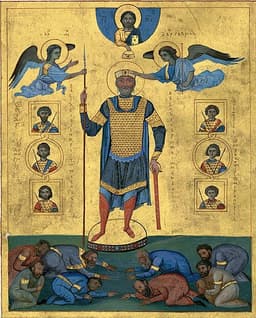
Basil II
Emperor · Medieval
63.8Total
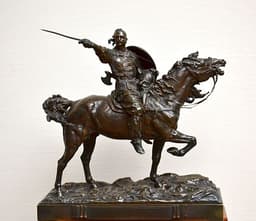
Sviatoslav I
Emperor · Medieval
52.8Total
Basic Information
Born
958
942
Died
1025
972
Era
Medieval
Medieval
Nationality
Byzantine Empire
Kievan Rus
Occupation
Emperor
Emperor
Civilization
Western
Western
Score Comparison
Military (10%)
85.0
74.0
Political (20%)
59.3
32.2
Influence (20%)
56.7
60.0
Legacy (20%)
55.0
54.0
Leadership (15%)
78.0
41.5
Strategy (15%)
68.0
58.0
TOTAL
63.8
52.8
Basil II — Complete Timeline
986 AD
Battle of the Gates of TrajanWar◆ Major
Basil II led an invasion of Bulgaria but was ambushed and defeated at the Gates of Trajan pass. The Byzantine army was routed, and Basil barely escaped. This defeat forced him to adopt a more cautious strategy and delayed the conquest of Bulgaria.
Byzantine-Bulgarian WarsDefeatAmbush
Impact: regionaltragic
1000 AD
Reforms of the Military and Land SystemReform◆ Major
Basil II implemented reforms to strengthen the Byzantine military and economy. He increased the size of the army, improved fortifications, and curbed the power of the landed aristocracy by enforcing laws against the accumulation of large estates. These measures stabilized the empire.
Military ReformLand ReformByzantine Empire
Impact: nationalconstructive
1014 AD
Battle of KleidionWar
Basil II decisively defeated the Bulgarian army at the Battle of Kleidion. After the victory, he blinded 15,000 Bulgarian prisoners, leaving one in every hundred with one eye to lead them home. This earned him the epithet 'Bulgar-Slayer' and broke Bulgarian resistance.
Byzantine-Bulgarian WarsMass BlindingBulgar-Slayer
Impact: regionaldestructive
1018 AD
Annexation of BulgariaWar◆ Major
Following the death of Bulgarian Tsar Samuel and the collapse of Bulgarian resistance, Basil II formally annexed the First Bulgarian Empire into the Byzantine Empire. He established the Theme of Bulgaria, integrating the territory and ending the long war.
AnnexationBulgariaByzantine Expansion
Impact: regionalconstructive
Sviatoslav I — Complete Timeline
965 AD
Destruction of the Khazar KhaganateWar
Sviatoslav led a campaign against the Khazar Khaganate, capturing the fortress of Sarkel and sacking the capital, Atil. This destroyed the Khazar state, ending its dominance over the steppes and opening the Volga trade route to Rus control.
Khazar CampaignConquestSteppe Politics
Impact: regional
968 AD
Conquest of BulgariaWar◆ Major
Sviatoslav invaded the First Bulgarian Empire at the request of the Byzantine Emperor. He defeated the Bulgarian army, occupied much of the country, and established his capital at Pereyaslavets on the Danube, threatening Byzantium.
Bulgarian CampaignDanubeExpansion
Impact: regional
971 AD
Battle of DorostolonWar◆ Major
After a three-month siege by Byzantine forces under Emperor John I Tzimiskes, Sviatoslav's army was defeated at Dorostolon. He was forced to surrender, renounce claims to Bulgaria, and withdraw from the Balkans.
Byzantine-Rus WarSiegeDefeat
Impact: regionaltragic
972 AD
Death at the Dnieper RapidsWar◆ Major
Returning to Kiev, Sviatoslav was ambushed and killed by the Pechenegs at the Dnieper Rapids. The Pecheneg chief Kurya made a drinking cup from Sviatoslav's skull. His death ended his expansionist campaigns.
AssassinationPechenegsAmbush
Impact: nationaltragic
Expert Analysis
Origins
**Basil II** was born in 958 CE into the Macedonian dynasty, the son of Emperor Romanos II and Theophano. He was co-emperor from 960 but effectively ruled after his father's death in 963. His early years were marked by regency under generals Nikephoros II Phokas and John I Tzimiskes, who married his mother. Basil received a thorough education in military and administrative matters, but his formative experiences were shaped by court intrigue and rebellions. He was deeply influenced by the need to restore imperial authority after decades of powerful generals overshadowing the throne.
**Sviatoslav I** was born around 942 CE, the son of Igor of Kiev and Olga. His mother ruled as regent after Igor's death in 945, and Sviatoslav grew up in a warrior culture. His education emphasized military prowess over diplomacy; he famously slept on the ground with his army and ate meat roasted over coals. He became Prince of Kiev in 963, inheriting a realm that was expanding but still threatened by nomadic neighbors and the Khazar Khaganate.
Rise to Power
Basil II's rise was gradual. After the death of John I Tzimiskes in 976, Basil became senior emperor, but he faced immediate revolts from the powerful general Bardas Skleros (976-979) and later Bardas Phokas (987-989). Basil's political skill was tested: he allied with the Rus' prince Vladimir I (who converted to Christianity and married Basil's sister Anna) to secure Varangian mercenaries. By 989, he had crushed all internal opposition, securing his throne. His military score of 85.0 reflects his eventual dominance, but his political score of 59.3 indicates the rocky start.
Sviatoslav I rose to power upon reaching maturity around 963. His first major act was to destroy the Khazar Khaganate (964-969), capturing Sarkel and sacking Atil. This campaign eliminated a major rival and opened the Volga trade route. His military score of 74.0 reflects his tactical brilliance, but his political score of 32.2 shows his lack of statecraft. He then turned to the Balkans, invading Bulgaria at the invitation of Byzantine Emperor Nikephoros II Phokas, who wanted to check Bulgarian power. Sviatoslav defeated the Bulgarians and occupied much of the country, but his success alarmed the Byzantines, who then turned against him.
Leadership & Governance
Basil II was a hands-on administrator who personally led campaigns and reformed the military. He increased army size, improved fortifications, and curbed the power of the landed aristocracy (the dynatoi) through legislation that protected small farmers and soldiers. His governance was authoritarian and efficient. He spent his entire reign on campaign, rarely in Constantinople. His leadership style was methodical and ruthless: after the Battle of Kleidion in 1014, he blinded 15,000 Bulgarian prisoners, earning the epithet "Bulgar-Slayer." This act, while brutal, broke Bulgarian resistance and allowed annexation by 1018.
Sviatoslav I was a warrior prince who led from the front. He famously sent messages to enemies saying "I am coming against you," reflecting his direct approach. He governed through conquest and tribute, not administration. His campaigns were swift and devastating, but he neglected to secure his base: while he was in Bulgaria, the Pechenegs besieged Kiev in 968, forcing a temporary return. He lacked the patience for diplomacy or long-term governance, which contributed to his low political score.
Triumph & Tragedy
**Basil II's greatest triumph** was the complete annexation of the First Bulgarian Empire after decades of war. The Battle of Kleidion (1014) was the turning point, but the final submission came in 1018. He also expanded Byzantine control into Armenia and parts of Georgia. His reforms strengthened the empire's finances and military, leading to a golden age under his successors. **His greatest failure** was the lack of a clear succession plan; he never married or had children, leaving the empire to his incompetent brother Constantine VIII, who undid many of Basil's gains. The Battle of the Gates of Trajan (986) was a major defeat where he was ambushed and barely escaped.
**Sviatoslav I's greatest triumph** was the destruction of the Khazar Khaganate, which removed a major rival and opened trade routes. His conquest of Bulgaria (969-971) briefly made him the dominant power in the Balkans. **His greatest failure** was overreaching: his invasion of Bulgaria provoked a massive Byzantine response under John I Tzimiskes, who besieged him at Dorostolon (971). Forced to surrender, Sviatoslav agreed to leave Bulgaria. On his return to Kiev, he was ambushed and killed by the Pechenegs at the Dnieper Rapids (972). His skull was made into a drinking cup, symbolizing his tragic end.
Character & Destiny
Basil II was austere, disciplined, and focused. He was known for his piety but also his ruthlessness. He distrusted the aristocracy and relied on loyal bureaucrats and soldiers. His character shaped his destiny: his relentless pursuit of Bulgarian submission led to victory, but his failure to secure the succession doomed his legacy. Historians note that his total score of 63.8 reflects a balanced but not exceptional figure; he was more a consolidator than an innovator.
Sviatoslav I was impulsive, brave, and contemptuous of comfort. His character was that of a pagan warrior, rejecting his mother's Christianity. He was a brilliant tactician but a poor strategist, failing to secure his conquests or manage his realm. His destiny was sealed by his disdain for caution: he ignored advice to bypass the Dnieper Rapids, leading to his death. His total score of 52.8 reflects his military prowess but overall lack of lasting impact.
Legacy
Basil II's legacy is the restoration of Byzantine power in the Balkans and the destruction of the Bulgarian Empire. The annexation of Bulgaria lasted until the Fourth Crusade (1204). His military reforms influenced later Byzantine emperors. He is remembered as a saint in the Eastern Orthodox Church. However, his short-term gains were undone by his successors, and the empire's decline after his death was swift. His legacy score of 55.0 is moderate: he is a pivotal figure but not transformative on a global scale.
Sviatoslav I's legacy is more symbolic than substantive. He destroyed the Khazar Khaganate, which allowed the Rus' to expand eastward. But his conquests in Bulgaria were temporary, and his death left the Kievan Rus' vulnerable to civil war. He is celebrated in Slavic folklore as a heroic warrior, but his actual impact on history is limited. His legacy score of 54.0 is similar to Basil's, but for different reasons.
Conclusion
Basil II had a greater impact than Sviatoslav I. His total score of 63.8 versus 52.8 reflects a more effective leader who achieved lasting territorial gains and stabilized the Byzantine Empire for a generation. Sviatoslav's military brilliance was real, but his lack of political acumen and failure to secure his conquests meant his achievements crumbled quickly. Basil's annexation of Bulgaria reshaped the Balkans for centuries, while Sviatoslav's destruction of the Khazars was his only enduring contribution. In the comparison of empire builder versus warrior prince, the builder wins decisively.
Rankings
🥇
Basil IILeader
Mil: 85.0Pol: 59.3Inf: 56.7
63.8
🥈
Sviatoslav I
Mil: 74.0Pol: 32.2Inf: 60.0
52.8
+11.0 behind
How This Comparison Works
Algorithm
Each figure is scored on 6 dimensions (0—100 scale) based on structured historical data: Military (10%), Political (20%), Influence (20%), Legacy (20%), Leadership (15%), Strategy (15%). The weighted total produces the final ranking.
Data Sources
Scores are computed from structured sub-indicators in the database. Scale factors adjust for era (Ancient ×0.85, Modern ×1.0) and civilization size (Eastern ×1.05, Other ×0.80) to account for differences in population and military scale.
Maximum 3 Figures
Comparisons are limited to 2—3 figures to ensure readability and statistical meaningfulness.
Error Margins
±5 points per dimension — Sub-scores are derived from historical records with inherent uncertainty. Two figures within 5 points on a dimension should be considered roughly equivalent in that area.
Total Score Accuracy
±3 points overall — The weighted combination of 6 dimensions produces a total score with approximately ±3 points of uncertainty. Differences of less than 3 points are not statistically significant— the figures are effectively tied.
Known Limitations
- Historical records are incomplete and uneven across civilizations
- Figures from oral-tradition societies may be underrepresented
- Occupation labels can misclassify multi-role figures
- Scores measure capability and impact, not moral character
- Quantitative scoring is a comparison tool, not absolute truth
Capability Radar
Military (10%) — Battles & Warfare
Battles
85
78
Win Rate
90
82
Expansion
80
85
Political (20%) — Governance & Reform
Reform
80
20
Diplomacy
70
35
Economy
75
25
Influence (20%) — Cultural & Global Reach
Cultural
60
55
Global
65
45
Legacy (20%) — Historical Impact
Historical
75
65
Longevity
70
50
Leadership (15%) — Power & Stability
Tenure
85
30
Stability
80
20
Strategy (15%) — Tactics & Innovation
Strategy
85
75
Tactics
80
80
Reform
75
40
Similar Comparisons
Comments & Discussion
No comments yet. Be the first to share your thoughts!