Loading...
Tetricus I vs Yuan Shu
Yuan Shu leads by 1.9 pts · 2 figures compared
…
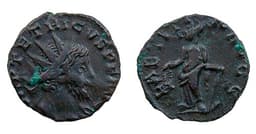
Tetricus I
Emperor · Ancient
34.8Total

Yuan Shu
Emperor · Ancient
36.7Total
Basic Information
Born
240
155
Died
274
199
Era
Ancient
Ancient
Nationality
Gallic Empire
China
Occupation
Emperor
Emperor
Civilization
Western
Eastern
Score Comparison
Military (10%)
25.9
25.0
Political (20%)
29.3
27.9
Influence (20%)
42.4
44.0
Legacy (20%)
33.3
35.0
Leadership (15%)
31.2
39.0
Strategy (15%)
42.3
43.7
TOTAL
34.8
36.7
Tetricus I — Complete Timeline
271 AD
Proclaimed emperor of the Gallic EmpirePolitical Action◆ Major
Tetricus I was proclaimed emperor of the Gallic Empire after the assassination of Victorinus. He was a senator and governor of Aquitania, and his reign marked the final phase of the breakaway state.
Gallic EmpireUsurpationSuccession
Impact: regional
274 AD
Defeated by Aurelian at the Battle of ChâlonsWar
Tetricus I led the Gallic army against the Roman emperor Aurelian at the Battle of Ch
BattleGallic EmpireReunification
Impact: regional
Surrendered to Aurelian and ended the Gallic EmpirePolitical Action
After his defeat, Tetricus I formally surrendered to Aurelian. The Gallic Empire was dissolved and reincorporated into the Roman Empire. Tetricus was spared and later appointed a governor in Italy, ending the breakaway state's ten-year existence.
SurrenderGallic EmpireReunification
Impact: regional
Yuan Shu — Complete Timeline
197 AD
Defeat at the Battle of FengqiuWar◆ Major
After declaring himself emperor, Yuan Shu was attacked by a coalition led by Cao Cao. At Fengqiu, Cao Cao's forces defeated Yuan Shu's army, forcing Yuan Shu to flee south and significantly weakening his power base.
Three KingdomsBattleDefeat
Impact: regionaldestructive
Declared himself Emperor of ZhongPolitical Action◆ Major
Yuan Shu declared himself emperor of the short-lived Zhong dynasty, claiming the Mandate of Heaven. This act alienated his allies, including Sun Ce and Cao Cao, and led to a coalition against him, marking a major strategic blunder.
Three KingdomsUsurpationDecline
Impact: nationaldestructive
199 AD
Death from illnessOther◆ Major
Yuan Shu died from illness while attempting to flee to his brother Yuan Shao. His failed imperial ambition and subsequent defeat left him isolated and destitute, marking the end of his faction in the late Han dynasty.
Three KingdomsDeathDecline
Impact: regionaltragic
Expert Analysis
Origins
Tetricus I was born around 220 AD into a Gallic senatorial family. He served as governor of Aquitania under the Gallic Empire, a breakaway state from Rome. His rise came after the assassination of Emperor Victorinus in 271 AD, when Victorinus's mother Victoria selected Tetricus as the next emperor, likely due to his administrative experience and noble lineage. He accepted the purple reluctantly, inheriting a realm under constant pressure from Germanic tribes and the Roman central government.
Yuan Shu was born around 155 AD into the powerful Yuan clan, one of the most prestigious families in the Eastern Han dynasty. His father Yuan Feng held high office, and his half-brother Yuan Shao was a major warlord. Yuan Shu began his career as a captain of the imperial guard and later became governor of Nanyang. He participated in the coalition against Dong Zhuo in 190 AD, but his ambitions soon outran his capabilities.
Rise to Power
Tetricus I became emperor in 271 AD after Victoria engineered his succession. He faced immediate challenges: the Roman emperor Aurelian was reconquering the breakaway Palmyrene Empire and then turned west. Tetricus's rule was largely defensive, as he struggled to maintain control over Gaul and Britain. His key turning point came in 274 AD when Aurelian marched into Gaul. According to some accounts, Tetricus secretly negotiated with Aurelian, agreeing to surrender in exchange for clemency. This led to the Battle of Châlons, where Tetricus's army was defeated, and he surrendered personally.
Yuan Shu rose to prominence during the chaos after Dong Zhuo's death. He controlled the rich territories of Nanyang and later moved to Shouchun. His major turning point came in 197 AD when he declared himself Emperor of Zhong, claiming the Mandate of Heaven. This act was based on propaganda that he possessed the imperial seal and that a comet signified his destiny. However, this move alienated his key allies, including Sun Ce, who broke away. Yuan Shu's political score of 27.9 reflects this miscalculation.
Leadership & Governance
Tetricus I governed the Gallic Empire as a Roman-style administrator, maintaining existing institutions. His leadership score of 31.2 suggests a passive style; he relied on the Gallic bureaucracy and military. Unlike his predecessor Victorinus, Tetricus did not lead military campaigns personally, instead delegating to generals. His strategy score of 42.3 indicates some diplomatic skill, as he possibly negotiated his surrender to save his life. However, he failed to inspire loyalty or effective resistance.
Yuan Shu's governance was marked by arrogance and poor judgment. He taxed his subjects heavily to support his lavish court and military campaigns. His leadership score of 39.0 is slightly higher than Tetricus's, but his political score of 27.9 is even lower, reflecting his inability to form lasting alliances. He alienated Sun Ce by refusing to honor promises, and his declaration of emperor turned former friends into enemies. His strategy score of 43.7 is similar to Tetricus's, but his execution was flawed.
Triumph & Tragedy
Tetricus I's greatest success was surviving his defeat. After surrendering to Aurelian, he was paraded in a triumph but then granted a governorship in Italy, living out his days in comfort. This was unusual for a usurper. His greatest failure was losing the Gallic Empire without a significant fight, ending the breakaway state after 14 years. His military score of 25.9 reflects his lack of battlefield success.
Yuan Shu's triumph was briefly controlling a large territory and claiming imperial status. His influence score of 44.0 is the highest among his scores, due to his family name and initial power. His tragedy was his utter collapse: after declaring emperor, he was defeated by Cao Cao at Fengqiu, lost his allies, and died in 199 AD while fleeing, reportedly abandoned by his own troops. His military score of 25.0 is even lower than Tetricus's.
Character & Destiny
Tetricus I was cautious and pragmatic, willing to sacrifice power for personal safety. His decision to surrender suggests a realistic assessment of his odds. This character trait likely saved his life but doomed his empire. Historical assessments view him as a weak ruler who was never truly committed to the Gallic cause.
Yuan Shu was arrogant and overambitious. His declaration of emperor was a catastrophic misjudgment, as he lacked the military strength to back it. The Chinese historian Chen Shou described him as 'reckless and conceited.' His destiny was shaped by his inability to listen to advisors, such as when he rejected peace offers from Cao Cao. His total score of 36.7 is only marginally higher than Tetricus's 34.8, but his legacy is more negative due to his self-inflicted downfall.
Legacy
Tetricus I's legacy is minor: he is remembered as the last Gallic emperor, a footnote in Roman history. The Gallic Empire's brief existence showed the fragility of Roman unity, but Tetricus did little to shape its memory. His influence score of 42.4 is surprisingly high for a figure of his stature, perhaps due to his unusual post-defeat career.
Yuan Shu's legacy is more significant in Chinese history. He is often cited as a cautionary example of overreaching ambition. The Three Kingdoms era is rich with figures like Cao Cao and Liu Bei, but Yuan Shu's folly is remembered as a turning point that accelerated the fragmentation of the Han. His influence score of 44.0 reflects his role in destabilizing the realm.
Conclusion
Yuan Shu had a greater impact on history than Tetricus I, despite his total score being only 1.9 points higher. Tetricus's surrender ended a minor rebellion, while Yuan Shu's imperial declaration helped trigger the final collapse of the Han dynasty. Yuan Shu's actions directly influenced the rise of Cao Cao and the subsequent Three Kingdoms period. While both were failed usurpers, Yuan Shu's impact on the course of Chinese history is far more significant. Tetricus I's legacy is a historical curiosity; Yuan Shu's is a lesson in hubris that shaped an era.
Rankings
🥇
Yuan ShuLeader
Mil: 25.0Pol: 27.9Inf: 44.0
36.7
🥈
Tetricus I
Mil: 25.9Pol: 29.3Inf: 42.4
34.8
+1.9 behind
How This Comparison Works
Algorithm
Each figure is scored on 6 dimensions (0—100 scale) based on structured historical data: Military (10%), Political (20%), Influence (20%), Legacy (20%), Leadership (15%), Strategy (15%). The weighted total produces the final ranking.
Data Sources
Scores are computed from structured sub-indicators in the database. Scale factors adjust for era (Ancient ×0.85, Modern ×1.0) and civilization size (Eastern ×1.05, Other ×0.80) to account for differences in population and military scale.
Maximum 3 Figures
Comparisons are limited to 2—3 figures to ensure readability and statistical meaningfulness.
Error Margins
±5 points per dimension — Sub-scores are derived from historical records with inherent uncertainty. Two figures within 5 points on a dimension should be considered roughly equivalent in that area.
Total Score Accuracy
±3 points overall — The weighted combination of 6 dimensions produces a total score with approximately ±3 points of uncertainty. Differences of less than 3 points are not statistically significant— the figures are effectively tied.
Known Limitations
- Historical records are incomplete and uneven across civilizations
- Figures from oral-tradition societies may be underrepresented
- Occupation labels can misclassify multi-role figures
- Scores measure capability and impact, not moral character
- Quantitative scoring is a comparison tool, not absolute truth
Capability Radar
Military (10%) — Battles & Warfare
Battles
15
35
Win Rate
10
30
Expansion
5
40
Political (20%) — Governance & Reform
Reform
10
10
Diplomacy
20
15
Economy
10
20
Influence (20%) — Cultural & Global Reach
Cultural
5
15
Global
5
5
Legacy (20%) — Historical Impact
Historical
15
20
Longevity
5
10
Leadership (15%) — Power & Stability
Tenure
30
15
Stability
5
10
Strategy (15%) — Tactics & Innovation
Strategy
5
20
Tactics
10
25
Reform
5
10
Similar Comparisons
Comments & Discussion
No comments yet. Be the first to share your thoughts!