Loading...
Polemon I of Pontus vs Yuan Shu
Polemon I of Pontus leads by 2.0 pts · 2 figures compared
…
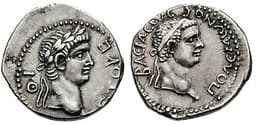
Polemon I of Pontus
Emperor · Ancient
38.7Total

Yuan Shu
Emperor · Ancient
36.7Total
Basic Information
Born
-40
155
Died
-8
199
Era
Ancient
Ancient
Nationality
Pontus
China
Occupation
Emperor
Emperor
Civilization
Western
Eastern
Score Comparison
Military (10%)
50.0
25.0
Political (20%)
26.4
27.9
Influence (20%)
44.0
44.0
Legacy (20%)
34.2
35.0
Leadership (15%)
41.5
39.0
Strategy (15%)
39.6
43.7
TOTAL
38.7
36.7
Polemon I of Pontus — Complete Timeline
36 BC
Appointed King of Pontus by Mark AntonyPolitical Action◆ Major
Mark Antony appointed Polemon I as king of Pontus, a client kingdom of Rome. This appointment placed Polemon in a position of power within the Roman sphere of influence in Anatolia.
AppointmentClient KingdomRoman Influence
Impact: regional
31 BC
Supported Mark Antony in the Final War of the Roman RepublicWar◆ Major
Polemon I supported Mark Antony against Octavian in the civil war. After Antony's defeat at the Battle of Actium, Polemon's kingdom was spared by Octavian, who confirmed him as king.
Roman Civil WarActiumClient King
Impact: regional
25 BC
Expanded Pontic Kingdom into ColchisWar
Polemon I expanded his kingdom by conquering Colchis on the eastern Black Sea coast. This expansion increased his territory and influence, though it required Roman approval.
ExpansionColchisPontus
Impact: regional
8 BC
Killed in Battle Against the AspurgianiWar◆ Major
Polemon I was killed in battle against the Aspurgiani, a tribe in the Bosporan region. His death ended his reign and led to Roman reorganization of the Pontic kingdom.
Death in BattleBosporan WarEnd of Reign
Impact: regionaltragic
Yuan Shu — Complete Timeline
197 AD
Defeat at the Battle of FengqiuWar◆ Major
After declaring himself emperor, Yuan Shu was attacked by a coalition led by Cao Cao. At Fengqiu, Cao Cao's forces defeated Yuan Shu's army, forcing Yuan Shu to flee south and significantly weakening his power base.
Three KingdomsBattleDefeat
Impact: regionaldestructive
Declared himself Emperor of ZhongPolitical Action◆ Major
Yuan Shu declared himself emperor of the short-lived Zhong dynasty, claiming the Mandate of Heaven. This act alienated his allies, including Sun Ce and Cao Cao, and led to a coalition against him, marking a major strategic blunder.
Three KingdomsUsurpationDecline
Impact: nationaldestructive
199 AD
Death from illnessOther◆ Major
Yuan Shu died from illness while attempting to flee to his brother Yuan Shao. His failed imperial ambition and subsequent defeat left him isolated and destitute, marking the end of his faction in the late Han dynasty.
Three KingdomsDeathDecline
Impact: regionaltragic
Expert Analysis
Origins
Polemon I of Pontus was born around 65 BCE into a noble family in Laodicea on the Lycus, a city in the Kingdom of Pontus. His father was Zenon, a prominent orator and politician. Polemon received a Greek education and was fluent in Greek and Latin, preparing him for a role in the Hellenistic-Roman world. He emerged as a local dynast during the chaos of the Mithridatic Wars, aligning with Rome.
Yuan Shu was born around 155 CE into the powerful Yuan clan of Runan, one of the most prestigious families in the Han Dynasty. His father, Yuan Feng, held high office. Yuan Shu grew up in a world of privilege and political intrigue, receiving a Confucian education. He entered officialdom as a colonel, but his ambition quickly outpaced his station.
Rise to Power
Polemon I rose to prominence through his service to Mark Antony. In 37 BCE, Antony appointed him king of Pontus, replacing the previous ruler. This appointment was part of Antony's reorganization of the eastern provinces. Polemon proved a loyal client, expanding his kingdom into Colchis (modern Georgia) around 35 BCE, subduing local tribes and securing the Black Sea coast. His rise was entirely dependent on Roman patronage.
Yuan Shu rose as a warlord during the collapse of the Han Dynasty. After the death of Emperor Ling in 189 CE, he joined the coalition against Dong Zhuo. He claimed the seal of the Han emperor and used it to bolster his legitimacy. In 197 CE, he declared himself emperor of the Zhong dynasty, claiming the Mandate of Heaven. This act, however, alienated his allies, including Sun Ce and his own brother Yuan Shao. His rise was based on a gamble that failed.
Leadership & Governance
Polemon I governed as a Hellenistic king under Roman suzerainty. He maintained the existing administrative structures, collected tribute, and provided troops for Roman campaigns. His governance was pragmatic: he allowed local elites to retain power as long as they remained loyal. He also minted coins bearing his image and Greek legends, projecting authority. His leadership style was cautious, avoiding direct confrontation with Rome.
Yuan Shu governed as a self-proclaimed emperor, but his rule was ineffective. He imposed heavy taxes to fund his military campaigns, alienating the peasantry. He failed to build a stable bureaucracy or secure consistent alliances. His leadership was marked by arrogance and poor judgment; he executed capable subordinates out of suspicion. His governance score of 39.0 reflects his inability to consolidate power.
Triumph & Tragedy
Polemon I's greatest success was the expansion of Pontus into Colchis, increasing his kingdom's resources and prestige. He also survived the defeat of his patron Mark Antony at Actium in 31 BCE. Octavian (later Augustus) confirmed his rule, a testament to Polemon's political skill. His tragedy came in 8 BCE when he was killed in battle against the Aspurgiani tribe in the Bosporan region. His death left his kingdom to be reorganized by Rome.
Yuan Shu's triumph was briefly holding the title of emperor and rallying some support. However, his tragedy was total: his declaration of empire led to a coalition against him. At the Battle of Fengqiu in 197 CE, Cao Cao defeated him, and his forces disintegrated. He died in 199 CE of illness, abandoned by his followers. His legacy is that of a failed usurper.
Character & Destiny
Polemon I was pragmatic and adaptable. He understood the limits of his power within the Roman framework and acted accordingly. His character was cautious, seeking stability over glory. This allowed him to retain his throne after Antony's fall. His destiny was to be a successful client king, but his death in battle showed that even caution could not always prevent a violent end.
Yuan Shu was arrogant and overambitious. His declaration of emperor was a miscalculation that ignored the political realities of the time. He lacked the strategic patience of his rivals. His character led to isolation and defeat. Historians note his lack of political acumen, reflected in his political score of 27.9.
Legacy
Polemon I's legacy is as a capable Roman client king. His kingdom of Pontus continued under his descendants until it was annexed by Rome in 64 CE. His expansion into Colchis had lasting cultural and political effects, integrating the region into the Greco-Roman world. He is remembered primarily through coinage and inscriptions.
Yuan Shu's legacy is that of a cautionary tale. His brief Zhong dynasty is not recognized by official Chinese historiography. His actions accelerated the fragmentation of the Han Dynasty. He is remembered as a symbol of overreach and the dangers of premature ambition. His influence score of 44.0 is largely due to his notoriety.
Conclusion
Polemon I of Pontus had greater actual impact than Yuan Shu. While Yuan Shu's ambition briefly shook the Han order, Polemon I successfully governed and expanded a kingdom for decades, navigating the treacherous waters of Roman politics. Polemon's total score of 38.7 edges out Yuan Shu's 36.7, but the gap understates the difference in effectiveness. Polemon left a tangible legacy in the Black Sea region, whereas Yuan Shu left only a failed rebellion. In the contest between a pragmatic client king and a reckless usurper, the client king wins by sustaining power and influence over time.
Rankings
🥇
Polemon I of PontusLeader
Mil: 50.0Pol: 26.4Inf: 44.0
38.7
🥈
Yuan Shu
Mil: 25.0Pol: 27.9Inf: 44.0
36.7
+2.0 behind
How This Comparison Works
Algorithm
Each figure is scored on 6 dimensions (0—100 scale) based on structured historical data: Military (10%), Political (20%), Influence (20%), Legacy (20%), Leadership (15%), Strategy (15%). The weighted total produces the final ranking.
Data Sources
Scores are computed from structured sub-indicators in the database. Scale factors adjust for era (Ancient ×0.85, Modern ×1.0) and civilization size (Eastern ×1.05, Other ×0.80) to account for differences in population and military scale.
Maximum 3 Figures
Comparisons are limited to 2—3 figures to ensure readability and statistical meaningfulness.
Error Margins
±5 points per dimension — Sub-scores are derived from historical records with inherent uncertainty. Two figures within 5 points on a dimension should be considered roughly equivalent in that area.
Total Score Accuracy
±3 points overall — The weighted combination of 6 dimensions produces a total score with approximately ±3 points of uncertainty. Differences of less than 3 points are not statistically significant— the figures are effectively tied.
Known Limitations
- Historical records are incomplete and uneven across civilizations
- Figures from oral-tradition societies may be underrepresented
- Occupation labels can misclassify multi-role figures
- Scores measure capability and impact, not moral character
- Quantitative scoring is a comparison tool, not absolute truth
Capability Radar
Military (10%) — Battles & Warfare
Battles
10
35
Win Rate
10
30
Expansion
15
40
Political (20%) — Governance & Reform
Reform
10
10
Diplomacy
35
15
Economy
15
20
Influence (20%) — Cultural & Global Reach
Cultural
10
15
Global
10
5
Legacy (20%) — Historical Impact
Historical
15
20
Longevity
10
10
Leadership (15%) — Power & Stability
Tenure
30
15
Stability
20
10
Strategy (15%) — Tactics & Innovation
Strategy
10
20
Tactics
10
25
Reform
5
10
Similar Comparisons
Comments & Discussion
No comments yet. Be the first to share your thoughts!