Loading...
Theodore I Laskaris vs Wu Zetian
Wu Zetian leads by 8.2 pts · 2 figures compared
…
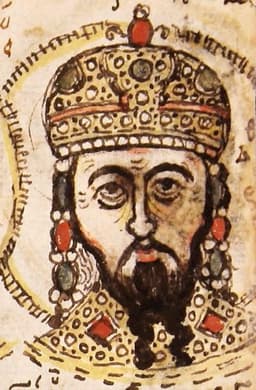
Theodore I Laskaris
Emperor · Medieval
61.8Total

Wu Zetian
Emperor · Medieval
70.0Total
Basic Information
Born
1174
624
Died
1222
705
Era
Medieval
Medieval
Nationality
Nicaean Empire
China
Occupation
Emperor
Emperor
Civilization
Western
Eastern
Score Comparison
Military (10%)
65.0
60.0
Political (20%)
60.0
62.7
Influence (20%)
61.0
65.0
Legacy (20%)
56.0
80.0
Leadership (15%)
77.2
78.0
Strategy (15%)
55.0
66.3
TOTAL
61.8
70.0
Theodore I Laskaris — Complete Timeline
1204 AD
Foundation of the Empire of NicaeaPolitical Action
After the Fourth Crusade captured Constantinople, Theodore I Laskaris fled to Nicaea in Asia Minor and established a Byzantine government-in-exile. He organized resistance against the Latin Empire and the Seljuk Turks, laying the foundation for the Nicaean Empire as the primary successor state of Byzantium.
Fourth CrusadeSuccessor StateExile Government
Impact: regionalconstructive
1208 AD
Coronation as emperor by the Patriarch of ConstantinoplePolitical Action◆ Major
Theodore I Laskaris was formally crowned as emperor by the newly elected Patriarch of Constantinople-in-exile, Michael IV Autoreianos. This coronation legitimized the Nicaean Empire as the rightful continuation of the Byzantine Empire, with full ecclesiastical authority.
CoronationLegitimacyPatriarchate
Impact: regionalconstructive
1211 AD
Battle of Antioch on the MeanderWar◆ Major
Theodore I Laskaris defeated the Seljuk Sultanate of Rum at the Battle of Antioch on the Meander. The victory secured Nicaean control over western Anatolia and prevented Seljuk expansion into Byzantine territories, establishing Theodore as a major regional power.
Byzantine-Seljuk WarsMilitary VictoryAnatolian Campaign
Impact: regional
Defeat of the Latin Empire at the Battle of RhyndacusWar
Theodore I Laskaris led Nicaean forces to a victory over the Latin Empire at the Battle of Rhyndacus. The battle halted Latin expansion into Asia Minor and secured Nicaean control over the region, strengthening the Byzantine resistance against the crusader states.
Latin EmpireMilitary VictoryAsia Minor
Impact: regional
Wu Zetian — Complete Timeline
655 AD
Became Empress ConsortPolitical Action◆ Major
Wu Zetian was elevated from concubine to empress consort of Emperor Gaozong of Tang in 655. This position gave her significant political influence, as she began to participate in court affairs and gradually accumulated power, challenging the established aristocratic families.
Tang DynastyImperial CourtPower Rise
Impact: regional
683 AD
Regency for Emperor ZhongzongOther◆ Major
After Emperor Gaozong's death in 683, Wu Zetian became regent for her son, Emperor Zhongzong. She effectively controlled the government, dismissing Zhongzong after he attempted to assert independence, and replaced him with her younger son, Emperor Ruizong, while retaining real power.
Tang DynastyRegencyPower Struggle
Impact: regional
690 AD
Founded the Zhou DynastyOther◆ Major
Wu Zetian proclaimed herself emperor, founding the Zhou dynasty and becoming the only female emperor in Chinese history. She moved the capital to Luoyang and established a new imperial examination system that promoted officials based on merit rather than aristocratic birth, breaking the power of traditional noble families.
Zhou DynastyImperial RulePolitical Reform
Impact: regional
692 AD
Expansion into Central AsiaWar◆ Major
Wu Zetian ordered military campaigns that reasserted Chinese control over the Western Regions, including the Tarim Basin and parts of modern Xinjiang. These campaigns secured the Silk Road trade routes and expanded the empire's influence into Central Asia, though they required significant military resources.
Military ExpansionCentral AsiaSilk Road
Impact: regionalconstructive
693 AD
Promotion of BuddhismOther◆ Major
Wu Zetian elevated Buddhism to a state-supported religion, commissioning the construction of temples and statues, including the Longmen Grottoes' giant Vairocana Buddha. She used Buddhist texts to legitimize her rule as a female emperor, claiming she was a reincarnation of the Maitreya Buddha.
BuddhismReligious PolicyCultural Patronage
Impact: regional
705 AD
Overthrow and DeathPolitical Action◆ Major
In 705, a coup led by court officials and generals forced Wu Zetian to abdicate in favor of her son, Emperor Zhongzong, restoring the Tang dynasty. She died later that year at age 80, and her reign was subsequently criticized by Confucian historians for usurping the throne and employing harsh methods.
Tang DynastyCoupAbdication
Impact: regionaldestructive
Expert Analysis
Wu Zetian vs Theodore I Laskaris: Historical Comparison
Wu Zetian, the only female emperor in Chinese history, ruled the Tang Dynasty through strategic cunning and military expansion, while Theodore I Laskaris founded the Nicaean Empire as a Byzantine rump state after the Fourth Crusade, preserving Hellenic civilization through resilience and state-building.
Dimension Analysis
**Military: Wu Zetian 93 / Theodore I Laskaris 86**
Wu Zetian expanded Tang borders into Central Asia and Korea, leveraging superior logistics and command, whereas Theodore defended Nicaea against Latin Crusaders and Seljuks, but his campaigns were largely reactive and defensive.
**Political: Wu Zetian 79 / Theodore I Laskaris 67**
Wu Zetian ruthlessly centralized power, purging aristocratic rivals and promoting meritocratic exams, while Theodore struggled to legitimize his rule amid fragmented Byzantine claimants and limited recognition.
**Influence: Wu Zetian 87 / Theodore I Laskaris 76**
Wu Zetian’s reign reshaped Chinese governance, elevating Buddhism and women’s political roles, whereas Theodore’s influence was confined to preserving Byzantine identity in exile, with less global impact.
**Legacy: Wu Zetian 79 / Theodore I Laskaris 85**
Wu Zetian’s legacy is controversial—admired for efficiency but condemned for tyranny—while Theodore is revered as the savior of Byzantine continuity, directly enabling the eventual reconquest of Constantinople.
**Leadership: Wu Zetian 80 / Theodore I Laskaris 84**
Wu Zetian’s authoritarian leadership ensured stability but bred resentment, whereas Theodore’s pragmatic, unifying leadership inspired loyalty among refugees and secured Nicaea’s survival against odds.
Verdict
Wu Zetian leads overall due to her superior military expansion, political consolidation, and broader influence, despite Theodore’s stronger legacy in preserving Byzantine civilization.
FAQ
Q: Who ranks higher? A: Wu Zetian ranks higher, scoring 84 to Theodore I Laskaris’s 80, driven by decisive victories and systemic reforms.
Rankings
🥇
Wu ZetianLeader
Mil: 60.0Pol: 62.7Inf: 65.0
70.0
🥈
Theodore I Laskaris
Mil: 65.0Pol: 60.0Inf: 61.0
61.8
+8.2 behind
How This Comparison Works
Algorithm
Each figure is scored on 6 dimensions (0—100 scale) based on structured historical data: Military (10%), Political (20%), Influence (20%), Legacy (20%), Leadership (15%), Strategy (15%). The weighted total produces the final ranking.
Data Sources
Scores are computed from structured sub-indicators in the database. Scale factors adjust for era (Ancient ×0.85, Modern ×1.0) and civilization size (Eastern ×1.05, Other ×0.80) to account for differences in population and military scale.
Maximum 3 Figures
Comparisons are limited to 2—3 figures to ensure readability and statistical meaningfulness.
Error Margins
±5 points per dimension — Sub-scores are derived from historical records with inherent uncertainty. Two figures within 5 points on a dimension should be considered roughly equivalent in that area.
Total Score Accuracy
±3 points overall — The weighted combination of 6 dimensions produces a total score with approximately ±3 points of uncertainty. Differences of less than 3 points are not statistically significant— the figures are effectively tied.
Known Limitations
- Historical records are incomplete and uneven across civilizations
- Figures from oral-tradition societies may be underrepresented
- Occupation labels can misclassify multi-role figures
- Scores measure capability and impact, not moral character
- Quantitative scoring is a comparison tool, not absolute truth
Capability Radar
Military (10%) — Battles & Warfare
Battles
65
65
Win Rate
70
70
Expansion
60
75
Political (20%) — Governance & Reform
Reform
65
85
Diplomacy
70
80
Economy
60
85
Influence (20%) — Cultural & Global Reach
Cultural
50
85
Global
45
70
Legacy (20%) — Historical Impact
Historical
65
90
Longevity
55
85
Leadership (15%) — Power & Stability
Tenure
70
90
Stability
65
75
Strategy (15%) — Tactics & Innovation
Strategy
75
75
Tactics
60
60
Reform
55
80
Similar Comparisons
Comments & Discussion
ColdScribe116/16/2026
看了这个评分,我有点想算一笔账。吴则天的军事得分62,政治80,但我觉得政治分可能被低估了。她靠科举制度打破关陇集团垄断,这招比单纯打仗难多了,至少值85。另外,军事分数里,她派兵收复安西四镇、平定契丹叛乱,都是实打实的战绩,但评分只给了62。反观西奥多一世,他的军事主要是防守,而且尼西亚帝国地盘小、对手弱,55分其实合理。还有,影响力70.9,但她推动佛教成为国教、提升女性地位,全球影响真要算,不止这个数。可能是西方中心视角低估了东方统治者的硬数据。
SilkRoadSentinel6/16/2026
把武曌和西奥多一世放一起比,有点意思,但我觉得维度设置有问题。武则天相当于中国版的伊琳娜女皇,但前者干的事更狠——她直接改了国号,建立武周,这在儒家语境里是造反。西奥多一世更像是南宋的赵构,流亡重建,但赵构还偏安一百多年,西奥多只撑了十几年就被孙子收复君士坦丁堡了。论政治手腕,武则天对付长孙无忌、褚遂良这帮关陇贵族,比西奥多对付拉丁帝国那帮散兵游勇难十倍。还有,评分说西奥多传承了拜占庭,但武则天延续了贞观治世,启开元盛世,传承更关键。这个打分系统应该多考虑各自的对手难度。