Loading...
Theodosius II vs Vitellius
Theodosius II leads by 18.7 pts · 2 figures compared
…
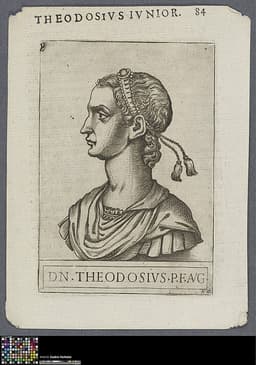
Theodosius II
Emperor · Ancient
58.4Total

Vitellius
Emperor · Ancient
39.7Total
Basic Information
Born
401
15
Died
450
69
Era
Ancient
Ancient
Nationality
Byzantine Empire
Roman Empire
Occupation
Emperor
Emperor
Civilization
Western
Western
Score Comparison
Military (10%)
47.5
45.0
Political (20%)
68.0
39.4
Influence (20%)
59.0
42.4
Legacy (20%)
58.0
32.5
Leadership (15%)
66.0
45.0
Strategy (15%)
43.3
38.3
TOTAL
58.4
39.7
Theodosius II — Complete Timeline
413 AD
Construction of the Theodosian WallsOther◆ Major
Theodosius II ordered the construction of the Theodosian Walls, a massive triple fortification system that protected Constantinople. The walls were built under the direction of the praetorian prefect Anthemius. They successfully defended the city from numerous sieges for over a thousand years.
FortificationsConstantinopleDefense
Impact: globalconstructive
425 AD
Foundation of the University of ConstantinopleCultural◆ Major
Theodosius II founded the Pandidakterion, a state-sponsored university in Constantinople. The institution had 31 chairs for Greek and Latin grammar, rhetoric, philosophy, and law. It became a major center of learning and preserved classical knowledge during the early Middle Ages.
EducationUniversityCulture
Impact: globalconstructive
438 AD
Publication of the Theodosian CodeReform◆ Major
Theodosius II oversaw the compilation of the Theodosian Code, a collection of Roman laws since the reign of Constantine I. The code was published in the Eastern and Western Roman Empires, standardizing legal practices and influencing later legal systems, including the Justinian Code.
LawCodeLegal Reform
Impact: globalconstructive
441 AD
Reign during the Hunnic ThreatWar◆ Major
Theodosius II's reign faced repeated invasions by the Huns under Attila. The Huns ravaged the Balkans and forced the Eastern Roman Empire to pay heavy tribute. Theodosius's policy of appeasement and payment of tribute was criticized but bought time for the empire.
HunsAttilaTribute
Impact: regional
Vitellius — Complete Timeline
69 AD
Battle of BedriacumWar◆ Major
Vitellius's forces defeated Otho's army at the First Battle of Bedriacum. The victory allowed Vitellius to enter Rome and be recognized as emperor by the Senate. His reign was marked by lavish spending and unpopularity.
Civil WarBattleVictory
Impact: national
Proclamation as EmperorPolitical Action◆ Major
Vitellius was proclaimed emperor by his troops in Germania Inferior after the death of Galba. He was the governor of the province and had the support of the Rhine legions. His claim was challenged by Otho, leading to civil war.
Year of the Four EmperorsProclamationRhine Legions
Impact: national
Death of VitelliusPolitical Action◆ Major
Vitellius was captured and killed by Vespasian's supporters in Rome. He was dragged through the streets and executed, and his body was thrown into the Tiber. His death ended the Year of the Four Emperors and established the Flavian dynasty.
ExecutionYear of the Four EmperorsFlavian Dynasty
Impact: nationaltragic
Expert Analysis
Origins
Theodosius II was born in 401 AD to Emperor Arcadius and Aelia Eudoxia, making him a member of the Theodosian dynasty. He became co-emperor as an infant in 402 and sole emperor in 408 at age seven. His education was overseen by the prefect Anthemius and his sister Pulcheria, who later served as regent. Theodosius grew up in the protected environment of Constantinople, steeped in Christian orthodoxy and Roman legal tradition.
Vitellius, born in 15 AD to Lucius Vitellius, a prominent senator and three-time consul under Claudius, hailed from a distinguished equestrian family. He served as governor of Africa and later as legate of Germania Inferior. His early career was marked by political maneuvering and patronage, but he lacked military distinction. His rise owed more to his father's connections than personal achievement.
Rise to Power
Theodosius II ascended to the throne at age seven, with effective power held by regents until he assumed control around 416. His sister Pulcheria was declared Augusta in 414 and exerted significant influence. Theodosius's reign was characterized by bureaucratic governance rather than personal military command. His key turning point was the construction of the Theodosian Walls (412-422), which secured Constantinople against barbarian threats. He also oversaw the compilation of the Theodosian Code, published in 438, standardizing Roman law across the empire.
Vitellius rose to power amid the chaos of the Year of the Four Emperors (69 AD). He was proclaimed emperor by his troops in Germania Inferior on January 2, 69, following the death of Galba. His forces defeated Otho at the First Battle of Bedriacum in April 69, securing his recognition by the Senate. Vitellius entered Rome in July 69, but his reign was immediately challenged by Vespasian, who was proclaimed emperor by the eastern legions. Vitellius's support crumbled as Vespasian's forces advanced, leading to his capture and execution on December 20, 69.
Leadership & Governance
Theodosius II's leadership was defined by delegation and institutional development. He relied on capable ministers like Anthemius and later the eunuch Chrysaphius. His governance prioritized legal codification, education (founding the University of Constantinople in 425), and fortification. The Theodosian Code, comprising 16 books, systematized imperial constitutions since Constantine I. His approach was bureaucratic and defensive, avoiding personal military campaigns. This earned him a political score of 68.0, reflecting administrative competence, but a military score of 47.5 due to his inability to confront the Huns effectively.
Vitellius's leadership was marked by excess and poor judgment. He focused on lavish banquets and executions of perceived enemies, alienating the Praetorian Guard and the people. His governance score of 39.4 reflects his failure to consolidate power. He disbanded the Praetorian Guard and replaced them with his German troops, causing resentment. His military score of 45.0 stems from his reliance on generals like Fabius Valens, who won Bedriacum for him. Vitellius lacked strategic vision and personal command ability.
Triumph & Tragedy
Theodosius II's greatest triumph was the Theodosian Walls, which protected Constantinople for over a millennium until the Ottoman conquest in 1453. His codification of Roman law influenced later Byzantine and European legal systems. The University of Constantinople became a center of learning for centuries. However, his reign suffered repeated Hunnic raids under Attila, forcing heavy tribute (reaching 2,100 pounds of gold annually by 447). Theodosius's failure to mount effective military resistance tarnished his legacy. His total score of 58.4 reflects a mixed record: strong in political and influence (59.0) but weak in strategy (43.3).
Vitellius's triumph was his rapid ascent and victory at Bedriacum, but his reign was a series of tragedies. He failed to secure loyalty, leading to his brutal death. His legacy is minimal, scoring 32.5. He did not enact lasting reforms or constructions. His total score of 39.7 places him among the weakest Roman emperors.
Character & Destiny
Theodosius II was pious, scholarly, and indecisive. He allowed his sister and ministers to dominate policy, which helped stability but also enabled corruption. His character suited peacetime governance but not crisis management. The Hunnic threat exposed his lack of military acumen. Historians assess him as a competent administrator but a weak strategist.
Vitellius was gluttonous, cruel, and politically inept. He squandered his opportunity through overindulgence and poor appointments. His character sealed his fate: after Bedriacum, he failed to consolidate, allowing Vespasian to rally opposition. His death was a direct result of his inability to govern.
Legacy
Theodosius II's legacy endures through the Theodosian Walls, a UNESCO World Heritage site, and the Theodosian Code, which preserved Roman law. The University of Constantinople influenced medieval education. His reign set precedents for Byzantine imperial ideology. His legacy score of 58.0 reflects lasting impact despite military failures.
Vitellius left no lasting monuments or laws. His name is synonymous with short-lived, failed emperorship. His legacy is limited to historical curiosity about the Year of the Four Emperors. His influence score of 42.4 underscores his insignificance.
Conclusion
Theodosius II had a substantially greater impact than Vitellius, as reflected by the 18.7-point score gap (58.4 vs 39.7). Theodosius's contributions to law, education, and fortification shaped Byzantine civilization for centuries. Vitellius's brief reign changed nothing. While Theodosius's military weaknesses are clear, his institutional achievements outweigh Vitellius's complete lack of enduring influence. Therefore, Theodosius II ranks significantly higher in historical importance.
Rankings
🥇
Theodosius IILeader
Mil: 47.5Pol: 68.0Inf: 59.0
58.4
🥈
Vitellius
Mil: 45.0Pol: 39.4Inf: 42.4
39.7
+18.7 behind
How This Comparison Works
Algorithm
Each figure is scored on 6 dimensions (0—100 scale) based on structured historical data: Military (10%), Political (20%), Influence (20%), Legacy (20%), Leadership (15%), Strategy (15%). The weighted total produces the final ranking.
Data Sources
Scores are computed from structured sub-indicators in the database. Scale factors adjust for era (Ancient ×0.85, Modern ×1.0) and civilization size (Eastern ×1.05, Other ×0.80) to account for differences in population and military scale.
Maximum 3 Figures
Comparisons are limited to 2—3 figures to ensure readability and statistical meaningfulness.
Error Margins
±5 points per dimension — Sub-scores are derived from historical records with inherent uncertainty. Two figures within 5 points on a dimension should be considered roughly equivalent in that area.
Total Score Accuracy
±3 points overall — The weighted combination of 6 dimensions produces a total score with approximately ±3 points of uncertainty. Differences of less than 3 points are not statistically significant— the figures are effectively tied.
Known Limitations
- Historical records are incomplete and uneven across civilizations
- Figures from oral-tradition societies may be underrepresented
- Occupation labels can misclassify multi-role figures
- Scores measure capability and impact, not moral character
- Quantitative scoring is a comparison tool, not absolute truth
Capability Radar
Military (10%) — Battles & Warfare
Battles
20
10
Win Rate
25
5
Expansion
15
0
Political (20%) — Governance & Reform
Reform
60
0
Diplomacy
55
5
Economy
50
0
Influence (20%) — Cultural & Global Reach
Cultural
55
5
Global
60
5
Legacy (20%) — Historical Impact
Historical
70
10
Longevity
75
5
Leadership (15%) — Power & Stability
Tenure
70
5
Stability
65
0
Strategy (15%) — Tactics & Innovation
Strategy
35
5
Tactics
30
10
Reform
40
0
Similar Comparisons
Comments & Discussion
No comments yet. Be the first to share your thoughts!