Loading...
Thorbjorn Falldin vs Vaclav Klaus
Vaclav Klaus leads by 4.1 pts · 2 figures compared
…
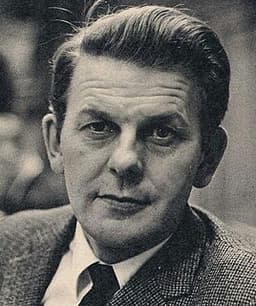
Thorbjorn Falldin
Politician · Modern
46.2Total

Vaclav Klaus
Politician · Modern
50.3Total
Basic Information
Born
1926
1941
Died
—
—
Era
Modern
Modern
Nationality
Sweden
Czech Republic
Occupation
Politician
Politician
Civilization
Western
Western
Score Comparison
Military (10%)
50.0
12.6
Political (20%)
43.7
53.8
Influence (20%)
47.1
57.2
Legacy (20%)
39.2
47.5
Leadership (15%)
58.8
72.0
Strategy (15%)
43.0
40.4
TOTAL
46.2
50.3
Thorbjorn Falldin — Complete Timeline
1976 AD
Became Prime Minister of SwedenPolitical Action
On October 8, 1976, F
CoalitionNon-SocialistPolitical Shift
Impact: national
1978 AD
Coalition Government CollapsePolitical Action◆ Major
In October 1978, F
CoalitionNuclear PowerGovernment Crisis
Impact: national
1979 AD
Returned as Prime MinisterPolitical Action
After the 1979 election, F
CoalitionElectionGovernment
Impact: national
1980 AD
Nuclear Power ReferendumPolitical Action◆ Major
Fälldin's government held a national referendum on nuclear power in March 1980. The result led to a decision to phase out nuclear power by 2010, though the policy was later modified. The issue divided his coalition and contributed to its collapse.
Nuclear PowerReferendumEnergy Policy
Impact: national
1982 AD
Resigned as Prime MinisterPolitical Action◆ Major
Fälldin resigned as Prime Minister in October 1982 after the Social Democrats won the general election. His tenure was marked by economic difficulties, including high inflation and unemployment, and the failure to maintain stable coalition governments.
ResignationElectionEconomic Crisis
Impact: national
Vaclav Klaus — Complete Timeline
1989 AD
Velvet RevolutionPolitical Action
Klaus was a key figure in the Velvet Revolution, which overthrew the communist regime in Czechoslovakia. He became a leading member of the Civic Forum and later the Civic Democratic Party.
Velvet RevolutionPost-Communism
Impact: regionalconstructive
1992 AD
Prime Minister of CzechoslovakiaPolitical Action◆ Major
Klaus became Prime Minister of Czechoslovakia and pushed for rapid economic reforms, including privatization and market liberalization. His policies led to the dissolution of Czechoslovakia.
Economic ReformDissolution
Impact: nationalconstructive
2003 AD
President of the Czech RepublicPolitical Action◆ Major
Klaus was elected President of the Czech Republic, serving two terms until 2013. He was known for his eurosceptic views and opposition to further European integration.
PresidencyEuroscepticism
Impact: national
Expert Analysis
Origins
Thorbjorn Falldin was born on April 24, 1926, in the village of Horsback, Sweden, into a farming family. He grew up in the rural province of Angermanland, which shaped his strong agrarian values. Falldin attended agricultural college and became a farmer, later entering politics through the Centre Party. His background gave him credibility with rural voters but limited his exposure to international affairs.
Vaclav Klaus was born on June 19, 1941, in Prague, Czechoslovakia, into a middle-class family. His father was a civil servant. Klaus studied economics at the University of Economics, Prague, and later earned a postgraduate degree from the Czechoslovak Academy of Sciences. He worked as a researcher at the Institute of Economics before the Velvet Revolution, which gave him a strong theoretical foundation for market reforms.
Rise to Power
Falldin rose through the Centre Party, becoming party leader in 1971. He led the party to a strong showing in the 1973 election, but it was not until 1976 that he formed a coalition government with the Moderate Party and Liberal People's Party, ending 44 years of Social Democratic rule. His rise was marked by a focus on decentralization, environmental issues, and opposition to nuclear power. The turning point was the 1976 election, where the non-socialist bloc won a majority.
Klaus rose to prominence during the Velvet Revolution in November 1989. He joined the Civic Forum and quickly became a leading figure due to his economic expertise. In 1990, he became Minister of Finance in the Czechoslovak government, where he implemented radical market reforms. He became Prime Minister of Czechoslovakia in 1992, just before the peaceful dissolution of the federation. His rise was driven by his clear vision of free-market capitalism and his rejection of gradual reform.
Leadership & Governance
Falldin's leadership style was consensus-oriented, reflecting Sweden's tradition of coalition politics. He prioritized environmental issues, pushing for a nuclear power referendum in 1980, which resulted in a decision to phase out nuclear power by 2010. However, his government struggled with economic stagflation and internal divisions over energy policy. His first coalition collapsed in 1978 over nuclear power, and his second term (1979-1982) was also plagued by conflicts. He scored 58.8 in leadership, reflecting his ability to hold together a fragile coalition but with limited effectiveness.
Klaus led with a more confrontational, ideologically driven style. As Prime Minister of Czechoslovakia and later the Czech Republic, he pushed for rapid privatization, fiscal austerity, and integration with Western institutions. His voucher privatization program allowed citizens to buy shares in state-owned companies, a bold move that earned him the nickname "the father of Czech capitalism." However, his euroscepticism led to tensions with the European Union. His leadership score of 72.0 reflects his decisive, though divisive, approach.
Triumph & Tragedy
Falldin's greatest success was breaking the Social Democrats' long grip on power, which opened the door for non-socialist governance in Sweden. He also advanced environmental issues, notably the nuclear power referendum. However, his failure to stabilize the economy and the collapse of his first government were major setbacks. The nuclear phase-out decision, while popular, was later criticized as costly and impractical.
Klaus's greatest triumph was overseeing the Velvet Divorce in 1993, peacefully splitting Czechoslovakia into the Czech Republic and Slovakia, and then leading the Czech Republic through a successful economic transition. His policies led to low unemployment and steady growth in the 1990s. However, his legacy is tarnished by allegations of corruption during privatization and his later role as a climate change skeptic. His influence score of 57.2 reflects his impact on Czech and European politics.
Character & Destiny
Falldin was a pragmatic, humble figure, often described as a "farmer in politics." His decision-making was cautious and consultative, which earned him respect but also criticism for indecisiveness. His character shaped his fate: his inability to impose discipline on his coalition led to its collapse. Post-premiership, he returned to farming, a quiet end to a political career.
Klaus was intellectual, combative, and self-assured. His rigid adherence to free-market principles made him a polarizing figure. His character drove him to push through reforms despite opposition, but also led to accusations of arrogance. After the presidency, he remained active as a commentator and think-tank leader, reinforcing his image as a persistent eurosceptic.
Legacy
Falldin's legacy is mixed. He is remembered as the man who ended Social Democratic dominance, but his governments were ineffective. His environmental stance influenced later Swedish policy, but the nuclear phase-out was later reversed. He scored 39.2 in legacy, reflecting limited long-term impact.
Klaus left a deeper mark. He is widely credited with transforming Czechoslovakia's economy and guiding the Czech Republic into NATO and the EU (despite his scepticism). His economic reforms are studied as a model of rapid transition. However, his euroscepticism and climate denial have diminished his standing. His legacy score of 47.5 indicates a significant but contested impact.
Conclusion
Vaclav Klaus had a greater impact on his country and the world than Thorbjorn Falldin. Klaus's total score of 50.3 exceeds Falldin's 46.2, reflecting his higher political and influence scores. Klaus's role in dismantling communism and building a market economy in Czechoslovakia was a transformative event, while Falldin's tenure was a brief interruption in Sweden's Social Democratic dominance. Klaus's policies shaped a nation's trajectory for decades, whereas Falldin's achievements were more temporary. Thus, Klaus is the more consequential figure.
Rankings
🥇
Vaclav KlausLeader
Mil: 12.6Pol: 53.8Inf: 57.2
50.3
🥈
Thorbjorn Falldin
Mil: 50.0Pol: 43.7Inf: 47.1
46.2
+4.1 behind
How This Comparison Works
Algorithm
Each figure is scored on 6 dimensions (0—100 scale) based on structured historical data: Military (10%), Political (20%), Influence (20%), Legacy (20%), Leadership (15%), Strategy (15%). The weighted total produces the final ranking.
Data Sources
Scores are computed from structured sub-indicators in the database. Scale factors adjust for era (Ancient ×0.85, Modern ×1.0) and civilization size (Eastern ×1.05, Other ×0.80) to account for differences in population and military scale.
Maximum 3 Figures
Comparisons are limited to 2—3 figures to ensure readability and statistical meaningfulness.
Error Margins
±5 points per dimension — Sub-scores are derived from historical records with inherent uncertainty. Two figures within 5 points on a dimension should be considered roughly equivalent in that area.
Total Score Accuracy
±3 points overall — The weighted combination of 6 dimensions produces a total score with approximately ±3 points of uncertainty. Differences of less than 3 points are not statistically significant— the figures are effectively tied.
Known Limitations
- Historical records are incomplete and uneven across civilizations
- Figures from oral-tradition societies may be underrepresented
- Occupation labels can misclassify multi-role figures
- Scores measure capability and impact, not moral character
- Quantitative scoring is a comparison tool, not absolute truth
Capability Radar
Military (10%) — Battles & Warfare
Battles
27
20
Win Rate
35
28
Expansion
33
28
Political (20%) — Governance & Reform
Reform
40
55
Diplomacy
35
60
Economy
30
60
Influence (20%) — Cultural & Global Reach
Cultural
10
40
Global
10
45
Legacy (20%) — Historical Impact
Historical
20
45
Longevity
15
40
Leadership (15%) — Power & Stability
Tenure
30
65
Stability
25
55
Strategy (15%) — Tactics & Innovation
Strategy
40
33
Tactics
41
35
Reform
43
35
Similar Comparisons
Comments & Discussion
No comments yet. Be the first to share your thoughts!