Loading...
Toqto'a vs Xu Jie
Toqto'a leads by 7.9 pts · 2 figures compared
…

Toqto'a
Politician · Medieval
61.7Total
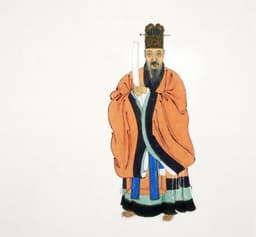
Xu Jie
Politician · Medieval
53.8Total
Basic Information
Born
1314
1503
Died
1356
1583
Era
Medieval
Medieval
Nationality
China
China
Occupation
Politician
Politician
Civilization
Eastern
Eastern
Score Comparison
Military (10%)
24.8
37.5
Political (20%)
60.0
65.0
Influence (20%)
82.0
53.3
Legacy (20%)
55.0
45.8
Leadership (15%)
72.0
78.0
Strategy (15%)
51.7
38.0
TOTAL
61.7
53.8
Toqto'a — Complete Timeline
1340 AD
Appointed Chief Minister of the Yuan DynastyPolitical Action◆ Major
Toqto'a was appointed chief minister (chancellor) under Emperor Toghon Tem
Yuan DynastyGovernment ReformAdministration
Impact: nationalconstructive
1343 AD
Compiled the History of Song, Liao, and Jin DynastiesCultural◆ Major
Toqto'a oversaw the compilation of the official histories of the Song, Liao, and Jin dynasties, a massive historiographical project commissioned by the Yuan court. The works standardized historical records and legitimized Yuan rule by linking it to Chinese tradition.
HistoriographyYuan DynastyCultural Legacy
Impact: nationalconstructive
1344 AD
Dismissed and Exiled by Political RivalsPolitical Action
Toqto'a was dismissed from office and exiled after losing a power struggle with rival Mongol factions. His reforms were reversed, and the Yuan government descended into factionalism and decline, contributing to the dynasty's eventual collapse.
Political ConflictExileYuan Decline
Impact: nationaltragic
Xu Jie — Complete Timeline
1552 AD
Appointed Grand SecretaryPolitical Action◆ Major
Xu Jie was appointed to the Grand Secretariat. He initially maintained a low profile to survive the dominance of Yan Song, carefully building his own network of allies within the Ming court.
Ming DynastyAppointmentCourt Politics
Impact: national
1562 AD
Ousted Yan Song from PowerPolitical Action
Xu Jie orchestrated the downfall of Grand Secretary Yan Song. He manipulated court politics to turn the Jiajing Emperor against Yan Song, leading to Yan's dismissal and the execution of his son. Xu Jie then became the leading Grand Secretary.
Ming DynastyPolitical ManeuveringPower Shift
Impact: nationalconstructive
1567 AD
Implemented ReformsReform◆ Major
After the death of the Jiajing Emperor, Xu Jie used his influence to implement reforms. He reversed some of the previous regime's excesses, reduced government spending, and promoted capable officials, helping to stabilize the Ming state.
Ming DynastyReformStabilization
Impact: nationalconstructive
1568 AD
Retired from PoliticsPolitical Action
Xu Jie retired from his position as Grand Secretary. His retirement was prompted by conflicts with the new Longqing Emperor and rival officials. He returned to his hometown, where he lived until his death in 1583.
Ming DynastyRetirementCourt Politics
Impact: national
Expert Analysis
Origins
Toqto'a (1314–1356) was born into the powerful Mongol Merkid clan, a military family serving the Yuan dynasty. His early education focused on Confucian classics and governance, preparing him for administrative service. He rose through the ranks due to his family connections and scholarly abilities. Xu Jie (1503–1583) was born into a modest scholar-official family in Songjiang, Jiangsu. He passed the imperial examinations in 1523, earning the jinshi degree and entering the Ming bureaucracy. His early career was marked by cautious advancement under the shadow of the dominant grand secretary Yan Song.
Rise to Power
Toqto'a's rise began in 1340 when he became chief minister under Emperor Toghon Temür. He implemented reforms to stabilize the Yuan government, including reducing court expenditures and reestablishing the imperial examinations. His major achievement was overseeing the compilation of the official histories of the Song, Liao, and Jin dynasties (1343–1345), a project that solidified his reputation as a scholar-official. Xu Jie's rise was more gradual. He entered the Grand Secretariat in 1552 but initially maintained a low profile to avoid conflict with Yan Song. His turning point came in 1562 when he orchestrated Yan Song's downfall by manipulating court politics and turning the Jiajing Emperor against him. Xu Jie then became senior grand secretary, holding power for over a decade.
Leadership & Governance
Toqto'a's leadership focused on administrative reform and cultural projects. He reduced government waste and attempted to revive the Yuan's fiscal health. However, his reforms alienated powerful Mongol nobles who relied on corruption. His governance score of 72.0 reflects his effectiveness in peacetime but inability to sustain support. Xu Jie's leadership style was pragmatic and patient. After securing power, he implemented reforms to reverse Yan Song's excesses, including reducing government spending and promoting capable officials. His leadership score of 78.0 indicates his skill in navigating court politics and enacting policy. Both leaders used their positions to promote Confucian governance, but Xu Jie's survival instincts and political maneuvering gave him an edge.
Triumph & Tragedy
Toqto'a's greatest triumph was the completion of the Histories of Song, Liao, and Jin, a massive historiographical project that preserved the records of three dynasties. This work earned him an influence score of 82.0. His tragedy came in 1355 when he was dismissed and exiled after losing a power struggle with rival Mongol factions. His reforms were reversed, and the Yuan dynasty continued its decline, collapsing in 1368. Xu Jie's triumph was the ouster of Yan Song, ending two decades of corrupt rule. He then implemented reforms that stabilized the Ming government. His tragedy was his retirement in 1568 after conflicts with the new Longqing Emperor and rival officials. His legacy was overshadowed by later grand secretaries like Zhang Juzheng.
Character & Destiny
Toqto'a was a dedicated scholar-official who believed in Confucian principles, but he lacked the ruthlessness needed to survive Yuan court politics. His decision to compile histories rather than focus on military threats (military score 24.8) reflected his priorities. His character led to his downfall. Xu Jie was cunning and patient, skilled at building alliances and waiting for opportunities. His strategy score of 38.0 suggests he relied more on political acumen than military or strategic planning. His ability to outmaneuver Yan Song demonstrated his mastery of court intrigue. Both men were shaped by their environments: Toqto'a in a declining Mongol empire, Xu Jie in a stable but corrupt Ming court.
Legacy
Toqto'a's legacy endures through the official histories he compiled, which remain primary sources for the Song, Liao, and Jin dynasties. His influence score of 82.0 reflects this lasting impact. However, his political reforms did not outlast him. Xu Jie's legacy is more mixed: he is remembered as the man who ended Yan Song's tyranny, but his reforms were incremental and later reversed. His influence score of 53.3 indicates a more limited long-term impact. Both men contributed to Chinese historiography and governance, but Toqto'a's work as a historian has proven more enduring.
Conclusion
Toqto'a had a greater overall impact than Xu Jie. His influence score of 82.0 versus Xu Jie's 53.3 reflects the enduring value of his historiographical contributions. While Xu Jie's political maneuvering was impressive, his reforms did not fundamentally alter the Ming dynasty's trajectory. Toqto'a's compilation of the three histories preserved the cultural heritage of China and continues to influence scholarship. Therefore, Toqto'a's legacy is more significant, despite his political failures.
Rankings
🥇
Toqto'aLeader
Mil: 24.8Pol: 60.0Inf: 82.0
61.7
🥈
Xu Jie
Mil: 37.5Pol: 65.0Inf: 53.3
53.8
+7.9 behind
How This Comparison Works
Algorithm
Each figure is scored on 6 dimensions (0—100 scale) based on structured historical data: Military (10%), Political (20%), Influence (20%), Legacy (20%), Leadership (15%), Strategy (15%). The weighted total produces the final ranking.
Data Sources
Scores are computed from structured sub-indicators in the database. Scale factors adjust for era (Ancient ×0.85, Modern ×1.0) and civilization size (Eastern ×1.05, Other ×0.80) to account for differences in population and military scale.
Maximum 3 Figures
Comparisons are limited to 2—3 figures to ensure readability and statistical meaningfulness.
Error Margins
±5 points per dimension — Sub-scores are derived from historical records with inherent uncertainty. Two figures within 5 points on a dimension should be considered roughly equivalent in that area.
Total Score Accuracy
±3 points overall — The weighted combination of 6 dimensions produces a total score with approximately ±3 points of uncertainty. Differences of less than 3 points are not statistically significant— the figures are effectively tied.
Known Limitations
- Historical records are incomplete and uneven across civilizations
- Figures from oral-tradition societies may be underrepresented
- Occupation labels can misclassify multi-role figures
- Scores measure capability and impact, not moral character
- Quantitative scoring is a comparison tool, not absolute truth
Capability Radar
Military (10%) — Battles & Warfare
Battles
10
38
Win Rate
10
42
Expansion
10
43
Political (20%) — Governance & Reform
Reform
65
65
Diplomacy
55
80
Economy
60
60
Influence (20%) — Cultural & Global Reach
Cultural
70
40
Global
60
20
Legacy (20%) — Historical Impact
Historical
75
55
Longevity
65
30
Leadership (15%) — Power & Stability
Tenure
60
75
Stability
50
70
Strategy (15%) — Tactics & Innovation
Strategy
10
49
Tactics
10
50
Reform
20
52
Similar Comparisons
Comments & Discussion
No comments yet. Be the first to share your thoughts!