Loading...
Torcuato Fernandez-Miranda vs Zhao Ziyang
Torcuato Fernandez-Miranda leads by 8.8 pts · 2 figures compared
…

Torcuato Fernandez-Miranda
Politician · Modern
56.5Total
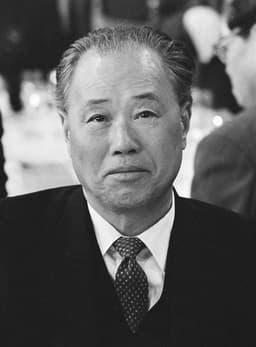
Zhao Ziyang
Politician · Modern
47.7Total
Basic Information
Born
1915
1919
Died
1980
2005
Era
Modern
Modern
Nationality
Spain
China
Occupation
Politician
Politician
Civilization
Western
Eastern
Score Comparison
Military (10%)
50.0
13.4
Political (20%)
70.0
45.0
Influence (20%)
60.0
56.4
Legacy (20%)
40.0
46.7
Leadership (15%)
78.0
74.0
Strategy (15%)
42.6
27.5
TOTAL
56.5
47.7
Torcuato Fernandez-Miranda — Complete Timeline
1969 AD
Appointed Minister of the MovementPolitical Action◆ Major
Franco appointed Fernandez-Miranda as Minister of the Movement, the single party of the Francoist regime. He oversaw the National Movement's structure and ideology.
Francoist SpainGovernment
Impact: national
1973 AD
Appointed Minister of EducationPolitical Action
Carrero Blanco appointed Fernandez-Miranda as Minister of Education. He implemented educational reforms, including the General Education Law of 1970, which modernized Spain's education system.
Francoist SpainEducation Reform
Impact: nationalconstructive
1975 AD
Appointed President of the CortesPolitical Action◆ Major
King Juan Carlos I appointed Fernandez-Miranda as President of the Cortes (the Francoist parliament). This position gave him control over the legislative process during the transition to democracy.
Spanish TransitionGovernment
Impact: national
1976 AD
Drafted the Law for Political ReformReform
As President of the Cortes, Fernandez-Miranda drafted the Law for Political Reform, a legal mechanism to dismantle the Francoist regime from within. The law was approved by the Cortes and later by referendum, enabling democratic elections.
Spanish TransitionDemocratizationLaw
Impact: nationalprogressive
Zhao Ziyang — Complete Timeline
1980 AD
Appointed Premier of the People's Republic of ChinaPolitical Action◆ Major
Zhao Ziyang succeeded Hua Guofeng as Premier. He implemented Deng Xiaoping's economic reforms, including the household responsibility system and the opening of Special Economic Zones.
Economic ReformPremiership
Impact: nationalconstructive
1987 AD
Appointed General Secretary of the Communist PartyPolitical Action◆ Major
Zhao Ziyang became General Secretary after Hu Yaobang's resignation. He continued economic reforms but faced growing pressure from conservative factions within the party.
Party LeadershipReform Era
Impact: national
1989 AD
Sympathized with Tiananmen Square ProtestersPolitical Action
During the Tiananmen Square protests, Zhao Ziyang visited the protesters and expressed sympathy, opposing the use of force. This led to his purge and house arrest for the rest of his life.
Tiananmen SquarePurge
Impact: globaltragic
Purged and Placed Under House ArrestPolitical Action◆ Major
Zhao Ziyang was removed from all posts and placed under house arrest after the Tiananmen Square crackdown. He was replaced by Jiang Zemin and lived in seclusion until his death in 2005.
PurgeHouse Arrest
Impact: nationaltragic
Expert Analysis
Origins
Torcuato Fernandez-Miranda was born in 1915 in Gijón, Spain, into a conservative Catholic family. He studied law at the University of Oviedo and later became a professor of political law. His early career was shaped by the Francoist regime, serving as a legal advisor and rising through the ranks of the National Movement. Fernandez-Miranda's formative experiences included drafting legal frameworks for the regime, which later became the basis for dismantling it.
Zhao Ziyang was born in 1919 in Hua County, Henan, China, into a relatively wealthy landlord family. He joined the Communist Party in 1938 and participated in the Chinese Civil War, serving as a political commissar. Zhao's early career involved local administration in Guangdong, where he gained experience in agricultural reform and economic management, which later influenced his national policies.
Rise to Power
Fernandez-Miranda's rise was gradual within Franco's bureaucracy. He became Minister of Education in 1973 under Prime Minister Carrero Blanco, implementing the General Education Law of 1970. His pivotal moment came in 1975 when King Juan Carlos I appointed him President of the Cortes (the Francoist parliament) and later Minister of the Movement. In 1976, he drafted the Law for Political Reform, a legal mechanism to transition Spain from dictatorship to democracy. This law was approved by referendum in December 1976, effectively dismantling the Francoist system from within.
Zhao Ziyang rose to prominence during the Cultural Revolution, when he was purged but later rehabilitated. He became Premier in 1980, succeeding Hua Guofeng, and implemented Deng Xiaoping's economic reforms, including the household responsibility system in agriculture. His success in reforming the economy led to his appointment as General Secretary of the Communist Party in 1987 after Hu Yaobang's resignation. Zhao's political score of 45.0 reflects his rise, but his influence peaked during the economic reforms.
Leadership & Governance
Fernandez-Miranda's leadership style was legalistic and procedural. He believed in using the existing legal framework to effect change, scoring 78.0 in leadership for his strategic use of the Cortes. He guided the Law for Political Reform through parliament, ensuring a peaceful transition. His governance approach contrasted with Zhao's more pragmatic style. Zhao scored 74.0 in leadership, focusing on economic liberalization and decentralization. He advocated for political reform but was constrained by conservative factions.
Triumph & Tragedy
Fernandez-Miranda's greatest success was designing the legal pathway for Spain's transition to democracy. The Law for Political Reform allowed for free elections and a new constitution. His failure was that he did not live to see the full transition; he died in 1980, before the consolidation of democracy. He also faced criticism for his past association with the Francoist regime.
Zhao's triumph was his role in China's economic reforms, which lifted millions out of poverty. His tragedy was the Tiananmen Square protests in 1989, where he sympathized with protesters and opposed military force. This led to his purge and house arrest. His political score of 45.0 and legacy score of 46.7 reflect this mixed outcome.
Character & Destiny
Fernandez-Miranda was a cautious, methodical strategist. He scored 42.6 in strategy, reflecting his ability to navigate complex political terrain. His character—loyal to the king but committed to reform—shaped his destiny as a key architect of the transition. Zhao Ziyang was more idealistic and open, scoring 27.5 in strategy. His sympathy for the protesters led to his downfall, showing how his character clashed with the regime's priorities. Historians view Zhao as a tragic figure who prioritized reform over personal power.
Legacy
Fernandez-Miranda's legacy is the Spanish democratic system. The Law for Political Reform is considered a masterstroke of political engineering, enabling a peaceful transition. He is remembered as the "teacher" of the transition, though his role is often overshadowed by King Juan Carlos. His legacy score of 40.0 reflects this underappreciation.
Zhao Ziyang's legacy is mixed. His economic reforms are widely credited, but his political career ended in disgrace. In China, he is a taboo subject, but internationally he is seen as a reformer who stood for human rights. His influence score of 56.4 is higher than Fernandez-Miranda's 60.0, but his overall impact is limited by his purge.
Conclusion
Torcuato Fernandez-Miranda had a greater impact on his country's political trajectory than Zhao Ziyang. Fernandez-Miranda's total score of 56.5 vs Zhao's 47.7 reflects this. While Zhao's economic reforms were transformative, they were part of a larger movement led by Deng Xiaoping. Fernandez-Miranda's legal strategy was uniquely his own and directly led to Spain's democracy. His ability to dismantle an authoritarian regime from within is a more singular achievement. Zhao's tragedy, while poignant, did not alter China's political system. Therefore, Fernandez-Miranda's contribution to democratic transition is more significant.
Rankings
🥇
Torcuato Fernandez-MirandaLeader
Mil: 50.0Pol: 70.0Inf: 60.0
56.5
🥈
Zhao Ziyang
Mil: 13.4Pol: 45.0Inf: 56.4
47.7
+8.8 behind
How This Comparison Works
Algorithm
Each figure is scored on 6 dimensions (0—100 scale) based on structured historical data: Military (10%), Political (20%), Influence (20%), Legacy (20%), Leadership (15%), Strategy (15%). The weighted total produces the final ranking.
Data Sources
Scores are computed from structured sub-indicators in the database. Scale factors adjust for era (Ancient ×0.85, Modern ×1.0) and civilization size (Eastern ×1.05, Other ×0.80) to account for differences in population and military scale.
Maximum 3 Figures
Comparisons are limited to 2—3 figures to ensure readability and statistical meaningfulness.
Error Margins
±5 points per dimension — Sub-scores are derived from historical records with inherent uncertainty. Two figures within 5 points on a dimension should be considered roughly equivalent in that area.
Total Score Accuracy
±3 points overall — The weighted combination of 6 dimensions produces a total score with approximately ±3 points of uncertainty. Differences of less than 3 points are not statistically significant— the figures are effectively tied.
Known Limitations
- Historical records are incomplete and uneven across civilizations
- Figures from oral-tradition societies may be underrepresented
- Occupation labels can misclassify multi-role figures
- Scores measure capability and impact, not moral character
- Quantitative scoring is a comparison tool, not absolute truth
Capability Radar
Military (10%) — Battles & Warfare
Battles
28
17
Win Rate
30
16
Expansion
33
19
Political (20%) — Governance & Reform
Reform
90
65
Diplomacy
85
55
Economy
40
60
Influence (20%) — Cultural & Global Reach
Cultural
30
30
Global
60
40
Legacy (20%) — Historical Impact
Historical
75
45
Longevity
70
35
Leadership (15%) — Power & Stability
Tenure
65
60
Stability
80
30
Strategy (15%) — Tactics & Innovation
Strategy
37
25
Tactics
42
28
Reform
43
30
Similar Comparisons
Comments & Discussion
No comments yet. Be the first to share your thoughts!