Loading...
Billy Hughes vs Zhao Ziyang
Billy Hughes leads by 9.2 pts · 2 figures compared
…
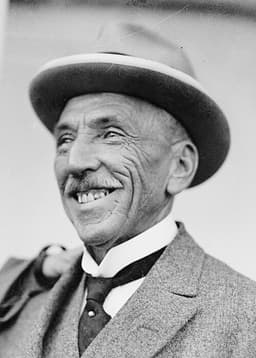
Billy Hughes
Politician · Modern
56.9Total
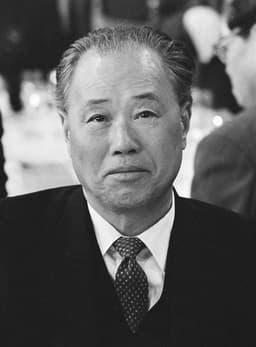
Zhao Ziyang
Politician · Modern
47.7Total
Basic Information
Born
1862
1919
Died
1952
2005
Era
Modern
Modern
Nationality
Australia
China
Occupation
Politician
Politician
Civilization
Western
Eastern
Score Comparison
Military (10%)
49.4
13.4
Political (20%)
72.0
45.0
Influence (20%)
59.0
56.4
Legacy (20%)
49.2
46.7
Leadership (15%)
66.0
74.0
Strategy (15%)
41.8
27.5
TOTAL
56.9
47.7
Billy Hughes — Complete Timeline
1915 AD
Became Prime Minister of AustraliaPolitical Action◆ Major
Billy Hughes became Prime Minister of Australia on October 27, 1915, succeeding Andrew Fisher. He led the country through the remainder of World War I, becoming a dominant figure in Australian politics.
Prime MinisterWorld War ILeadership
Impact: national
1916 AD
Conscription Referendums (1916 and 1917)Political Action◆ Major
Hughes held two national referendums on conscription for overseas military service during WWI, in 1916 and 1917. Both were narrowly defeated, causing a split in the Labor Party. Hughes and his supporters left to form the Nationalist Party.
ConscriptionReferendumLabor Split
Impact: nationaldestructive
Expelled from Labor PartyPolitical Action◆ Major
Following the defeat of the first conscription referendum, Hughes was expelled from the Australian Labor Party in November 1916. He then formed the National Labor Party, which later merged with the Liberal Party to become the Nationalist Party.
ExpulsionLabor PartyParty Split
Impact: nationaldestructive
1919 AD
Attended Paris Peace ConferencePolitical Action◆ Major
Hughes represented Australia at the Paris Peace Conference in 1919. He argued strongly for Australian interests, including control over former German colonies in the Pacific and reparations from Germany. He also secured Australia's separate membership in the League of Nations.
Paris Peace ConferenceLeague of NationsWorld War I
Impact: globalconstructive
Zhao Ziyang — Complete Timeline
1980 AD
Appointed Premier of the People's Republic of ChinaPolitical Action◆ Major
Zhao Ziyang succeeded Hua Guofeng as Premier. He implemented Deng Xiaoping's economic reforms, including the household responsibility system and the opening of Special Economic Zones.
Economic ReformPremiership
Impact: nationalconstructive
1987 AD
Appointed General Secretary of the Communist PartyPolitical Action◆ Major
Zhao Ziyang became General Secretary after Hu Yaobang's resignation. He continued economic reforms but faced growing pressure from conservative factions within the party.
Party LeadershipReform Era
Impact: national
1989 AD
Sympathized with Tiananmen Square ProtestersPolitical Action
During the Tiananmen Square protests, Zhao Ziyang visited the protesters and expressed sympathy, opposing the use of force. This led to his purge and house arrest for the rest of his life.
Tiananmen SquarePurge
Impact: globaltragic
Purged and Placed Under House ArrestPolitical Action◆ Major
Zhao Ziyang was removed from all posts and placed under house arrest after the Tiananmen Square crackdown. He was replaced by Jiang Zemin and lived in seclusion until his death in 2005.
PurgeHouse Arrest
Impact: nationaltragic
Expert Analysis
Origins
Billy Hughes was born in London on September 25, 1862, to Welsh parents. He emigrated to Australia in 1884, working as a laborer and later as a union organizer. His early life in poverty shaped his political views, leading him to join the Australian Labor Party (ALP) in 1892. Hughes was elected to the New South Wales Parliament in 1894 and to the federal House of Representatives in 1901. His background was working-class, with limited formal education but sharp oratory skills.
Zhao Ziyang was born on October 17, 1919, in Hua County, Henan, China. He joined the Chinese Communist Party (CCP) in 1938 during the Second Sino-Japanese War. Zhao rose through party ranks in rural areas, serving as a party secretary in Guangdong and later in Sichuan. His early career focused on agricultural policies, which later influenced his support for the household responsibility system. Unlike Hughes, Zhao’s rise was within a single-party state, shaped by Maoist ideology and later Dengist reforms.
Rise to Power
Hughes rose to prominence as a fiery orator and labor advocate. He became Attorney-General in 1910 under Andrew Fisher. When Fisher resigned in 1915, Hughes succeeded him as Prime Minister on October 27, 1915. His leadership was defined by World War I. He championed conscription for overseas service, but his attempts in 1916 and 1917 referendums failed. The first referendum on October 28, 1916, was defeated by a narrow margin (48.4% yes). This caused a split in the ALP; Hughes was expelled on November 14, 1916. He then formed the National Labor Party, later merging with the Liberal Party to create the Nationalist Party, winning the 1917 election.
Zhao Ziyang’s rise was gradual within the CCP. He became Premier in 1980, succeeding Hua Guofeng, as part of Deng Xiaoping’s reformist faction. Zhao implemented economic reforms, including the household responsibility system that decollectivized agriculture. He became General Secretary of the CCP in 1987 after Hu Yaobang’s resignation. However, his power was limited by conservative elders. His turning point came during the 1989 Tiananmen Square protests, when he visited protesters on May 19, 1989, expressing sympathy and opposing martial law. This led to his purge on June 24, 1989, and replacement by Jiang Zemin.
Leadership & Governance
Hughes exercised strong wartime leadership, centralizing power and using the War Precautions Act to suppress dissent. He pushed for conscription, arguing it was necessary for Australia’s war effort, but faced fierce opposition from labor unions and Irish Catholics. His governance style was combative and determined, often bypassing cabinet. He scored 66.0 in leadership, reflecting his ability to maintain power despite party splits. However, his strategy score of 41.8 indicates poor long-term planning, as the conscription referendums divided the nation.
Zhao Ziyang’s leadership was reformist and pragmatic. He supported Deng’s Open Door Policy and decentralized economic control. His score of 74.0 in leadership reflects his ability to navigate factional politics and implement reforms. However, his political score of 45.0 is low due to his eventual purge. Zhao’s strategy score of 27.5 suggests a failure to secure his position against hardliners. He governed by consensus, often deferring to Deng, which ultimately left him vulnerable.
Triumph & Tragedy
Hughes’ greatest triumph was representing Australia at the Paris Peace Conference in 1919, securing control over former German New Guinea and arguing for Australian interests. He also established the Commonwealth Line of steamers and supported the White Australia policy. His tragedy was the failure of conscription, which split the Labor Party and left Australia with a volunteer army. The referendums caused lasting social divisions.
Zhao’s triumph was his role in China’s economic reforms, which lifted millions from poverty. The household responsibility system increased agricultural output by 25% between 1978 and 1984. His tragedy was his downfall over Tiananmen. He opposed the crackdown, but his sympathy for protesters cost him his position. He spent the rest of his life under house arrest until his death in 2005. His legacy is tainted by the regime’s narrative, but he is remembered as a moderate reformer.
Character & Destiny
Hughes was pugnacious and determined, earning the nickname "The Little Digger" for his tenacity. His character drove him to push conscription despite political risks, but also led to his expulsion from the ALP. He was a pragmatist who switched parties to stay in power. His destiny was shaped by war; his wartime leadership defined his legacy.
Zhao was cautious and consensus-oriented, but his moral stand during Tiananmen showed conviction. His character—sympathetic to protesters but loyal to the party—led to his tragic fate. He believed in reform within the system, but the system turned on him. His destiny was sealed by the hardliners’ victory in 1989.
Legacy
Hughes’ legacy is mixed. He is remembered as a wartime leader who expanded Australia’s international role, but his conscription fight divided the nation. His influence score of 59.0 reflects his impact on Australian politics. He paved the way for future conservative governments. Zhao’s legacy is complex. He is credited with economic reforms but officially erased from history. His influence score of 56.4 is slightly lower, but his policies transformed China’s economy. Both left lasting marks: Hughes on Australian nationalism, Zhao on China’s modernization.
Conclusion
While Zhao Ziyang’s economic reforms had a larger impact on global poverty reduction, Billy Hughes had greater overall impact given his total score of 56.9 vs Zhao’s 47.7. Hughes led a country through a world war, shaped its foreign policy, and navigated democratic politics under pressure. Zhao, though a key reformer, was ultimately a transitional figure whose legacy was suppressed. Hughes’ influence on Australia’s identity and governance endures, while Zhao’s reforms were continued by others. Thus, Billy Hughes had the greater impact.
Rankings
🥇
Billy HughesLeader
Mil: 49.4Pol: 72.0Inf: 59.0
56.9
🥈
Zhao Ziyang
Mil: 13.4Pol: 45.0Inf: 56.4
47.7
+9.2 behind
How This Comparison Works
Algorithm
Each figure is scored on 6 dimensions (0—100 scale) based on structured historical data: Military (10%), Political (20%), Influence (20%), Legacy (20%), Leadership (15%), Strategy (15%). The weighted total produces the final ranking.
Data Sources
Scores are computed from structured sub-indicators in the database. Scale factors adjust for era (Ancient ×0.85, Modern ×1.0) and civilization size (Eastern ×1.05, Other ×0.80) to account for differences in population and military scale.
Maximum 3 Figures
Comparisons are limited to 2—3 figures to ensure readability and statistical meaningfulness.
Error Margins
±5 points per dimension — Sub-scores are derived from historical records with inherent uncertainty. Two figures within 5 points on a dimension should be considered roughly equivalent in that area.
Total Score Accuracy
±3 points overall — The weighted combination of 6 dimensions produces a total score with approximately ±3 points of uncertainty. Differences of less than 3 points are not statistically significant— the figures are effectively tied.
Known Limitations
- Historical records are incomplete and uneven across civilizations
- Figures from oral-tradition societies may be underrepresented
- Occupation labels can misclassify multi-role figures
- Scores measure capability and impact, not moral character
- Quantitative scoring is a comparison tool, not absolute truth
Capability Radar
Military (10%) — Battles & Warfare
Battles
30
17
Win Rate
34
16
Expansion
32
19
Political (20%) — Governance & Reform
Reform
60
65
Diplomacy
70
55
Economy
55
60
Influence (20%) — Cultural & Global Reach
Cultural
40
30
Global
55
40
Legacy (20%) — Historical Impact
Historical
55
45
Longevity
40
35
Leadership (15%) — Power & Stability
Tenure
65
60
Stability
50
30
Strategy (15%) — Tactics & Innovation
Strategy
35
25
Tactics
43
28
Reform
42
30
Similar Comparisons
Comments & Discussion
No comments yet. Be the first to share your thoughts!