Loading...
U Ottama vs Vyacheslav Molotov
Vyacheslav Molotov leads by 20.1 pts · 2 figures compared
…

U Ottama
Politician · Modern
39.8Total
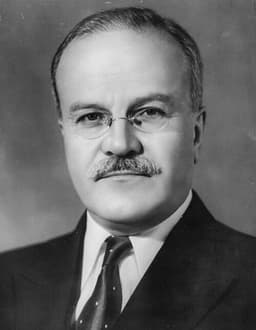
Vyacheslav Molotov
Politician · Modern
59.9Total
Basic Information
Born
1879
1890
Died
1939
1986
Era
Modern
Modern
Nationality
Burma
Russia
Occupation
Politician
Politician
Civilization
Eastern
Western
Score Comparison
Military (10%)
10.8
50.0
Political (20%)
30.8
70.0
Influence (20%)
53.3
62.0
Legacy (20%)
45.0
55.0
Leadership (15%)
45.0
72.0
Strategy (15%)
27.5
43.1
TOTAL
39.8
59.9
U Ottama — Complete Timeline
1907 AD
Returned from India to BurmaPolitical Action◆ Major
U Ottama returned to Burma after studying in India, where he was influenced by Indian nationalist movements. He began advocating for Burmese independence and social reform, using his position as a Buddhist monk to mobilize public support against British colonial rule.
Anti-colonial activismNationalismBuddhist leadership
Impact: nationalconstructive
1921 AD
Arrested for seditionPolitical Action◆ Major
British authorities arrested U Ottama for delivering speeches that encouraged resistance to colonial rule. He was sentenced to imprisonment, which made him a martyr figure among Burmese nationalists and intensified anti-British sentiment.
RepressionMartyrdomColonial justice
Impact: nationaldestructive
1922 AD
Led boycott of British goodsPolitical Action◆ Major
U Ottama organized a widespread boycott of British-manufactured goods, urging Burmese to support local products. The boycott weakened British economic interests in Burma and demonstrated the power of nonviolent resistance, inspiring later movements.
Economic resistanceBoycottNationalism
Impact: nationalconstructive
1929 AD
Imprisoned for lifePolitical Action◆ Major
After continued anti-colonial activities, U Ottama was sentenced to life imprisonment by British authorities. He spent his remaining years in prison, where he died in 1939, becoming a symbol of sacrifice for Burmese independence.
ImprisonmentMartyrdomColonial repression
Impact: nationaltragic
Vyacheslav Molotov — Complete Timeline
1939 AD
Signing of the Molotov-Ribbentrop PactPolitical Action
As Soviet Foreign Minister, Molotov signed the Molotov-Ribbentrop Pact with Nazi Germany on August 23, 1939. The non-aggression treaty included secret protocols dividing Eastern Europe into spheres of influence, enabling the Soviet invasion of Poland and Baltic states.
World War IIDiplomacyNazi-Soviet Pact
Impact: global
Appointment as Foreign MinisterPolitical Action◆ Major
Molotov was appointed People's Commissar for Foreign Affairs in May 1939, replacing Maxim Litvinov. He served as Stalin's chief diplomat during World War II and the early Cold War, representing the Soviet Union at major conferences including Tehran, Yalta, and Potsdam.
Soviet DiplomacyWorld War IIAppointment
Impact: global
1945 AD
Role in the Potsdam ConferencePolitical Action◆ Major
Molotov attended the Potsdam Conference in July-August 1945 as part of the Soviet delegation. He participated in negotiations on post-war Europe, including the division of Germany, reparations, and the establishment of communist governments in Eastern Europe.
World War IIPost-WarDiplomacy
Impact: global
1962 AD
Expulsion from the Communist PartyPolitical Action◆ Major
After Stalin's death, Molotov opposed Khrushchev's de-Stalinization policies. He was expelled from the Communist Party in 1962 for factional activity, ending his political career. He was later readmitted in 1984 but never regained influence.
De-StalinizationKhrushchevExpulsion
Impact: nationaldestructive
Expert Analysis
Origins
U Ottama was born in 1879 in Sittwe, Arakan, British Burma. He was ordained as a Buddhist monk and later traveled to India, where he studied and was influenced by the Indian independence movement, particularly the Swadeshi movement. His exposure to anti-colonial ideas in India shaped his nationalist fervor. Vyacheslav Molotov, born Vyacheslav Skryabin in 1890 in Kukarka, Russian Empire, came from a middle-class family. He joined the Bolshevik Party in 1906, adopting the pseudonym Molotov (meaning 'hammer'). He was a key figure in the Russian Revolution and rose through the party ranks due to his organizational skills and loyalty to Stalin.
Rise to Power
U Ottama returned to Burma in 1918 and began delivering fiery speeches against British colonial rule. He organized the boycott of British goods in 1920, which gained widespread support among the Burmese population. His arrest in 1921 for sedition turned him into a martyr and symbol of resistance. Despite imprisonment, his influence grew. Molotov's rise was more methodical. He became a member of the Central Committee in 1921 and supported Stalin during the power struggles after Lenin's death. In 1930, he became Chairman of the Council of People's Commissars (Premier) and later, in 1939, was appointed Foreign Minister, replacing Litvinov. His key turning point was signing the Molotov-Ribbentrop Pact with Nazi Germany in August 1939, which included secret protocols dividing Eastern Europe.
Leadership & Governance
U Ottama's leadership was charismatic and moral, rooted in Buddhist principles. He mobilized mass protests and boycotts, but his governance was limited to agitation; he never held formal political power. His methods were non-violent but confrontational. Molotov, in contrast, was a bureaucratic and ruthless Stalinist. He implemented Stalin's policies without question, overseeing the Great Purge's diplomatic aspects. As Foreign Minister, he negotiated with Allies during World War II, attending conferences at Tehran, Yalta, and Potsdam. His governance style was rigid, loyal to Stalin, and focused on Soviet state interests. Molotov scored 72.0 in leadership compared to U Ottama's 45.0, reflecting his direct control over state apparatus.
Triumph & Tragedy
U Ottama's greatest triumph was inspiring the Burmese independence movement through the 1920 boycott, which weakened British economic interests. His tragedy was his life imprisonment in 1929; he died in prison in 1939, never seeing independence. Molotov's triumphs include the Molotov-Ribbentrop Pact, which bought the USSR time and territory, and his role in securing Soviet interests at the Potsdam Conference. However, his tragedy was his complicity in Stalin's crimes and his later fall from grace—expelled from the Communist Party in 1962 for opposing Khrushchev's de-Stalinization. Molotov's political score of 70.0 far exceeds U Ottama's 30.8, but his legacy is tainted by his association with totalitarianism.
Character & Destiny
U Ottama was a principled monk who sacrificed personal freedom for national liberation. His destiny was shaped by his unwavering commitment to anti-colonialism, leading to martyrdom. Molotov was a pragmatic and obedient servant of Stalin, known for his unyielding demeanor (the 'Molotov cocktail' nickname). His destiny was tied to Stalin's regime; after Stalin's death, he lacked the flexibility to adapt, leading to his political demise. U Ottama's influence score of 53.3 is slightly lower than Molotov's 62.0, but U Ottama's moral authority remains respected in Myanmar.
Legacy
U Ottama is remembered as a founding father of Burmese nationalism. His methods of civil disobedience influenced later leaders like Aung San. His legacy is honored in Myanmar, though his direct impact on independence was limited. Molotov's legacy is more complex: the Molotov-Ribbentrop Pact is a symbol of cynical diplomacy, and his name is synonymous with Soviet foreign policy during World War II. However, his role in the Great Purge and Stalinist repression mars his reputation. Molotov's total score of 59.9 compared to U Ottama's 39.8 indicates greater historical impact in terms of political and strategic influence.
Conclusion
While U Ottama was a heroic figure in Burma's independence struggle, Vyacheslav Molotov wielded far greater power and influence on the global stage. Molotov's actions directly shaped the course of World War II and the Cold War, affecting millions. U Ottama's impact was primarily symbolic and inspirational within a single colony. Therefore, Molotov had a greater overall impact, despite his moral failings. The score gap of 20.1 points reflects this disparity.
Rankings
🥇
Vyacheslav MolotovLeader
Mil: 50.0Pol: 70.0Inf: 62.0
59.9
🥈
U Ottama
Mil: 10.8Pol: 30.8Inf: 53.3
39.8
+20.1 behind
How This Comparison Works
Algorithm
Each figure is scored on 6 dimensions (0—100 scale) based on structured historical data: Military (10%), Political (20%), Influence (20%), Legacy (20%), Leadership (15%), Strategy (15%). The weighted total produces the final ranking.
Data Sources
Scores are computed from structured sub-indicators in the database. Scale factors adjust for era (Ancient ×0.85, Modern ×1.0) and civilization size (Eastern ×1.05, Other ×0.80) to account for differences in population and military scale.
Maximum 3 Figures
Comparisons are limited to 2—3 figures to ensure readability and statistical meaningfulness.
Error Margins
±5 points per dimension — Sub-scores are derived from historical records with inherent uncertainty. Two figures within 5 points on a dimension should be considered roughly equivalent in that area.
Total Score Accuracy
±3 points overall — The weighted combination of 6 dimensions produces a total score with approximately ±3 points of uncertainty. Differences of less than 3 points are not statistically significant— the figures are effectively tied.
Known Limitations
- Historical records are incomplete and uneven across civilizations
- Figures from oral-tradition societies may be underrepresented
- Occupation labels can misclassify multi-role figures
- Scores measure capability and impact, not moral character
- Quantitative scoring is a comparison tool, not absolute truth
Capability Radar
Military (10%) — Battles & Warfare
Battles
14
31
Win Rate
19
31
Expansion
21
32
Political (20%) — Governance & Reform
Reform
30
60
Diplomacy
25
90
Economy
5
55
Influence (20%) — Cultural & Global Reach
Cultural
35
30
Global
25
70
Legacy (20%) — Historical Impact
Historical
40
75
Longevity
30
65
Leadership (15%) — Power & Stability
Tenure
20
85
Stability
15
40
Strategy (15%) — Tactics & Innovation
Strategy
21
39
Tactics
28
43
Reform
30
43
Similar Comparisons
Comments & Discussion
No comments yet. Be the first to share your thoughts!