Loading...
Guillermo Endara vs Vyacheslav Molotov
Vyacheslav Molotov leads by 8.3 pts · 2 figures compared
…

Guillermo Endara
Politician · Modern
51.6Total
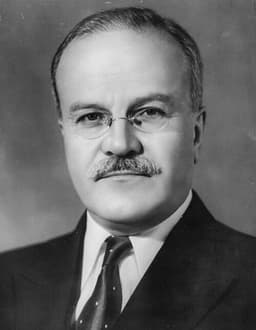
Vyacheslav Molotov
Politician · Modern
59.9Total
Basic Information
Born
1936
1890
Died
—
1986
Era
Modern
Modern
Nationality
Panama
Russia
Occupation
Politician
Politician
Civilization
Western
Western
Score Comparison
Military (10%)
50.0
50.0
Political (20%)
54.7
70.0
Influence (20%)
50.2
62.0
Legacy (20%)
41.7
55.0
Leadership (15%)
74.0
72.0
Strategy (15%)
43.1
43.1
TOTAL
51.6
59.9
Guillermo Endara — Complete Timeline
1989 AD
Won 1989 Presidential ElectionPolitical Action◆ Major
Guillermo Endara, running as the candidate of the opposition coalition ADOC, won the Panamanian presidential election against Manuel Noriega's candidate. The election was marred by fraud and violence, and the results were subsequently annulled by Noriega's regime.
ElectionOppositionNoriega
Impact: national
Sworn in as President (1989)Political Action◆ Major
Following the U.S. invasion of Panama in December 1989, Endara was sworn in as President at a U.S. military base. His presidency was initially seen as legitimate by the international community, but he faced challenges of rebuilding the country after the invasion.
PresidencyU.S. InvasionLegitimacy
Impact: national
Presidency (1989-1994)Political Action◆ Major
Endara served as President from 1989 to 1994. His administration focused on economic recovery, dismantling Noriega's military apparatus, and strengthening democratic institutions. He faced criticism for corruption and slow progress, but oversaw the transition to a civilian government.
PresidencyDemocratizationReconstruction
Impact: national
Vyacheslav Molotov — Complete Timeline
1939 AD
Signing of the Molotov-Ribbentrop PactPolitical Action
As Soviet Foreign Minister, Molotov signed the Molotov-Ribbentrop Pact with Nazi Germany on August 23, 1939. The non-aggression treaty included secret protocols dividing Eastern Europe into spheres of influence, enabling the Soviet invasion of Poland and Baltic states.
World War IIDiplomacyNazi-Soviet Pact
Impact: global
Appointment as Foreign MinisterPolitical Action◆ Major
Molotov was appointed People's Commissar for Foreign Affairs in May 1939, replacing Maxim Litvinov. He served as Stalin's chief diplomat during World War II and the early Cold War, representing the Soviet Union at major conferences including Tehran, Yalta, and Potsdam.
Soviet DiplomacyWorld War IIAppointment
Impact: global
1945 AD
Role in the Potsdam ConferencePolitical Action◆ Major
Molotov attended the Potsdam Conference in July-August 1945 as part of the Soviet delegation. He participated in negotiations on post-war Europe, including the division of Germany, reparations, and the establishment of communist governments in Eastern Europe.
World War IIPost-WarDiplomacy
Impact: global
1962 AD
Expulsion from the Communist PartyPolitical Action◆ Major
After Stalin's death, Molotov opposed Khrushchev's de-Stalinization policies. He was expelled from the Communist Party in 1962 for factional activity, ending his political career. He was later readmitted in 1984 but never regained influence.
De-StalinizationKhrushchevExpulsion
Impact: nationaldestructive
Expert Analysis
Origins
Guillermo Endara Galimany was born on May 12, 1936, in Panama City, Panama. His father was a prominent lawyer and politician. Endara studied law at the University of Panama and later at New York University, earning a master's degree. He worked as a lawyer and entered politics, serving as a legislator and later as a key opposition figure against the military regime of Manuel Noriega.
Vyacheslav Mikhailovich Molotov was born on March 9, 1890, in Kukarka, Russian Empire (now Sovetsk, Russia). His father was a shop clerk. Molotov joined the Bolshevik Party in 1906 and was involved in revolutionary activities. He was educated at the Kazan Real School but did not complete university due to his political activism. He became a close associate of Joseph Stalin, rising through the party ranks.
Rise to Power
Endara's rise came through opposition to the Noriega dictatorship. In the 1989 presidential election, he ran as the candidate of the opposition coalition ADOC (Democratic Alliance of Civil Opposition). Despite widespread fraud, Endara's victory was annulled by Noriega. Following the U.S. invasion of Panama on December 20, 1989, Endara was sworn in as president at a U.S. military base on December 20, 1989. His rise was thus heavily dependent on U.S. intervention, scoring 54.7 in political and 43.1 in strategy.
Molotov's rise was within the Soviet Communist Party. He became a member of the Central Committee in 1921 and a close ally of Stalin. In May 1939, he was appointed People's Commissar for Foreign Affairs, replacing Maxim Litvinov. Molotov's political score of 70.0 reflects his ability to navigate Stalin's purges and maintain power. His key turning point was signing the Molotov-Ribbentrop Pact with Nazi Germany on August 23, 1939, which included secret protocols dividing Eastern Europe.
Leadership & Governance
Endara's leadership focused on restoring democracy and dismantling Noriega's military apparatus. He served as president from 1989 to 1994. His administration prioritized economic recovery, but faced challenges such as high unemployment and corruption. Endara's leadership score of 74.0 reflects his role in transitioning Panama to democratic governance, but his governance was constrained by the lingering influence of the military and the U.S. presence.
Molotov's leadership was as Stalin's loyal executor. As foreign minister, he implemented Soviet foreign policy, including the pact with Germany and later participation in Allied conferences. He was known for his stubbornness and unwavering adherence to Stalin's line. His leadership score of 72.0 is comparable to Endara's, but his governance was within a totalitarian system, scoring 62.0 in influence. He attended the Potsdam Conference in July-August 1945, negotiating post-war Europe.
Triumph & Tragedy
Endara's greatest success was overseeing a peaceful transition to democracy after the U.S. invasion, with elections held in 1994. He also reduced the size of the military and promoted human rights. His greatest failure was the inability to address economic inequality and corruption, leading to a mixed legacy. His legacy score of 41.7 is low, as his presidency is often seen as a U.S.-backed interlude.
Molotov's greatest triumph was his role in the Grand Alliance during World War II, helping secure Soviet interests at Yalta and Potsdam. His tragedy was his fall from grace after Stalin's death. He opposed Khrushchev's de-Stalinization and was expelled from the Communist Party in 1962 for factional activity. His legacy score of 55.0 reflects his association with Stalinist policies and the Molotov cocktail.
Character & Destiny
Endara was seen as a moderate, honest figure but lacked the political acumen to consolidate power independently. His destiny was tied to U.S. intervention, which both elevated and limited him. His strategy score of 43.1 indicates a lack of long-term planning.
Molotov was dogmatic, ruthless, and loyal to Stalin. His character made him ideal for implementing harsh policies. His destiny was shaped by Stalin's patronage and later rejection by Khrushchev. His political score of 70.0 shows his ability to survive purges, but his rigidity led to his downfall.
Legacy
Endara's legacy is as the first democratic president after Noriega, but his impact is limited. He is remembered as a transitional figure. His military score of 50.0 reflects no significant military role. His influence score of 50.2 is moderate.
Molotov's legacy is more substantial. He is remembered for the Molotov-Ribbentrop Pact and the Molotov cocktail. His influence on Soviet foreign policy was profound, but his association with Stalin's crimes tarnishes his reputation. His total score of 59.9 reflects a stronger impact.
Conclusion
Vyacheslav Molotov had a greater impact on history than Guillermo Endara. Molotov's actions shaped the course of World War II and the Cold War, while Endara's presidency was a brief episode in Panama's history. Molotov's total score of 59.9 exceeds Endara's 51.6 by 8.3 points, reflecting his higher political influence and legacy. Endara's leadership score of 74.0 is slightly higher than Molotov's 72.0, but Molotov's political score of 70.0 and influence of 62.0 clearly surpass Endara's 54.7 and 50.2. Thus, Molotov's role in global history is more significant.
Rankings
🥇
Vyacheslav MolotovLeader
Mil: 50.0Pol: 70.0Inf: 62.0
59.9
🥈
Guillermo Endara
Mil: 50.0Pol: 54.7Inf: 50.2
51.6
+8.3 behind
How This Comparison Works
Algorithm
Each figure is scored on 6 dimensions (0—100 scale) based on structured historical data: Military (10%), Political (20%), Influence (20%), Legacy (20%), Leadership (15%), Strategy (15%). The weighted total produces the final ranking.
Data Sources
Scores are computed from structured sub-indicators in the database. Scale factors adjust for era (Ancient ×0.85, Modern ×1.0) and civilization size (Eastern ×1.05, Other ×0.80) to account for differences in population and military scale.
Maximum 3 Figures
Comparisons are limited to 2—3 figures to ensure readability and statistical meaningfulness.
Error Margins
±5 points per dimension — Sub-scores are derived from historical records with inherent uncertainty. Two figures within 5 points on a dimension should be considered roughly equivalent in that area.
Total Score Accuracy
±3 points overall — The weighted combination of 6 dimensions produces a total score with approximately ±3 points of uncertainty. Differences of less than 3 points are not statistically significant— the figures are effectively tied.
Known Limitations
- Historical records are incomplete and uneven across civilizations
- Figures from oral-tradition societies may be underrepresented
- Occupation labels can misclassify multi-role figures
- Scores measure capability and impact, not moral character
- Quantitative scoring is a comparison tool, not absolute truth
Capability Radar
Military (10%) — Battles & Warfare
Battles
27
31
Win Rate
30
31
Expansion
33
32
Political (20%) — Governance & Reform
Reform
40
60
Diplomacy
50
90
Economy
35
55
Influence (20%) — Cultural & Global Reach
Cultural
20
30
Global
20
70
Legacy (20%) — Historical Impact
Historical
30
75
Longevity
20
65
Leadership (15%) — Power & Stability
Tenure
55
85
Stability
30
40
Strategy (15%) — Tactics & Innovation
Strategy
36
39
Tactics
42
43
Reform
46
43
Similar Comparisons
Comments & Discussion
No comments yet. Be the first to share your thoughts!