Loading...
Ursula von der Leyen vs Viktor Yushchenko
Ursula von der Leyen leads by 4.1 pts · 2 figures compared
…

Ursula von der Leyen
Politician · Modern
55.5Total
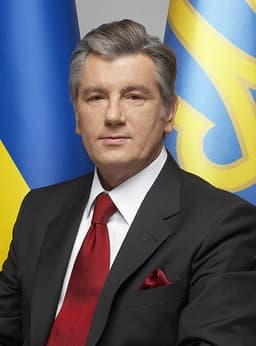
Viktor Yushchenko
Politician · Modern
51.4Total
Basic Information
Born
1958
1954
Died
—
—
Era
Modern
Modern
Nationality
Germany
Ukraine
Occupation
Politician
Politician
Civilization
Western
Western
Score Comparison
Military (10%)
50.0
49.8
Political (20%)
65.0
68.0
Influence (20%)
55.0
58.0
Legacy (20%)
47.5
46.7
Leadership (15%)
72.0
40.0
Strategy (15%)
43.0
40.7
TOTAL
55.5
51.4
Ursula von der Leyen — Complete Timeline
2013 AD
Appointed German Minister of DefencePolitical Action◆ Major
Ursula von der Leyen was appointed German Minister of Defence under Chancellor Angela Merkel. She oversaw the Bundeswehr during a period of modernization and increased defense spending, though the ministry faced criticism over equipment shortages and consulting contracts.
German PoliticsDefenceMerkel Cabinet
Impact: national
2019 AD
Launched the European Green DealReform◆ Major
Von der Leyen presented the European Green Deal, a set of policy initiatives aiming to make the EU climate-neutral by 2050. The plan included emissions reduction targets, investment in renewable energy, and a just transition mechanism for affected regions.
Climate PolicyGreen DealEU Environment
Impact: globalprogressive
Elected President of the European CommissionPolitical Action
Von der Leyen was elected President of the European Commission by the European Parliament, becoming the first woman to hold the office. Her election followed a contentious process involving the Spitzenkandidat system and a narrow parliamentary majority.
EU LeadershipFirst WomanEuropean Commission
Impact: globalconstructive
2020 AD
Proposed the NextGenerationEU Recovery FundReform
Von der Leyen proposed a
EU BudgetRecovery FundFiscal Integration
Impact: regionalconstructive
Oversaw EU COVID-19 Vaccine ProcurementPolitical Action◆ Major
Von der Leyen led the EU's joint procurement of COVID-19 vaccines, negotiating contracts with pharmaceutical companies. The program faced early delays and criticism over slow rollout compared to the UK and US, but eventually vaccinated a majority of EU adults.
COVID-19VaccineEU Health
Impact: regional
2022 AD
Imposed Sanctions on Russia over Ukraine InvasionPolitical Action◆ Major
Following Russia's full-scale invasion of Ukraine, von der Leyen led the EU in imposing multiple rounds of sanctions targeting Russian finance, energy, and individuals. The sanctions aimed to weaken Russia's war capacity, with effects on global energy markets.
Russia-Ukraine WarSanctionsEU Foreign Policy
Impact: global
Viktor Yushchenko — Complete Timeline
2004 AD
Orange Revolution and Election as PresidentPolitical Action
Yushchenko won the 2004 Ukrainian presidential election after the Orange Revolution overturned a fraudulent runoff. He defeated Viktor Yanukovych in a re-run election, taking office in January 2005.
Orange RevolutionElectionDemocracy
Impact: nationalconstructive
Dioxin PoisoningOther◆ Major
Yushchenko was poisoned with dioxin during the presidential campaign, causing severe facial disfigurement and health issues. The poisoning was widely attributed to political opponents, though no one was convicted.
PoisoningAssassination AttemptHealth
Impact: nationaltragic
2005 AD
Pro-European Union PoliciesPolitical Action◆ Major
Yushchenko pursued EU and NATO integration for Ukraine, though progress was slow. He advocated for democratic reforms and anti-corruption measures, but faced internal political opposition.
EUNATOReform
Impact: nationalconstructive
2007 AD
Political Crisis and Early ElectionsPolitical Action◆ Major
Yushchenko dissolved parliament and called early elections after a prolonged political crisis with Prime Minister Viktor Yanukovych. The crisis weakened his presidency and led to a loss of public support.
Political CrisisEarly ElectionsYanukovych
Impact: nationaldestructive
2010 AD
Lost Re-election to Viktor YanukovychPolitical Action◆ Major
Yushchenko lost the 2010 Ukrainian presidential election, receiving only 5.5% of the vote in the first round. Viktor Yanukovych won the presidency, marking a reversal of the Orange Revolution.
ElectionDefeatOrange Revolution
Impact: nationaltragic
Expert Analysis
Origins
Ursula von der Leyen was born in 1958 in Brussels, Belgium, as the daughter of Ernst Albrecht, a prominent German politician and former Prime Minister of Lower Saxony. She grew up in a politically engaged family, studied economics at the University of Göttingen, and later earned a medical degree from Hannover Medical School. Her early career included work as a physician and later as a faculty member at the School of Veterinary Medicine Hannover. She entered politics in the 1990s, joining the Christian Democratic Union (CDU) and serving in various state and federal roles.
Viktor Yushchenko was born in 1954 in Khoruzhivka, Ukraine, then part of the Soviet Union. He grew up in a rural family; his father was a teacher. Yushchenko studied economics at the Ternopil National Economic University and later worked in banking. He rose through the ranks of the Soviet state bank and after Ukrainian independence became head of the National Bank of Ukraine in 1993, where he gained a reputation for fighting inflation. His political career began in 1999 when he was appointed Prime Minister under President Leonid Kuchma.
Rise to Power
Von der Leyen's rise was steady within the CDU. She served as Minister for Family Affairs in 2005 under Chancellor Angela Merkel, then Minister of Labour and Social Affairs in 2009. Her breakthrough came in 2013 when she became Germany's first female Minister of Defence. Despite controversies over the Bundeswehr's readiness, she remained a key Merkel ally. In 2019, she was elected President of the European Commission, becoming the first woman to hold that office. Her election was a compromise among EU leaders, and she secured a narrow majority in the European Parliament.
Yushchenko's rise was more dramatic. As Prime Minister from 1999 to 2001, he implemented economic reforms and improved budget discipline. However, he was dismissed after a no-confidence vote. In 2004, he ran for president against the establishment candidate Viktor Yanukovych. The initial election was marred by fraud, sparking the Orange Revolution—mass protests that led to a peaceful rerun. Yushchenko won the revote with 52% of the vote, taking office in January 2005. His dioxin poisoning during the campaign, which left his face disfigured, became a symbol of his struggle.
Leadership & Governance
Von der Leyen's leadership style is pragmatic and consensus-oriented, reflecting her background in coalition politics. As Commission President, she has prioritized the European Green Deal, a comprehensive plan to make the EU carbon-neutral by 2050. She also proposed the €750 billion NextGenerationEU recovery fund, financed by common EU debt, to rebuild after the COVID-19 pandemic. Her governance has faced criticism over the EU's vaccine procurement strategy, which was initially slower than the UK or US. She scored 72.0 in leadership, reflecting her ability to navigate complex EU institutions, but only 43.0 in strategy, indicating limited long-term vision.
Yushchenko's leadership was more idealistic but less effective. He pursued pro-European integration, advocating for NATO and EU membership, but faced resistance from a divided parliament and a powerful prime minister. His governance was hampered by infighting among Orange Revolution allies, including Yulia Tymoshenko. He failed to push through comprehensive anti-corruption reforms, and his leadership score of 40.0 reflects his inability to maintain unity. His strategic score of 40.7 is similar to von der Leyen's, but his political score (68.0) is slightly higher, showing his ability to mobilize people.
Triumph & Tragedy
Von der Leyen's greatest triumph is the NextGenerationEU fund, which marked a historic shift toward fiscal solidarity in the EU. The European Green Deal is also a major achievement, setting ambitious climate targets. However, her handling of the COVID-19 vaccine rollout was a significant failure, with the EU lagging behind other developed nations. She also faced criticism for her initial response to the war in Ukraine, though she later became a strong supporter of sanctions.
Yushchenko's triumph was leading the Orange Revolution, a peaceful democratic uprising that inspired many. He also stabilized the economy after his election, with growth rates over 7% in 2006-2007. However, his tragedy was his failure to consolidate democratic gains. He lost the 2010 election with only 5.5% of the vote, and his pro-Western policies were reversed by his successor Yanukovych. His dioxin poisoning left him with chronic health issues.
Character & Destiny
Von der Leyen is known for her discipline and ambition. She has been described as a technocrat who adapts to political realities rather than shaping them. Her character is shaped by her medical background and her father's political legacy. She has shown resilience in the face of criticism, but her reliance on consensus sometimes leads to slow decision-making. Her destiny is tied to the EU's future; she has become a key figure in European integration.
Yushchenko is characterized by his idealism and a certain naivety. He genuinely believed in democratic reforms but lacked the ruthlessness to enforce them. His poisoning made him a martyr figure, but it also affected his health and possibly his judgment. His inability to build strong institutions and his tendency to compromise with oligarchs led to his political downfall. His character, while noble, was ill-suited for Ukraine's rough politics.
Legacy
Von der Leyen's legacy is still unfolding, but she has already reshaped the EU's economic and environmental policies. The NextGenerationEU fund may be a precursor to a permanent fiscal union. She has also strengthened the EU's role in health and climate policy. Her political score of 65.0 and influence of 55.0 reflect her impact, though her legacy score of 47.5 is moderate due to ongoing controversies.
Yushchenko's legacy is more mixed. He is remembered as a symbol of the Orange Revolution, but his failure to deliver lasting reforms means that his impact was limited. Ukraine's democratic trajectory stalled after his presidency. His influence score of 58.0 is slightly higher than von der Leyen's, but his legacy score of 46.7 is lower. He is a cautionary tale about the difficulty of democratic transitions.
Conclusion
Ursula von der Leyen has had a greater impact on a larger stage. With a total score of 55.5, she leads Yushchenko's 51.4. Her policy initiatives—the Green Deal and NextGenerationEU—have the potential to transform the European Union for decades. Yushchenko's Orange Revolution was a moment of hope, but its gains were not sustained. While both faced significant challenges, von der Leyen's position as head of the EU's executive gives her more leverage to shape global affairs. Her leadership score of 72.0 dwarfs Yushchenko's 40.0, underscoring her ability to navigate complex institutions. In the historical balance, von der Leyen's impact is more lasting and substantial.
Rankings
🥇
Ursula von der LeyenLeader
Mil: 50.0Pol: 65.0Inf: 55.0
55.5
🥈
Viktor Yushchenko
Mil: 49.8Pol: 68.0Inf: 58.0
51.4
+4.1 behind
How This Comparison Works
Algorithm
Each figure is scored on 6 dimensions (0—100 scale) based on structured historical data: Military (10%), Political (20%), Influence (20%), Legacy (20%), Leadership (15%), Strategy (15%). The weighted total produces the final ranking.
Data Sources
Scores are computed from structured sub-indicators in the database. Scale factors adjust for era (Ancient ×0.85, Modern ×1.0) and civilization size (Eastern ×1.05, Other ×0.80) to account for differences in population and military scale.
Maximum 3 Figures
Comparisons are limited to 2—3 figures to ensure readability and statistical meaningfulness.
Error Margins
±5 points per dimension — Sub-scores are derived from historical records with inherent uncertainty. Two figures within 5 points on a dimension should be considered roughly equivalent in that area.
Total Score Accuracy
±3 points overall — The weighted combination of 6 dimensions produces a total score with approximately ±3 points of uncertainty. Differences of less than 3 points are not statistically significant— the figures are effectively tied.
Known Limitations
- Historical records are incomplete and uneven across civilizations
- Figures from oral-tradition societies may be underrepresented
- Occupation labels can misclassify multi-role figures
- Scores measure capability and impact, not moral character
- Quantitative scoring is a comparison tool, not absolute truth
Capability Radar
Military (10%) — Battles & Warfare
Battles
26
32
Win Rate
32
31
Expansion
33
33
Political (20%) — Governance & Reform
Reform
70
55
Diplomacy
75
50
Economy
60
40
Influence (20%) — Cultural & Global Reach
Cultural
40
45
Global
65
45
Legacy (20%) — Historical Impact
Historical
45
50
Longevity
30
30
Leadership (15%) — Power & Stability
Tenure
65
60
Stability
55
35
Strategy (15%) — Tactics & Innovation
Strategy
38
37
Tactics
43
39
Reform
43
42
Similar Comparisons
Comments & Discussion
No comments yet. Be the first to share your thoughts!