Loading...
Winston Churchill vs Qin Shi Huang
Qin Shi Huang leads by 11.2 pts · 2 figures compared
…
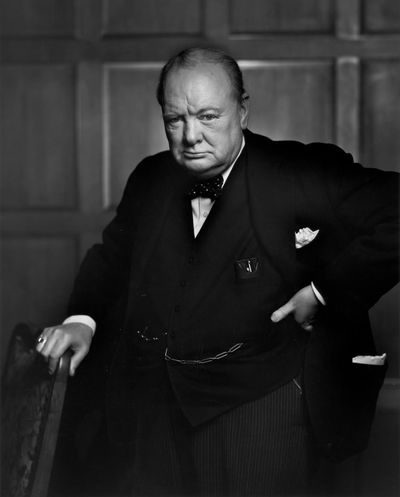
Winston Churchill
Politician · Modern
72.3Total
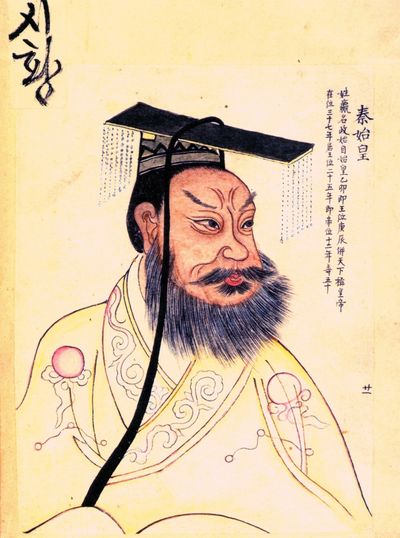
Qin Shi Huang
Emperor · Ancient
83.5Total
Basic Information
Born
1874
-259
Died
1965
-210
Era
Modern
Ancient
Nationality
United Kingdom
China
Occupation
Politician
Emperor
Civilization
Western
Eastern
Score Comparison
Military (10%)
55.0
80.0
Political (20%)
82.0
88.0
Influence (20%)
72.0
82.0
Legacy (20%)
75.0
85.0
Leadership (15%)
85.0
88.0
Strategy (15%)
55.0
75.0
TOTAL
72.3
83.5
Rankings
🥇
Qin Shi HuangLeader
Mil: 80.0Pol: 88.0Inf: 82.0
83.5
🥈
Winston Churchill
Mil: 55.0Pol: 82.0Inf: 72.0
72.3
+11.2 behind
How This Comparison Works
Algorithm
Each figure is scored on 6 dimensions (0—100 scale) based on structured historical data: Military (10%), Political (20%), Influence (20%), Legacy (20%), Leadership (15%), Strategy (15%). The weighted total produces the final ranking.
Data Sources
Scores are computed from structured sub-indicators in the database. Scale factors adjust for era (Ancient ×0.85, Modern ×1.0) and civilization size (Eastern ×1.05, Other ×0.80) to account for differences in population and military scale.
Maximum 3 Figures
Comparisons are limited to 2—3 figures to ensure readability and statistical meaningfulness.
Error Margins
±5 points per dimension — Sub-scores are derived from historical records with inherent uncertainty. Two figures within 5 points on a dimension should be considered roughly equivalent in that area.
Total Score Accuracy
±3 points overall — The weighted combination of 6 dimensions produces a total score with approximately ±3 points of uncertainty. Differences of less than 3 points are not statistically significant— the figures are effectively tied.
Known Limitations
- Historical records are incomplete and uneven across civilizations
- Figures from oral-tradition societies may be underrepresented
- Occupation labels can misclassify multi-role figures
- Scores measure capability and impact, not moral character
- Quantitative scoring is a comparison tool, not absolute truth
Capability Radar
Military (10%) — Battles & Warfare
Battles
55
85
Win Rate
60
90
Expansion
40
90
Political (20%) — Governance & Reform
Reform
70
95
Diplomacy
85
75
Economy
60
90
Influence (20%) — Cultural & Global Reach
Cultural
85
95
Global
85
85
Legacy (20%) — Historical Impact
Historical
90
95
Longevity
80
95
Leadership (15%) — Power & Stability
Tenure
75
70
Stability
70
65
Strategy (15%) — Tactics & Innovation
Strategy
85
85
Tactics
65
80
Reform
70
95
Expert Analysis
Qin Shi Huang vs Winston Churchill: Historical Comparison
Qin Shi Huang, the first Emperor of a unified China, and Winston Churchill, the Prime Minister who led Britain through World War II, represent vastly different eras and governance models—yet both wielded immense power during transformative periods. This comparison evaluates their effectiveness across key dimensions, with Qin Shi Huang emerging as the higher-ranked figure overall.
Dimension Analysis
**Military: Qin Shi Huang 80 / Winston Churchill 55**
Qin Shi Huang personally commanded the unification of warring states through relentless conquest and standardized military logistics, while Churchill’s strategic role was primarily inspirational and diplomatic, with mixed results in direct military campaigns (e.g., Gallipoli).
**Political: Qin Shi Huang 88 / Winston Churchill 82**
Qin Shi Huang centralized a fragmented realm under absolute rule, abolishing feudalism and standardizing laws, currency, and writing; Churchill excelled in coalition-building and rallying democratic resolve during crisis, but his peacetime political record was less transformative.
**Influence: Qin Shi Huang 82 / Winston Churchill 72**
Qin Shi Huang’s institutional reforms—including the Great Wall and standardized bureaucracy—shaped Chinese civilization for millennia, whereas Churchill’s influence, though profound in the 20th century West, is more circumscribed to wartime leadership and post-war rhetoric.
**Legacy: Qin Shi Huang 85 / Winston Churchill 75**
Qin Shi Huang’s legacy is foundational, with his unification and centralization remaining the template for Chinese statecraft; Churchill’s legacy as a wartime icon is durable but contested in modern critiques of imperialism and colonial policy.
**Leadership: Qin Shi Huang 88 / Winston Churchill 85**
Both demonstrated iron will: Qin Shi Huang enforced ruthless discipline to create a unified empire, while Churchill’s defiant oratory and steadfastness during the Blitz mobilized a nation—though Qin’s total control gave him greater unilateral command.
Verdict
Qin Shi Huang leads decisively due to his foundational, long-term impact on state-building and civilization-wide standardization, whereas Churchill’s leadership, while heroic in crisis, was more reactive and temporally bounded.
FAQ
Q: Who ranks higher? A: Qin Shi Huang, with a composite score of 84 vs. Churchill’s 72, driven by superior military, political, and legacy scores.
Similar Comparisons
Comments & Discussion
No comments yet. Be the first to share your thoughts!