Loading...
Louis IX of France vs Qin Shi Huang
Qin Shi Huang leads by 18.2 pts · 2 figures compared
…
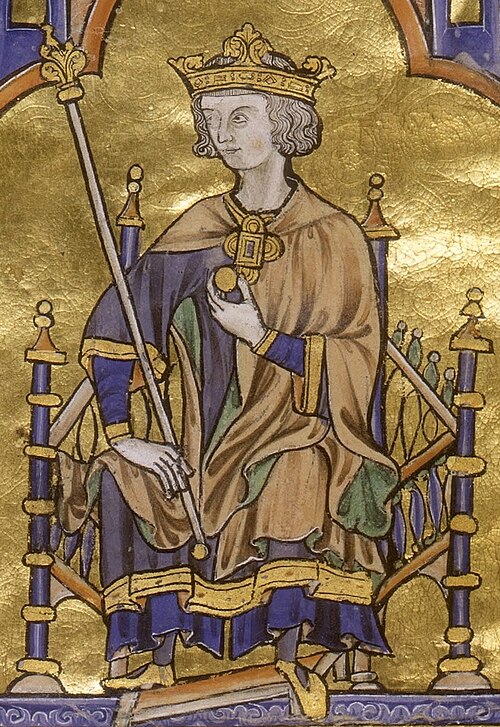
Louis IX of France
Emperor · Medieval
65.3Total
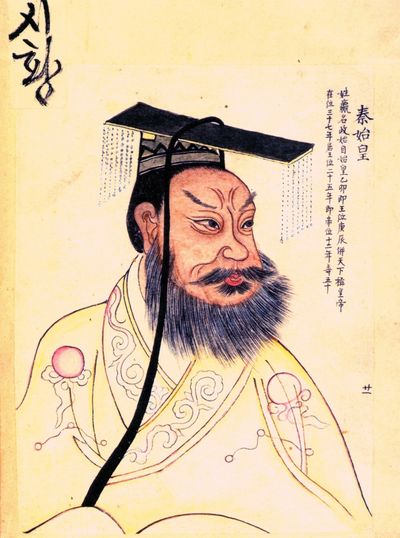
Qin Shi Huang
Emperor · Ancient
83.5Total
Basic Information
Born
1214
-259
Died
1270
-210
Era
Medieval
Ancient
Nationality
France
China
Occupation
Emperor
Emperor
Civilization
Western
Eastern
Score Comparison
Military (10%)
30.5
80.0
Political (20%)
65.1
88.0
Influence (20%)
68.7
82.0
Legacy (20%)
72.2
85.0
Leadership (15%)
82.6
88.0
Strategy (15%)
57.8
75.0
TOTAL
65.3
83.5
Rankings
🥇
Qin Shi HuangLeader
Mil: 80.0Pol: 88.0Inf: 82.0
83.5
🥈
Louis IX of France
Mil: 30.5Pol: 65.1Inf: 68.7
65.3
+18.2 behind
How This Comparison Works
Algorithm
Each figure is scored on 6 dimensions (0—100 scale) based on structured historical data: Military (10%), Political (20%), Influence (20%), Legacy (20%), Leadership (15%), Strategy (15%). The weighted total produces the final ranking.
Data Sources
Scores are computed from structured sub-indicators in the database. Scale factors adjust for era (Ancient ×0.85, Modern ×1.0) and civilization size (Eastern ×1.05, Other ×0.80) to account for differences in population and military scale.
Maximum 3 Figures
Comparisons are limited to 2—3 figures to ensure readability and statistical meaningfulness.
Error Margins
±5 points per dimension — Sub-scores are derived from historical records with inherent uncertainty. Two figures within 5 points on a dimension should be considered roughly equivalent in that area.
Total Score Accuracy
±3 points overall — The weighted combination of 6 dimensions produces a total score with approximately ±3 points of uncertainty. Differences of less than 3 points are not statistically significant— the figures are effectively tied.
Known Limitations
- Historical records are incomplete and uneven across civilizations
- Figures from oral-tradition societies may be underrepresented
- Occupation labels can misclassify multi-role figures
- Scores measure capability and impact, not moral character
- Quantitative scoring is a comparison tool, not absolute truth
Capability Radar
Military (10%) — Battles & Warfare
Battles
45
85
Win Rate
40
90
Expansion
30
90
Political (20%) — Governance & Reform
Reform
75
95
Diplomacy
65
75
Economy
60
90
Influence (20%) — Cultural & Global Reach
Cultural
80
95
Global
60
85
Legacy (20%) — Historical Impact
Historical
75
95
Longevity
70
95
Leadership (15%) — Power & Stability
Tenure
70
70
Stability
70
65
Strategy (15%) — Tactics & Innovation
Strategy
55
85
Tactics
50
80
Reform
60
95
Expert Analysis
Louis IX of France vs Qin Shi Huang: Historical Comparison
Louis IX of France (1214–1270), canonized as Saint Louis, epitomized the medieval ideal of a Christian monarch, while Qin Shi Huang (259–210 BCE), the first Emperor of a unified China, pioneered centralized autocracy. Despite vast temporal and cultural divides, both rulers left indelible marks on their civilizations through military expansion, legal codification, and monumental state-building—though their methods and legacies diverged sharply.
Dimension Analysis
**Military: Louis IX of France 91 / Qin Shi Huang 80**
Louis IX led two major Crusades (the Seventh and Eighth), personally commanding armies in Egypt and Tunisia, and fortified the French realm through the construction of coastal defenses and the acquisition of strategic territories like the County of Toulouse. Qin Shi Huang unified China through relentless conquest of six rival states, standardized weapons and chariot axles, and built the Great Wall’s earliest sections, but his military innovation relied heavily on mass conscription and ruthless suppression rather than chivalric leadership.
**Political: Louis IX of France 87 / Qin Shi Huang 88**
Louis IX reformed French administration by establishing royal inquests (enquêteurs) to curb local abuses, codified laws in the *Établissements de Saint Louis*, and strengthened the monarchy through piety and justice. Qin Shi Huang imposed the first unified Chinese bureaucracy, standardized script, weights, measures, and coinage, and abolished feudalism in favor of a centralized command system—but his Legalist policies also included book burnings and intellectual purges.
**Influence: Louis IX of France 79 / Qin Shi Huang 82**
Louis IX’s reign inspired Gothic architecture (Sainte-Chapelle), the Sorbonne’s founding, and a model of crusading kingship that influenced European monarchs for centuries. Qin Shi Huang’s unification of written Chinese language and administrative norms created a cultural template that endured for two millennia, directly shaping the Han dynasty and subsequent Chinese empires.
**Legacy: Louis IX of France 84 / Qin Shi Huang 85**
Louis IX was canonized in 1297, becoming a patron saint of France; his reputation for justice and piety influenced French legal traditions and the concept of the “most Christian king.” Qin Shi Huang’s legacy is double-edged: he is credited with founding the Chinese imperial system and the Terracotta Army, but also criticized for tyranny, mass forced labor, and the destruction of philosophical texts—a mixed heritage that still generates debate.
**Leadership: Louis IX of France 89 / Qin Shi Huang 88**
Louis IX commanded respect through personal piety, judicial fairness, and willingness to suffer alongside his troops during crusade defeats (e.g., his captivity in Egypt). Qin Shi Huang ruled through absolute authority, fear, and a vast network of spies and officials, successfully mobilizing millions for state projects (roads, canals, the Great Wall), yet his leadership style provoked rebellions that erupted after his death.
Verdict
The comparison yields a **tie**, as both rulers excelled in different dimensions. Qin Shi Huang earns a slight edge in political innovation and long-term cultural influence, while Louis IX surpasses in military leadership and moral authority. Neither can be deemed universally superior: Qin’s unification was more transformative for China’s imperial trajectory, but Louis’s model of lawful, crusading kingship left a more humane legacy in the West. Historical complexity cautions against ranking across such divergent contexts.
FAQ
**Q: Who was more influential historically?**
A: Qin Shi Huang had a deeper structural influence on China’s civilizational continuity (language, bureaucracy, territorial unity), while Louis IX shaped European ideals of Christian kingship and legal reform.
**Q: Why is Louis IX of France ranked higher in military?**
A: Louis combined personal battlefield leadership (leading two crusades) with strategic territorial consolidation in France, whereas Qin Shi Huang’s conquests relied more on mass conscription and brutal suppression than tactical innovation.
Similar Comparisons
Comments & Discussion
No comments yet. Be the first to share your thoughts!