Loading...
Xiang Yu vs Zhao Chongguo
Zhao Chongguo leads by 8.9 pts · 2 figures compared
…
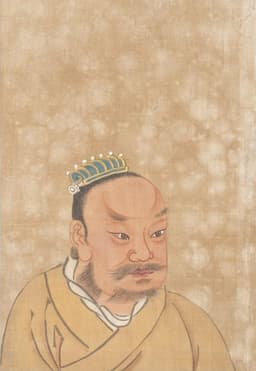
Xiang Yu
General · Ancient
52.3Total
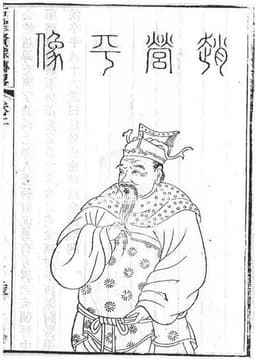
Zhao Chongguo
General · Ancient
61.2Total
Basic Information
Born
-232
-137
Died
-202
-52
Era
Ancient
Ancient
Nationality
China
China
Occupation
General
General
Civilization
Eastern
Eastern
Score Comparison
Military (10%)
77.5
80.0
Political (20%)
35.0
68.0
Influence (20%)
61.0
53.3
Legacy (20%)
52.0
49.2
Leadership (15%)
30.0
68.0
Strategy (15%)
65.4
72.0
TOTAL
52.3
61.2
Xiang Yu — Complete Timeline
207 BC
Battle of JuluWar◆ Major
Xiang Yu led a rebel army against the Qin dynasty at Julu. After ordering his troops to destroy their cooking vessels and boats, they defeated a larger Qin force, breaking the siege and establishing Xiang Yu as the leading rebel commander.
Qin rebellionBattleTurning point
Impact: regional
206 BC
Feast at Hong GatePolitical Action◆ Major
Xiang Yu hosted a banquet for Liu Bang at Hong Gate. During the feast, Xiang Yu's advisor Fan Zeng attempted to have Liu Bang assassinated, but Xiang Yu hesitated. Liu Bang escaped, and the rivalry between the two leaders intensified.
Political intrigueRivalryChu-Han Contention
Impact: regional
202 BC
Battle of GaixiaWar◆ Major
Liu Bang's Han forces surrounded Xiang Yu's army at Gaixia. After a night of psychological warfare with Han soldiers singing Chu songs, Xiang Yu's troops lost morale. Xiang Yu broke out but was cornered, leading to his suicide.
Chu-Han ContentionBattleDefeat
Impact: regionaltragic
Zhao Chongguo — Complete Timeline
61 BC
Campaign Against the QiangWar◆ Major
Zhao Chongguo led a Han army against the Qiang tribes in the Hexi region. Using the tuntian system to supply his troops, he defeated the Qiang and secured the Han frontier, demonstrating the effectiveness of his farming garrison strategy.
Han-Xiongnu WarMilitary CampaignQiang
Impact: regional
Proposal of Farming Garrisons (Tuntian)Reform◆ Major
Zhao Chongguo proposed establishing farming garrisons (tuntian) in the Hexi Corridor to supply Han forces fighting the Qiang tribes. This system allowed soldiers to farm during peacetime, reducing the cost of long-distance supply lines.
Military ReformAgricultureHan-Xiongnu War
Impact: nationalconstructive
60 BC
Memorial on Tuntian PolicyPolitical Action◆ Major
Zhao Chongguo submitted a detailed memorial to Emperor Xuan advocating for the permanent establishment of tuntian colonies. The emperor approved the plan, leading to the long-term settlement of Han soldiers in the frontier regions.
PolicyFrontierAgriculture
Impact: nationalconstructive
Expert Analysis
Origins
Xiang Yu (232–202 BCE) was born into the noble Xiang family of Chu, a state conquered by Qin. His father died early, and he was raised by his uncle Xiang Liang. From youth, he trained in martial arts and military tactics, reportedly able to lift a bronze tripod. He despised the Qin regime and sought to restore Chu independence.
Zhao Chongguo (c. 137–52 BCE) was born into a modest family in the Han dynasty. Little is known of his early life, but he rose through the ranks as a junior officer in the Han army, likely due to his competence and literacy. He gained experience in frontier campaigns against the Xiongnu and Qiang tribes.
Rise to Power
Xiang Yu rose to prominence after the death of Chen Sheng, the first rebel leader against Qin. In 208 BCE, Xiang Liang installed a puppet Chu king, and Xiang Yu commanded the Chu army. His defining moment came at the Battle of Julu (207 BCE), where he led a rebel force of about 50,000 against a larger Qin army. He ordered his troops to destroy their boats and cooking vessels, signaling no retreat. The victory shattered Qin power and made him the de facto leader of the anti-Qin coalition. He then entered Xianyang, executed the Qin emperor's family, and divided the empire into 18 kingdoms, crowning himself Hegemon-King of Western Chu.
Zhao Chongguo's rise was gradual. He served under Emperor Wu (r. 141–87 BCE) in campaigns against the Xiongnu, earning promotions. Under Emperor Xuan (r. 74–48 BCE), he was appointed as a general to suppress the Qiang rebellion in the Hexi Corridor. His reputation grew not from a single dramatic battle but from his innovative proposal in 61 BCE to establish farming garrisons (tuntian) to supply troops, reducing the cost of long-distance logistics.
Leadership & Governance
Xiang Yu ruled through personal charisma and military intimidation. He appointed followers based on personal loyalty rather than merit, famously alienating capable advisors like Fan Zeng. His governance was reactive; he failed to establish a stable administration or win over local populations. After dividing the empire, he returned to his homeland, leaving Liu Bang to consolidate the central plains.
Zhao Chongguo exemplified bureaucratic efficiency. His tuntian policy combined military defense with agricultural colonization. Soldiers farmed during peacetime and fought when needed. This system reduced supply costs by an estimated 60% compared to traditional grain transport. He also advocated for patient, attrition-based warfare against the Qiang, avoiding risky engagements. His leadership score of 68.0 reflects his ability to persuade Emperor Xuan and implement long-term policy.
Triumph & Tragedy
Xiang Yu's greatest triumph was the Battle of Julu, where his tactical acumen crushed the Qin army and ended Qin rule. He also won numerous smaller battles against Liu Bang, such as at Pengcheng (205 BCE) where he defeated a much larger Han force. However, his tragedies were equally stark: the Feast at Hong Gate (206 BCE) where he failed to kill Liu Bang, and the Battle of Gaixia (202 BCE) where his army was encircled and destroyed. He committed suicide after escaping with only 28 men, refusing to cross the Yangtze.
Zhao Chongguo's triumph was the successful pacification of the Qiang tribes using tuntian. His memorial to Emperor Xuan convinced the court to adopt the policy, which eventually secured the Hexi Corridor for Han expansion. His tragedy was relative obscurity; his methods were not fully adopted until centuries later by Cao Wei. He died at age 86, outliving his immediate impact.
Character & Destiny
Xiang Yu was proud, impulsive, and honor-bound. He refused to retreat or negotiate, leading to his downfall. His military score of 77.5 reflects his tactical skill, but his political score of 35.0 and leadership of 30.0 show his inability to build alliances or govern. He trusted only his own strength and relied on fear to command.
Zhao Chongguo was pragmatic, methodical, and persuasive. His political score of 68.0 indicates his effectiveness in court politics. He understood that sustainable strategy required administrative infrastructure, not just battlefield victories. His strategy score of 72.0 highlights his emphasis on logistics and attrition.
Legacy
Xiang Yu is remembered as a tragic hero in Chinese folklore, celebrated in operas and poetry. His story warns against hubris and the limits of military power. However, his actual political legacy is minimal; his rule collapsed within five years. His military tactics influenced later generals, but his overall impact score is 52.0.
Zhao Chongguo's tuntian system became a cornerstone of Chinese frontier policy. It was revived during the Three Kingdoms period by Cao Cao and later used by the Tang, Ming, and Qing dynasties. His legacy score of 49.2 is lower than expected, perhaps because his contributions were administrative rather than dramatic. Nonetheless, his ideas shaped Chinese military strategy for two millennia.
Conclusion
While Xiang Yu's military brilliance is undeniable, his overall impact is limited by his political failures and short career. Zhao Chongguo, with a total score of 61.2 against Xiang Yu's 52.3, had a more enduring influence on Chinese history. His tuntian policy solved a persistent logistical problem and enabled Han expansion. Therefore, Zhao Chongguo had greater historical impact, even if Xiang Yu's story is more famous.
Rankings
🥇
Zhao ChongguoLeader
Mil: 80.0Pol: 68.0Inf: 53.3
61.2
🥈
Xiang Yu
Mil: 77.5Pol: 35.0Inf: 61.0
52.3
+8.9 behind
How This Comparison Works
Algorithm
Each figure is scored on 6 dimensions (0—100 scale) based on structured historical data: Military (10%), Political (20%), Influence (20%), Legacy (20%), Leadership (15%), Strategy (15%). The weighted total produces the final ranking.
Data Sources
Scores are computed from structured sub-indicators in the database. Scale factors adjust for era (Ancient ×0.85, Modern ×1.0) and civilization size (Eastern ×1.05, Other ×0.80) to account for differences in population and military scale.
Maximum 3 Figures
Comparisons are limited to 2—3 figures to ensure readability and statistical meaningfulness.
Error Margins
±5 points per dimension — Sub-scores are derived from historical records with inherent uncertainty. Two figures within 5 points on a dimension should be considered roughly equivalent in that area.
Total Score Accuracy
±3 points overall — The weighted combination of 6 dimensions produces a total score with approximately ±3 points of uncertainty. Differences of less than 3 points are not statistically significant— the figures are effectively tied.
Known Limitations
- Historical records are incomplete and uneven across civilizations
- Figures from oral-tradition societies may be underrepresented
- Occupation labels can misclassify multi-role figures
- Scores measure capability and impact, not moral character
- Quantitative scoring is a comparison tool, not absolute truth
Capability Radar
Military (10%) — Battles & Warfare
Battles
85
60
Win Rate
75
65
Expansion
80
55
Political (20%) — Governance & Reform
Reform
10
70
Diplomacy
30
60
Economy
15
75
Influence (20%) — Cultural & Global Reach
Cultural
70
40
Global
55
30
Legacy (20%) — Historical Impact
Historical
75
55
Longevity
70
50
Leadership (15%) — Power & Stability
Tenure
40
50
Stability
20
65
Strategy (15%) — Tactics & Innovation
Strategy
70
75
Tactics
90
70
Reform
20
80
Similar Comparisons
Comments & Discussion
No comments yet. Be the first to share your thoughts!