Loading...
Du Yu vs Zhao Chongguo
Zhao Chongguo leads by 4.4 pts · 2 figures compared
…
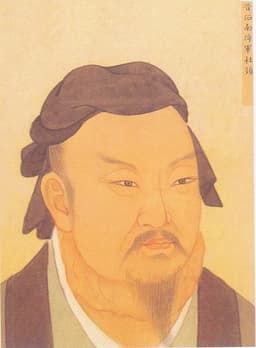
Du Yu
General · Ancient
56.8Total
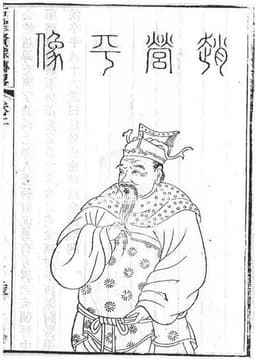
Zhao Chongguo
General · Ancient
61.2Total
Basic Information
Born
222
-137
Died
285
-52
Era
Ancient
Ancient
Nationality
China
China
Occupation
General
General
Civilization
Eastern
Eastern
Score Comparison
Military (10%)
77.5
80.0
Political (20%)
43.7
68.0
Influence (20%)
53.3
53.3
Legacy (20%)
47.5
49.2
Leadership (15%)
65.0
68.0
Strategy (15%)
75.0
72.0
TOTAL
56.8
61.2
Du Yu — Complete Timeline
279 AD
Appointed as commander of the Jin invasion of WuPolitical Action◆ Major
Du Yu was appointed as the overall commander of the Jin forces for the invasion of Eastern Wu, following Yang Hu's recommendation. He was given command of the central army group.
Jin DynastyEastern WuMilitary Command
Impact: nationalconstructive
280 AD
Led the conquest of Eastern WuWar
Du Yu's forces captured key Wu cities, including Jiangling, and advanced toward the Wu capital Jianye. The campaign culminated in the surrender of Wu's emperor Sun Hao, ending the Three Kingdoms period.
Conquest of WuJin DynastyUnification
Impact: globalconstructive
Authored the 'Commentary on the Spring and Autumn Annals'Cultural◆ Major
Du Yu wrote a comprehensive commentary on the Confucian classic 'Spring and Autumn Annals', which became a standard reference for later scholars. His work influenced Chinese historiography.
ScholarshipConfucianismHistoriography
Impact: nationalconstructive
Zhao Chongguo — Complete Timeline
61 BC
Campaign Against the QiangWar◆ Major
Zhao Chongguo led a Han army against the Qiang tribes in the Hexi region. Using the tuntian system to supply his troops, he defeated the Qiang and secured the Han frontier, demonstrating the effectiveness of his farming garrison strategy.
Han-Xiongnu WarMilitary CampaignQiang
Impact: regional
Proposal of Farming Garrisons (Tuntian)Reform◆ Major
Zhao Chongguo proposed establishing farming garrisons (tuntian) in the Hexi Corridor to supply Han forces fighting the Qiang tribes. This system allowed soldiers to farm during peacetime, reducing the cost of long-distance supply lines.
Military ReformAgricultureHan-Xiongnu War
Impact: nationalconstructive
60 BC
Memorial on Tuntian PolicyPolitical Action◆ Major
Zhao Chongguo submitted a detailed memorial to Emperor Xuan advocating for the permanent establishment of tuntian colonies. The emperor approved the plan, leading to the long-term settlement of Han soldiers in the frontier regions.
PolicyFrontierAgriculture
Impact: nationalconstructive
Expert Analysis
Origins
Du Yu (222–284) was born into a prominent family in the state of Wei during the Three Kingdoms period. His grandfather Du Ji served as a governor under Cao Cao, and his father Du Shu held official posts. Du Yu was well-educated in Confucian classics and legal texts, which later influenced his governance style. He began his career as a minor official under Wei, but his talents were recognized by Sima Zhao, the regent of Wei.
Zhao Chongguo (137–52 BCE) was born in Shanggui (modern Tianshui, Gansu) during the Western Han dynasty. His family had a military background, and he learned horsemanship and archery from a young age. Zhao began his military career as a cavalry officer under Emperor Wu of Han, serving in campaigns against the Xiongnu. His early experiences in frontier warfare shaped his strategic thinking.
Rise to Power
Du Yu rose to prominence as a trusted advisor and general under Sima Zhao and later Sima Yan, the founder of the Jin dynasty. In 263, Du Yu participated in the conquest of Shu Han, but his role was minor. His major break came when Yang Hu, the commander of Jin forces against Eastern Wu, recommended Du Yu as his successor. In 278, Du Yu was appointed commander of the Jin invasion of Wu. He led a multi-pronged offensive in 280, capturing key cities like Jiangling and advancing to the Wu capital Jianye. The Wu emperor Sun Hao surrendered, completing the unification of China under Jin.
Zhao Chongguo rose through the ranks in the Han military. He served under generals Li Guang and Wei Qing, gaining experience in cavalry tactics. His breakthrough came during the campaign against the Qiang tribes in 61 BCE. Emperor Xuan appointed him as a commander to quell the Qiang rebellion. Zhao proposed a strategy of establishing farming garrisons (tuntian) to supply his troops, which would reduce the logistical burden on the central government. His plan was initially opposed by court officials but eventually approved after Zhao submitted a detailed memorial.
Leadership & Governance
Du Yu was known for his methodical and cautious leadership. He meticulously planned the Wu campaign, coordinating naval and land forces. He also implemented strict discipline among his troops, forbidding looting and protecting civilians. After the conquest, Du Yu was appointed as a regional governor and implemented policies to stabilize the newly conquered territories. He reduced taxes, promoted agriculture, and restored local administration. However, his governance was overshadowed by the subsequent War of the Eight Princes, which eroded Jin stability. Du Yu's political score of 43.7 reflects his limited impact on long-term governance.
Zhao Chongguo demonstrated innovative leadership in frontier defense. He proposed the tuntian system, where soldiers farmed their own food during peacetime, reducing the need for costly grain shipments. This approach allowed the Han to maintain a permanent military presence in the Hexi Corridor. Zhao also advocated for a defensive strategy against the Qiang, preferring to wear them down through attrition rather than risky offensives. His political score of 68.0 is higher than Du Yu's, reflecting his greater influence on policy. However, his direct leadership was limited to military campaigns, and he never held high civil office.
Triumph & Tragedy
Du Yu's greatest triumph was the conquest of Eastern Wu, which ended the Three Kingdoms period and unified China under the Jin dynasty. His campaign was swift and decisive, lasting only a few months. However, his success was short-lived. The Jin dynasty quickly descended into civil war, and Du Yu's achievements were overshadowed by the chaos. He also failed to secure lasting political stability, as he died in 284, just a few years before the War of the Eight Princes began. His legacy score of 47.5 reflects this ephemeral impact.
Zhao Chongguo's greatest triumph was the successful implementation of the tuntian system, which became a model for later dynasties. His campaign against the Qiang resulted in a stable frontier for decades. However, his tragedy was that his defensive approach was criticized by some contemporaries as overly cautious. He also faced political opposition from court officials who favored more aggressive expansion. Despite his success, Zhao was not given high honors; he retired to obscurity and died in 52 BCE. His legacy score of 49.2 is slightly higher than Du Yu's, reflecting the enduring influence of the tuntian system.
Character & Destiny
Du Yu was a scholarly general who combined military competence with intellectual pursuits. He authored the "Commentary on the Spring and Autumn Annals," which became a standard Confucian text. His character was marked by pragmatism and attention to detail. However, his reliance on the Jin central government meant that his destiny was tied to the dynasty's fortunes. When the Jin collapsed into civil war, his legacy suffered. His strategy score of 75.0 reflects his effective planning, but his leadership score of 65.0 indicates he was not a charismatic leader.
Zhao Chongguo was a seasoned frontier commander who valued sustainability over glory. His personality was cautious and methodical, preferring long-term solutions to short-term victories. He was willing to argue with the emperor and court to implement his ideas, showing political courage. However, his lack of political ambition meant he never reached the highest offices. His strategy score of 72.0 is slightly lower than Du Yu's, but his leadership score of 68.0 is higher, reflecting his ability to motivate troops and maintain discipline in harsh conditions.
Legacy
Du Yu's primary legacy is the unification of China under Jin, which ended the Three Kingdoms period. His commentary on the Spring and Autumn Annals also influenced Chinese scholarship for centuries. However, the Jin dynasty's instability meant that his political achievements were not lasting. His military campaigns are studied as examples of coordinated amphibious operations.
Zhao Chongguo's tuntian system had a profound impact on Chinese military policy. It was adopted by later dynasties, including the Tang and Ming, to support frontier garrisons. His strategy of combining agriculture with defense became a cornerstone of Chinese border policy. Zhao's memorials on tuntian are preserved in the Han shu and are considered classic examples of strategic analysis. His legacy score of 49.2 edges out Du Yu's 47.5.
Conclusion
In comparing Du Yu and Zhao Chongguo, Zhao emerges as the more impactful figure. While Du Yu's conquest of Wu was a dramatic achievement, its long-term significance was undermined by the Jin dynasty's collapse. Zhao's tuntian system, in contrast, provided a sustainable model for frontier defense that influenced Chinese statecraft for over a millennium. Zhao's overall score of 61.2 surpasses Du Yu's 56.8, reflecting his greater contributions to military strategy and governance. Du Yu's legacy is more tied to a single event, whereas Zhao's ideas endured. Therefore, Zhao Chongguo had a greater impact on Chinese history.
Rankings
🥇
Zhao ChongguoLeader
Mil: 80.0Pol: 68.0Inf: 53.3
61.2
🥈
Du Yu
Mil: 77.5Pol: 43.7Inf: 53.3
56.8
+4.4 behind
How This Comparison Works
Algorithm
Each figure is scored on 6 dimensions (0—100 scale) based on structured historical data: Military (10%), Political (20%), Influence (20%), Legacy (20%), Leadership (15%), Strategy (15%). The weighted total produces the final ranking.
Data Sources
Scores are computed from structured sub-indicators in the database. Scale factors adjust for era (Ancient ×0.85, Modern ×1.0) and civilization size (Eastern ×1.05, Other ×0.80) to account for differences in population and military scale.
Maximum 3 Figures
Comparisons are limited to 2—3 figures to ensure readability and statistical meaningfulness.
Error Margins
±5 points per dimension — Sub-scores are derived from historical records with inherent uncertainty. Two figures within 5 points on a dimension should be considered roughly equivalent in that area.
Total Score Accuracy
±3 points overall — The weighted combination of 6 dimensions produces a total score with approximately ±3 points of uncertainty. Differences of less than 3 points are not statistically significant— the figures are effectively tied.
Known Limitations
- Historical records are incomplete and uneven across civilizations
- Figures from oral-tradition societies may be underrepresented
- Occupation labels can misclassify multi-role figures
- Scores measure capability and impact, not moral character
- Quantitative scoring is a comparison tool, not absolute truth
Capability Radar
Military (10%) — Battles & Warfare
Battles
70
60
Win Rate
85
65
Expansion
75
55
Political (20%) — Governance & Reform
Reform
55
70
Diplomacy
60
60
Economy
50
75
Influence (20%) — Cultural & Global Reach
Cultural
40
40
Global
30
30
Legacy (20%) — Historical Impact
Historical
55
55
Longevity
40
50
Leadership (15%) — Power & Stability
Tenure
65
50
Stability
55
65
Strategy (15%) — Tactics & Innovation
Strategy
80
75
Tactics
75
70
Reform
60
80
Similar Comparisons
Comments & Discussion
No comments yet. Be the first to share your thoughts!